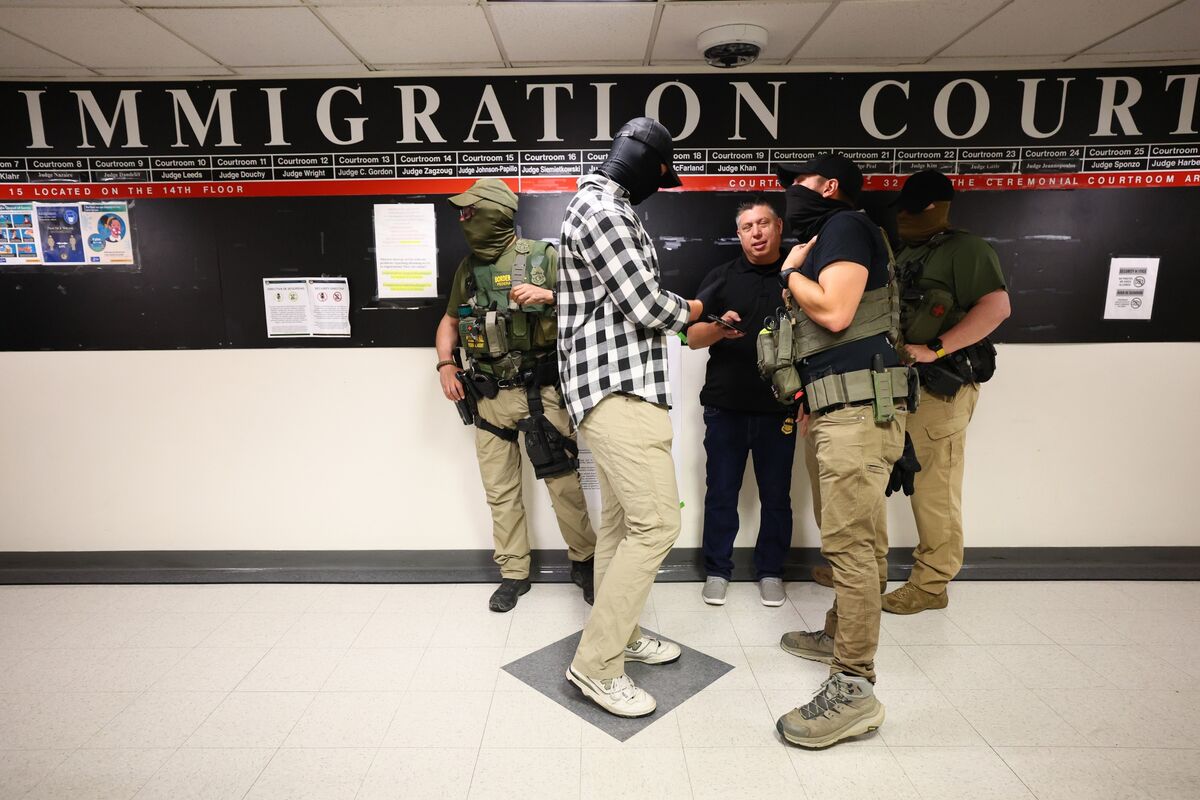
President Donald Trump vowed sweeping immigration curbs — including a permanent pause on migration from "all Third World Countries," ending federal benefits for non-citizens, deporting those deemed security risks and denaturalizing migrants — after a shooting by an Afghan national that killed a National Guard member. He provided no firm details on the legal or congressional mechanisms to implement the measures, creating legal and policy uncertainty that could prompt political and litigation risks and weigh on investor sentiment ahead of an election cycle.
Market structure: A durable restriction on immigration tightens US low- and semi-skilled labor supply (agriculture, food service, construction, care) and shifts pricing power to incumbent employers and automation vendors. Winners: industrial automation (Rockwell ROK, ABB ABB), staffing-tech and labor-substitution capex; losers: small-cap restaurants, seasonal agriculture processors, regional construction/materials firms. Expect margin pressure concentrated in Q2–Q4 (3–9 months) as hiring freezes and wage hikes filter through P&Ls.
Risk assessment: Tail risks include nationwide unrest, rapid state-level policy responses, and federal litigation that could block measures—each could spike volatility (VIX +30–50% intraday). Immediate (days): equity volatility and USD safe-haven flows; short-term (weeks/months): earnings revisions, wage prints; long-term (quarters/years): structural capex to automate, sustained wage inflation of 100–300bps above baseline in exposed sectors. Hidden dependency: H-1B restrictions would accelerate tech capex and offshore outsourcing, not just domestic labor tightening.
Trade implications: Favor durable, high-ROIC automation/capital goods exposure (6–18 month horizon) and short-duration macro hedges (long Treasuries) for risk-off spikes. Use defined-risk options to monetize expected near-term volatility in small-cap and consumer discretionary names. Position sizing should be modest (1–3% per idea) and conditional on policy filings (Federal Register/DHS) within 30–60 days.
Contrarian angles: Consensus may overreact to headline rhetoric; full legal/operational implementation often takes 30–180 days and faces court stays—creating a two-stage trade (volatility spike then policy clarity). Historical parallels (2016 rhetoric) show transient drawdowns in small-caps and hospitality but sustained gains for automation suppliers over 12–24 months; beware overcrowding in large-cap defensive longs.
AI-powered research, real-time alerts, and portfolio analytics for institutional investors.
Request DemoOverall Sentiment
moderately negative
Sentiment Score
-0.35
