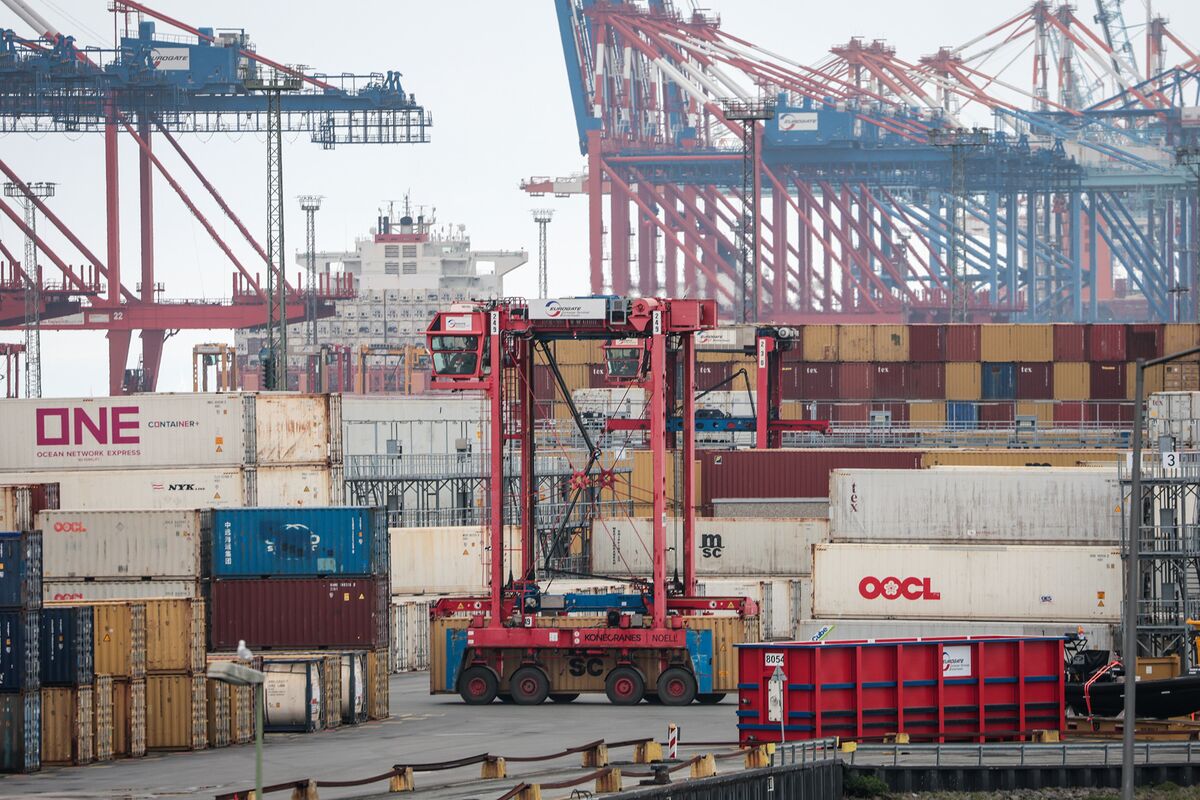
Global trade experienced a slowdown in April, attributed to President Trump's tariffs causing a pullback in US consumer spending, which saw its weakest quarter in nearly two years. This decline in spending is impacting exporters across Europe and Asia, with potential for further deterioration as trade tensions between the US and China escalate following accusations of agreement violations.
Global trade experienced a significant downturn in April, primarily attributed to President Trump's tariffs, which led to a marked contraction in US consumer spending. This pullback resulted in the weakest quarter for American consumer expenditure in nearly two years, reflecting an undercurrent of economic anxiety among US consumers. The slowdown is exerting pressure on exporters across Europe and Asia. Trade tensions are poised to worsen following President Trump's accusations on Friday that China violated an agreement to ease tariffs, further straining relations between the world's two largest economies. The strongly negative sentiment score of -0.75 and a high market impact score of 0.75 underscore the market's pessimistic view of these developments and their potential to disrupt economic stability, particularly concerning trade policy, supply chains, and consumer demand.
AI-powered research, real-time alerts, and portfolio analytics for institutional investors.
Request DemoOverall Sentiment
strongly negative
Sentiment Score
-0.75
