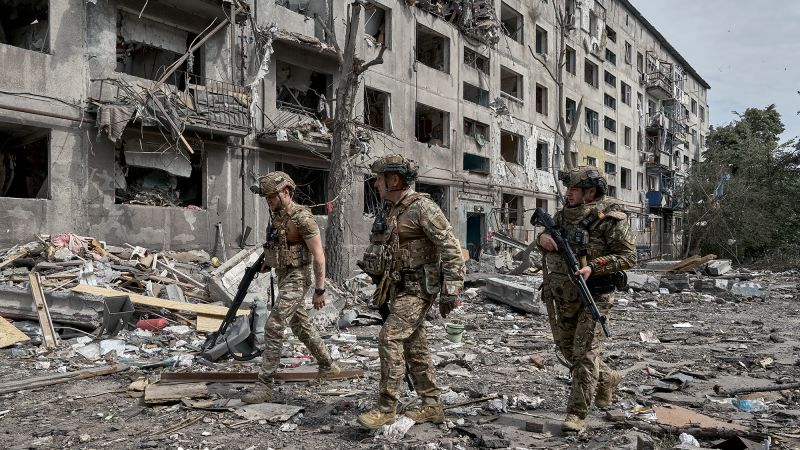
Pokrovsk appears increasingly likely to fall to Russian forces—the largest city captured since Bakhmut—as footage and Ukrainian ministry reports indicate roughly 300 Russian troops are now inside and fighting continues; Moscow’s approach has shifted from massed frontal assaults to small infiltration teams using light vehicles (mopeds, buggies) aided by a massive proliferation of drones that extend ‘kill zones,’ sever Ukrainian supply lines and make medical evacuations nearly impossible. Analysts say the tactical pivot prioritizes encirclement and gradual territorial gain over rapid breakthroughs, reducing reliance on heavy armor but sustaining very high attrition—the UK MoD estimates over 1.1 million Russian casualties since 2022, about a third this year—which implies a slower, grinding campaign that will strain logistics, readiness and morale on both sides and reshape operational and sustainment requirements for future fighting.
Video geolocated near Pokrovsk and a Ukrainian Ministry of Defense estimate that ~300 Russian troops are inside indicate Pokrovsk is increasingly likely to fall, which would be the largest city captured by Moscow since Bakhmut in May 2023; CNN reporting and field testimony underscore that fighting continues and the city has been largely reduced to rubble. Analysts from the ISW and UK MoD commentary contextualize this as part of a shift in operational objectives: Moscow appears to prioritize encirclement and gradual territorial gain rather than rapid, direct urban clearing.
The battlefield tactics have materially changed because of a massive proliferation of drones that extend “kill zones,” sever Ukrainian supply lines and make medical evacuations nearly impossible—evacuation vehicles reportedly cannot approach closer than 10–15 km and wounded remain trapped for days. Russian forces are using light transport (mopeds, buggies) and small infiltration teams (often three-person units, with reports of ~100 groups passing through daily) to reduce detection and sustain advance, while attrition remains high; the UK MoD estimates Russia has suffered >1.1 million casualties since February 2022, with about one-third occurring this year.
These developments imply a slower, grinding campaign that will strain logistics, readiness and sustainment, and increase demand for counter-drone capability, unmanned extraction and reconnaissance solutions while maintaining elevated battlefield attrition. Investors should treat this as a protracted operational trajectory rather than a short-lived shock, monitoring procurement signals, casualty and territorial reports as leading indicators of defense spending and technology priorities.
AI-powered research, real-time alerts, and portfolio analytics for institutional investors.
Request DemoOverall Sentiment
moderately negative
Sentiment Score
-0.45
