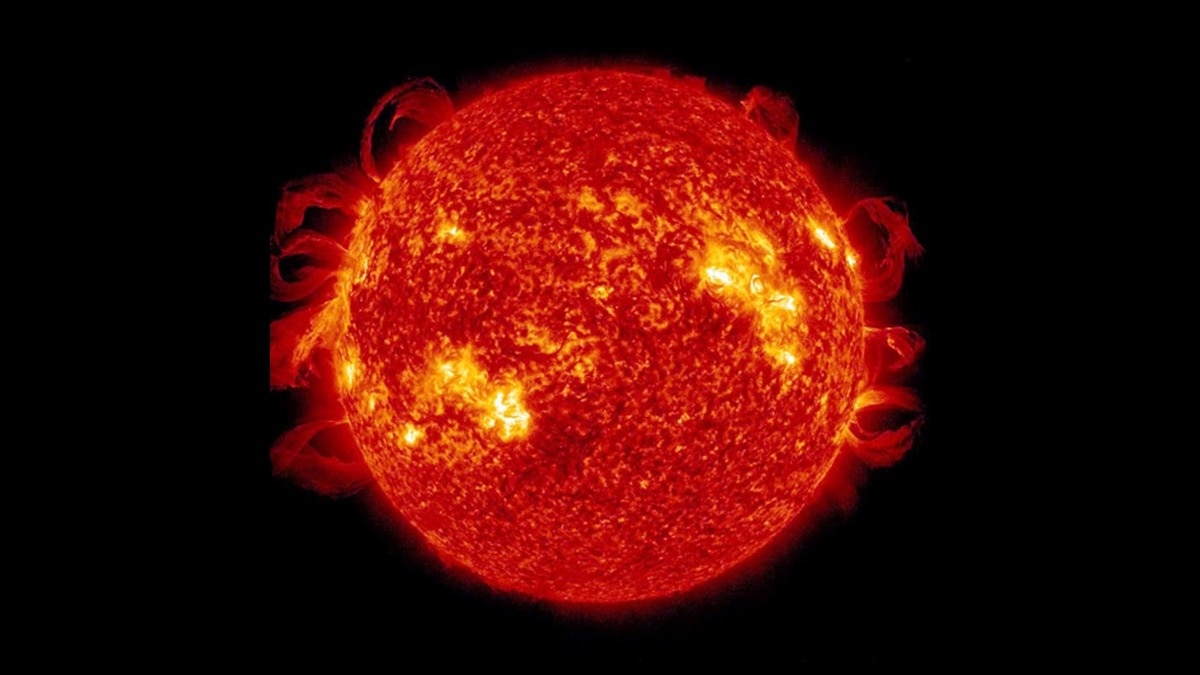
A powerful M5.7 solar flare from sunspot AR4436 launched a coronal mass ejection, with early models suggesting it will narrowly miss Earth but could still cause minor geomagnetic unrest around May 13. The active region has already produced at least five significant CMEs while on the Sun’s far side, increasing the risk of additional Earth-directed eruptions as it rotates into a more direct position. Impact is currently limited to space-weather-sensitive infrastructure, satellites, communications, GPS, and power grids rather than broad financial markets.
This is a low-probability, high-beta infrastructure risk, not a broad macro shock. The first-order market impact is usually confined to satellite operators, HF radio-dependent industries, and utilities with exposed high-latitude grids; the second-order risk is more interesting: even a near-miss can push operators to preemptively harden procedures, temporarily raising operating costs and causing short-lived service deratings across telecom, aviation, and precision navigation users.
The bigger asymmetry is in sentiment rather than physical damage. Space-weather headlines tend to compress into a narrow window of attention, but the real catalyst is rotational: as the active region turns more Earth-facing over the next several days to two weeks, the odds of a direct hit rise faster than the market typically prices. That creates a classic “calm before alignment” setup where implied volatility in exposed names can be underpriced relative to tail risk, especially if insurers and grid operators begin repricing outage probability.
Contrarian take: the market may overestimate the chance of a materially disruptive event from the current eruption while underestimating the persistence of the source region. The trade is less about this specific CME and more about the regime shift into a more active solar phase, which can create repeated nuisance events rather than one headline storm. Those nuisance events are enough to matter for high-frequency, low-margin businesses that depend on GPS timing and uninterrupted comms, even if a full-scale grid event never materializes.
AI-powered research, real-time alerts, and portfolio analytics for institutional investors.
Overall Sentiment
mildly negative
Sentiment Score
-0.15
