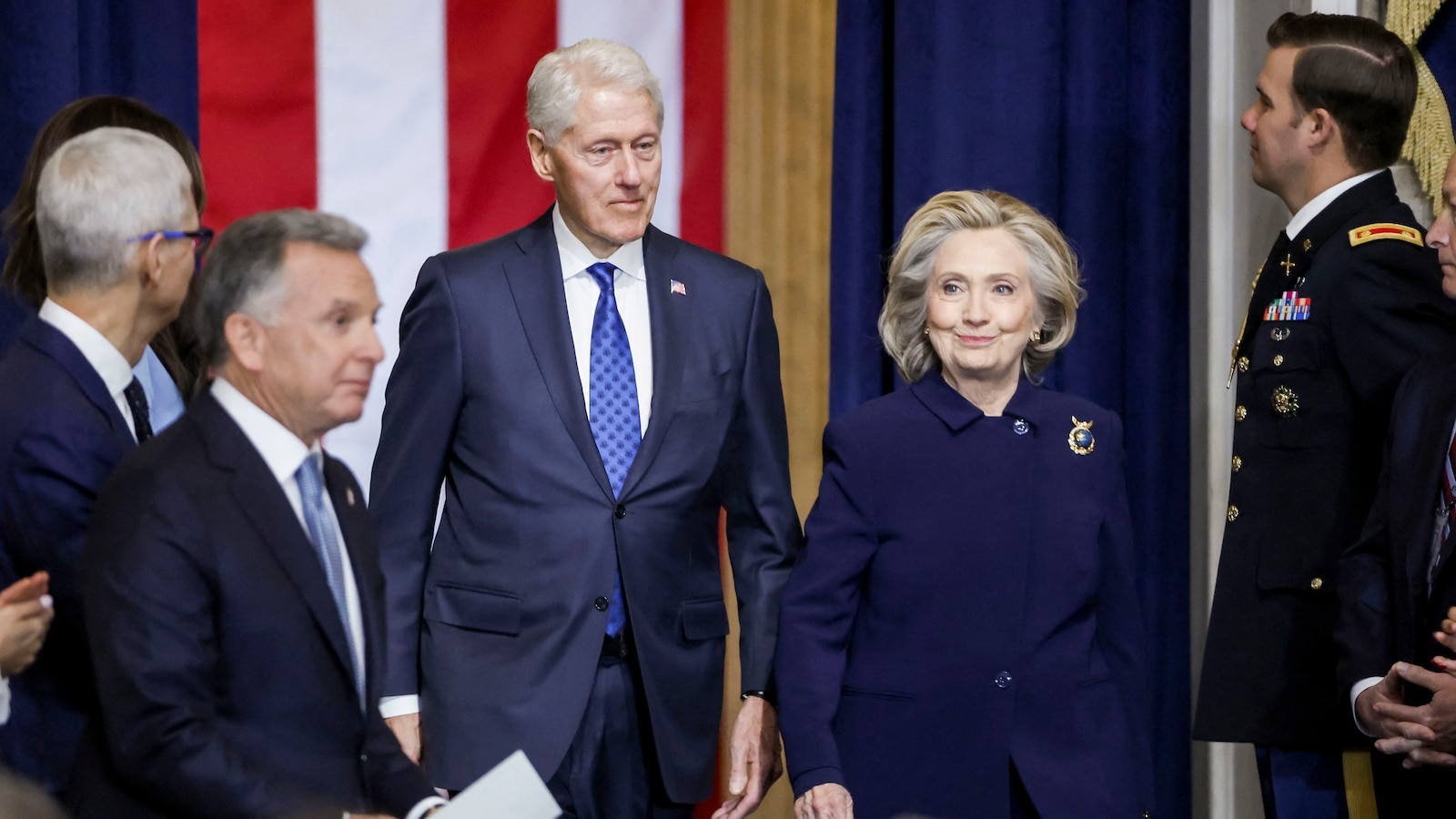
Hillary Clinton is scheduled to give a transcribed, videotaped deposition to the House Oversight Committee on Feb. 26, with Bill Clinton set to testify on Feb. 27, as part of the panel's inquiry into Jeffrey Epstein. The Clintons pushed for a public hearing but agreed to recorded depositions after subpoenas and committee rules; the committee previously advanced bipartisan contempt resolutions for noncompliance. The matter raises political and reputational risk but carries minimal direct market or corporate-earnings implications.
Market structure: Direct beneficiaries are media and legal-service providers (cable news owners WBD, FOXA, CMCSA; legal consultancies) from a short-term surge in viewership and ad demand around Feb 26–27; expect a modest, concentrated revenue/tone bump (order of magnitude: +1–3% incremental ad RPM for 1–2 weeks). Broader equity markets should be largely indifferent; political-news events historically move US equities <1% intraday unless new material allegations surface.
Risk assessment: Tail risks are low-probability/high-impact — emergence of new credible allegations or criminal referrals could meaningfully alter campaign funding and donor flows, driving multi-day risk-off (10y yields down 10–25bps, S&P draw 3–6%). Immediate horizon (days): headline-driven volatility spikes; short-term (weeks): fundraising and narrative shifts ahead of primaries; long-term (quarters): structural polling/fundraising effects only if corroborating evidence appears. Hidden dependencies include advertiser pullbacks, social-platform amplification, and a possible House floor vote that creates longer news cycles.
Trade implications: Tactical hedges around deposition dates (Feb 26–27) are highest-conviction: capped-cost volatility protection (VIX call spreads) and small SPY downside spreads. Selective longs in news-distribution/streaming owners (WBD, CMCSA) capture transient ad/ratings upside; avoid large directional macro moves absent policy shocks. Cross-asset: allocate a 0.5–1% FX hedge to JPY if headlines trigger global risk-off.
Contrarian angle: The consensus treats this as political theater with near-zero market impact — that underprices the option value of a sustained media cycle or new allegations. If no new revelations occur, short-lived volatility will revert quickly; a small, low-cost volatility hedge should therefore be both cheap and high asymmetry. Historical parallels (high-profile congressional depositions) show quick mean reversion within 3–7 trading days unless legal escalation occurs.
AI-powered research, real-time alerts, and portfolio analytics for institutional investors.
Request DemoOverall Sentiment
neutral
Sentiment Score
0.00
