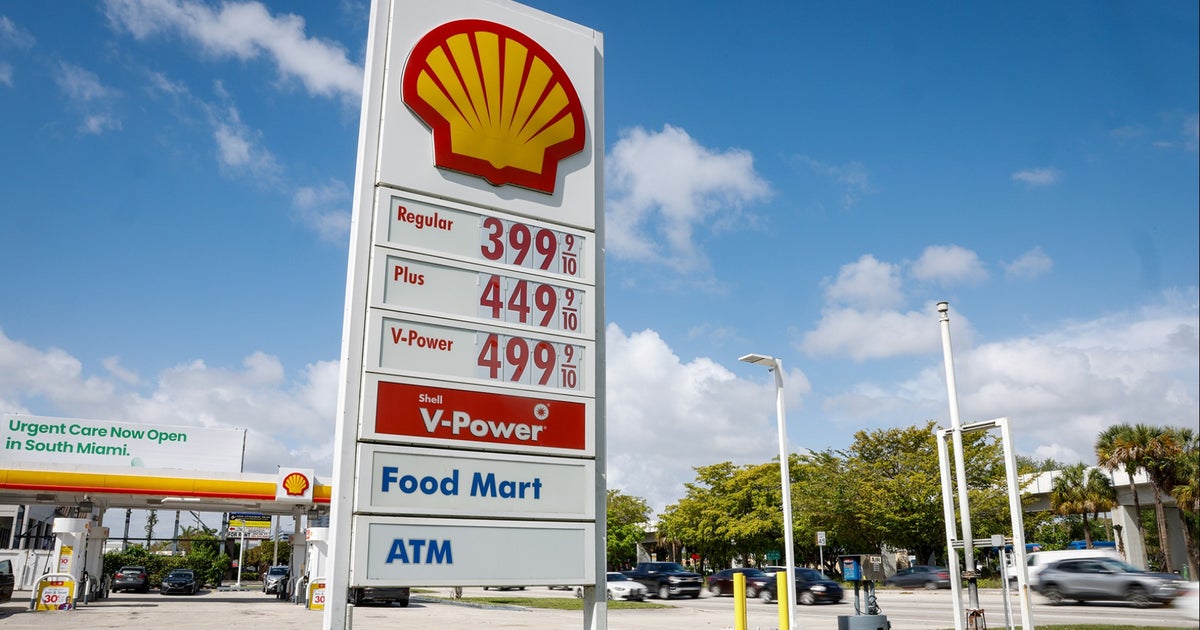
Gasoline national average hit $4.01 (highest since Aug 2022); prices are up >30% since late February and diesel has surged >40% to over $5/gal (local retail observed: regular $4.25, premium $4.65, diesel $5.75). Market participants and distributors attribute the spike to geopolitics and supply disruptions (including closure of the Strait of Hormuz) plus speculation; US Energy Secretary said the administration plans to increase diesel supply while distributors warn retailers are losing volume and urge conservation.
Retail pump volatility in South Florida is a signal, not the full story: local pump spikes compress discretionary spending in ways that show up in short-cycle consumption (grocery, restaurants) within 1-4 weeks and in used-car turnover over 3-6 months. Diesel-driven logistics cost shocks propagate faster and more mechanically than gasoline shocks — a sustained diesel premium of $0.50+/gal typically forces trucking rate resets inside 30-60 days and can shave 2-4 percentage points off grocer and CPG margins over a quarter.
The transportation re-routing and chokepoint risk (e.g., longer voyage miles) creates a wedge between crude and refined product availability that benefits asset-light optimizers (traders & refiners with flexible feedstock access) while penalizing integrated players with fixed logistics costs; expect regional crack-spread dispersion to widen, not uniform price moves. Politically-triggered supply responses (strategic releases or diplomatic reopenings) can compress the dislocation quickly — the mean reversion window historically is 4-10 weeks after a major diplomatic de-escalation or coordinated SPR action.
Near-term catalysts to watch: Iran escalation trajectory (days-weeks), OPEC spare capacity actions (weeks-months), US SPR releases and refinery maintenance schedules (30-90 days), and Atlantic hurricane landfalls (seasonal risk over coming months). The asymmetric payoff is clear — option-like positions on refined product spreads or short-duration protection on consumer cyclicals capture outsized downside if supply tightness persists, while cash-long exposure in high-margin, flexible refiners captures rapid upside if the disruption lasts past 6-10 weeks.
AI-powered research, real-time alerts, and portfolio analytics for institutional investors.
Request DemoOverall Sentiment
mildly negative
Sentiment Score
-0.35
