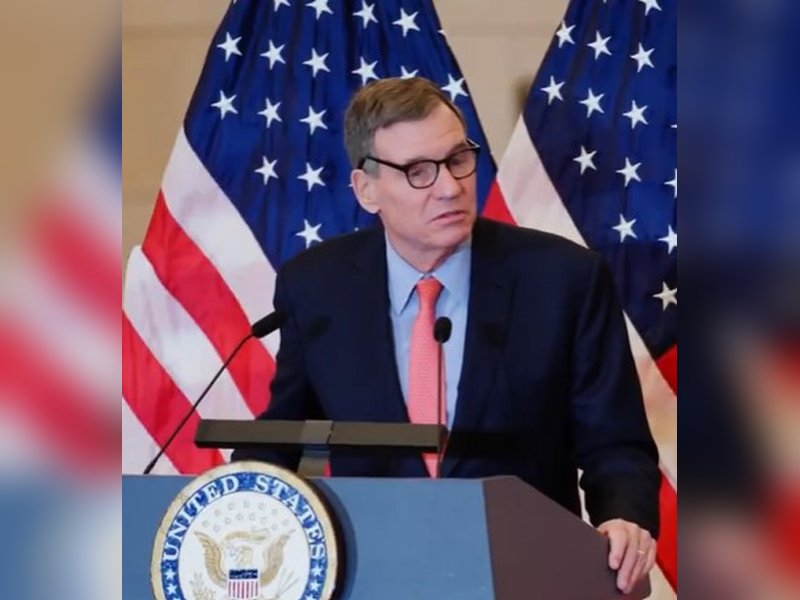
Senator Mark Warner warned that renewed tariff threats from the U.S. President could unsettle global markets and strain alliances, adding volatility at a time of investor caution; Mike Pence defended tariffs as a bargaining tool but urged clear goals and limits. Commentators and analysts flagged that prolonged tariff escalation could raise consumer prices, complicate central banks' efforts to control inflation and pressure Fed independence, while shifting supply chains may create opportunities for Indian exporters even as energy and industrial goods see greater price swings.
Market structure: Renewed tariff threats widen the gap between protected-input sectors (steel, some heavy industrials) and import-dependent manufacturers; winners include commodity exporters and alternative manufacturing hubs (India, Mexico) while US small-cap cyclicals and consumer discretionary are most exposed. Higher tariffs raise input-cost pass-through risk (expected near-term margin compression of 100–300bps in affected industries over 3–6 months) and increase realized volatility across equities and FX. Cross-asset effects: commodities (industrial metals, oil) should trade higher; safe-haven demand will bid USD and push term yields in both directions depending on growth vs. inflation dynamics.
Risk assessment: Tail risks include broad escalation (reciprocal tariffs >$300B) that could trigger global GDP shock (-1.5% to -3% year-over-year) and equity drawdowns of 15–30% within 3–12 months, or a policy muddle where tariffs stoke inflation and force the Fed to tighten despite slowing growth. Immediate (days) risk = volatility spikes on headlines; short-term (weeks–months) = capex delays and inventory hoarding; long-term = structural supply-chain realignment benefiting non-US exporters. Hidden dependency: Fed independence and political signaling — if markets price central-bank capture, risk premia and real yields reprice quickly. Key catalysts: large tariff announcements, retaliatory measures from China/EU, and CPI prints ±20bp from consensus.
Trade implications: Tactical plays favor long exposure to India exporters (INDA) and commodity/energy proxies (DBC, XLE) for 6–24 months while hedging US cyclicals via puts on IWM or short XLY/IWM for 3–6 months. Use options to buy 3-month 5–10% OTM puts on IWM as low-cost insurance and consider 6–12 month TIPS (TIP) exposure if breakevens rise >20bp. Rotate 3–9 months overweight into materials (XLB) and energy (XLE) and underweight US small-cap cyclicals (XLY/IWM) until tariff clarity arrives.
Contrarian angles: The market underestimates the asymmetric benefit to scalable service/IT exporters in India (software firms, contract manufacturers) — this is structural, not just cyclical, over 12–36 months. The knee-jerk hit to US industrials may be overdone if firms accelerate automation and nearshoring, creating winners in robotics/automation (BOTZ) that can offset some manufacturing losses. Unintended consequence: sustained tariffs can catalyze currency moves (INR appreciation vs a stronger USD) and trade agreements that permanently shift market share away from the US, creating multi-year alpha opportunities for non-US exporters.
AI-powered research, real-time alerts, and portfolio analytics for institutional investors.
Request DemoOverall Sentiment
moderately negative
Sentiment Score
-0.45
