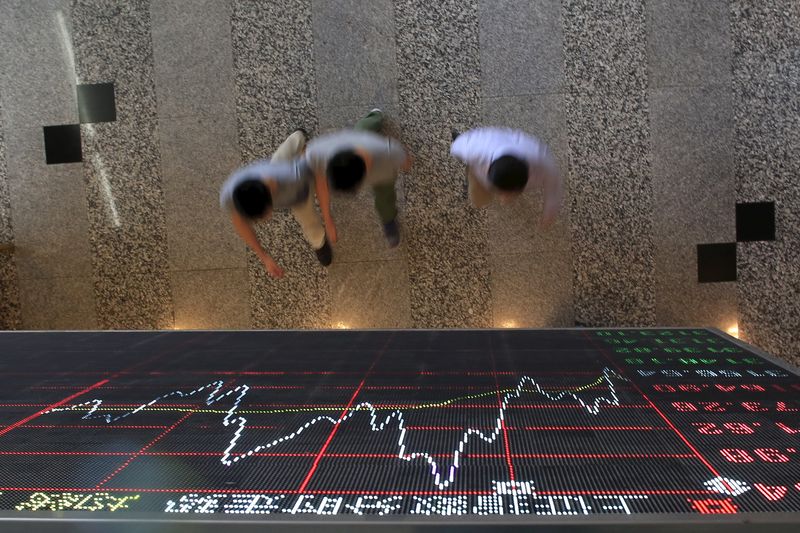
Asian equities rose as expectations of a December Fed rate cut and a tech-led rebound lifted markets: China’s CSI 300 and Shanghai Composite gained about 0.5–0.7% and Hong Kong’s Hang Seng added 0.4%, while South Korea’s KOSPI and Japan’s Nikkei each rose ~1.3%. However, renewed stress in China’s property sector pressured sentiment—China Vanke plunged over 6% amid bond sell-offs as the company seeks bondholder approval to delay payments and peers Sunac and China Overseas fell >1%—fueling speculation Beijing may deploy more stimulus to support growth.
Market structure: Dovish Fed pricing (markets implying ~25bp cut in Dec) and renewed tech rotation directly benefits long-duration, AI/compute-exposed names (SMCI, APP) and equity indices sensitive to growth (Nasdaq, KOSPI, Nikkei). Clear losers are Chinese real-estate issuers (China Vanke SZ:000002, Sunac HK:1918, China Overseas HK:0688) where bond-market stress is compressing credit access and forcing fire sales; expect onshore credit spreads to widen another 100–300bps absent strong Beijing intervention. Cross-asset flows: US rate easing should compress global front-end yields and steepen curves, supporting equities and high-duration assets, while China property stress raises CNH/CNY funding volatility and pushes domestic bond yields wider.
Risk assessment: Tail risks include a Vanke restructuring contagion that freezes offshore commercial paper (low-probability but high-impact within 30–90 days) and a Fed hold/dovish reversal that could trigger a tech derating (days–weeks). Hidden dependencies: a Beijing “targeted” stimulus (consumer subsidies, selective mortgage support) will buoy consumption and select developers but won’t cure widespread balance-sheet strains—expect dispersion across names. Key catalysts to monitor: Vanke bondholder vote (days–weeks), any Beijing stimulus package announcement (2–6 weeks), US CPI/PCE prints and Dec Fed decision.
Trade implications: Tactical longs — overweight SMCI (SMCI) and APP (APP) as 1–2% positions to capture a tech rebound over 2–12 weeks; pair with shorts in weak HK property names (1918.HK, 0688.HK) to hedge China-risk. Use options: buy 3-month call spreads on SMCI or Nasdaq to limit premium vs binary Fed upside; buy 3-month put spreads or 10-delta puts on 1918.HK as cheap insurance if property contagion intensifies. Rotate out of Australia rate-sensitive cyclicals (trim ASX bank exposure by 2–3%) until RBA moves clarify.
Contrarian angles: Consensus expects broad Beijing stimulus; the market may be underpricing a partial, targeted package that only stabilizes demand without resolving developer solvency—this creates both short-term shorts in weak credits and selective long opportunities in well-capitalized developers after 30–50% sell-offs. If Vanke bonds trade <30¢ on the dollar or CDS widens >500bps, consider selective distressed credit buybacks (12–24 month recovery trade) because historical Chinese policy cycles have rewarded opportunistic credit purchases post-capitulation. Beware that an aggressive fiscal backstop would quickly reprice risk-on and squeeze shorts.
AI-powered research, real-time alerts, and portfolio analytics for institutional investors.
Request DemoOverall Sentiment
mixed
Sentiment Score
0.18
Ticker Sentiment
