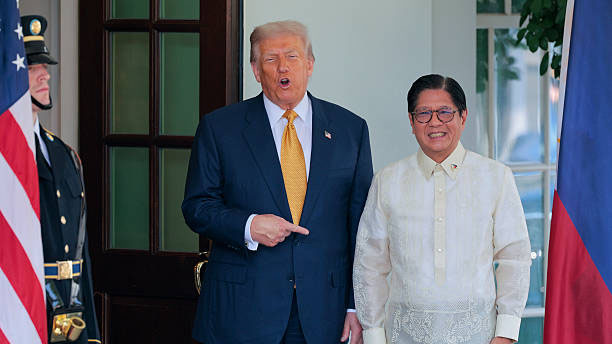
President Donald Trump announced a new agreement with the Philippines, establishing a 19% tariff on the country’s exports to the US. Revealed via social media following a meeting with President Ferdinand Marcos Jr., the deal also includes military cooperation, signaling a significant shift in bilateral trade and strategic relations.
The United States has established a new trade agreement with the Philippines, imposing a 19% tariff on all Philippine exports to the US. This policy, announced by President Trump via social media following a meeting with President Ferdinand Marcos Jr., marks a significant development in bilateral relations. The imposition of a flat 19% tariff is a substantial trade barrier that will likely increase costs for US importers of Philippine goods and erode the competitiveness of Philippine exporters in the US market. Concurrently, the agreement includes a military cooperation component, suggesting a broader strategic alignment where trade policy is being used as a lever in geopolitical maneuvering. This dual-focus deal introduces considerable uncertainty for supply chains reliant on the US-Philippines trade corridor and signals a potential return to more protectionist US trade policies, aligning with the provided themes of 'Tax & Tariffs' and 'Geopolitics'. The moderately negative sentiment signal (-0.4) reflects the market's typical reaction to new trade frictions and their potential to disrupt economic activity.
AI-powered research, real-time alerts, and portfolio analytics for institutional investors.
Request DemoOverall Sentiment
moderately negative
Sentiment Score
-0.40
