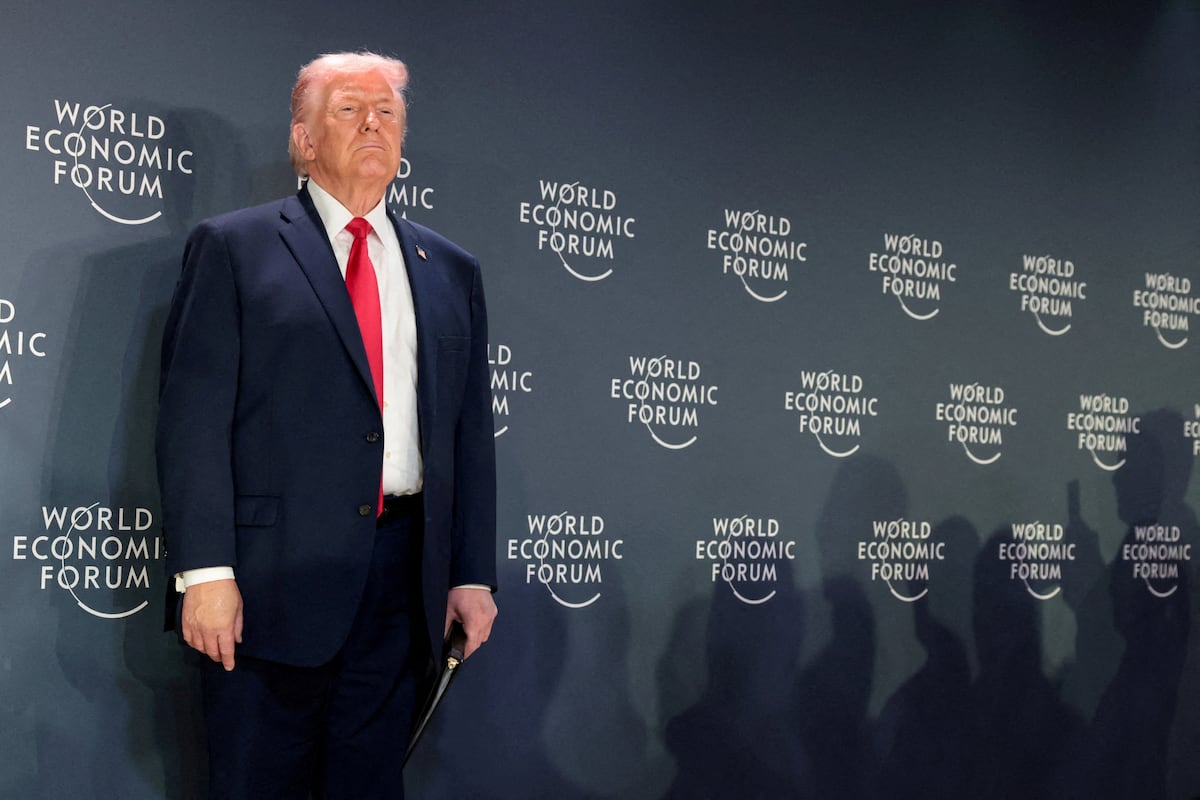
A visible shift at Davos and beyond shows European leaders, Canadian and other allies mobilizing resistance to Trump-era threats — notably tariff threats and territorial claims — and using the prospect of market and trade retaliation as leverage. Past actions (China restricting strategic raw-material exports) and recent episodes (Trump’s rapid withdrawal of the Greenland annexation threat and threats of 100% tariffs on Canada) demonstrate that trade and supply-chain countermeasures can force policy reversals, raising geopolitical risk, prompting alliance diversification (EU–China/India trade moves, Canada-China deal) and increasing policy uncertainty for investors.
Market structure: A hardened European stance against U.S. tariff bullying shifts winners to non-Chinese miners and 'onshore' supply-chain beneficiaries (rare-earths, specialty metals, semiconductor equipment) and hurts U.S.-centric exporters vulnerable to retaliatory tariffs. Expect a 6–18 month re-pricing: commodity producers with non-Chinese supply (e.g., MP Materials) can see +20–50% upside if export curbs repeat; European exporters to the U.S. face 5–15% margin pressure under sustained tit-for-tat tariffs.
Risk assessment: Tail risks include rapid tariff escalation (100% tariffs as threatened) triggering global growth shock (-1–3% GDP hit in affected countries) and forced secondary sanctions on financial flows; probability low (<15%) but high impact. Short-term (days–weeks) volatility spikes; medium-term (3–12 months) realignment of trade blocs and capex onshoring; long-term (2+ years) structural investment in alternative supply chains and higher defense budgets across EU.
Trade implications: Implement hedges and selectively long supply-side plays. Buy downside protection on European equity exposure (3-month put spreads on VGK) and allocate 2–4% to hard-asset hedges (GLD or physical/ETFs). Rotate portfolio +3–5% into Materials and Defense (miners, ASML, BAE/RTX) and trim cyclical exporters and consumer discretionary names with >20% revenue exposure to U.S.-EU trade flows.
Contrarian angles: Consensus assumes USD-safe-haven flows; but sustained decoupling can weaken USD over 6–18 months as allies diversify into RMB and bilateral trade invoicing shifts—monitor FX reserve shifts and bilateral trade agreements (EU-India, EU-Mercosur) for inflection. Current volatility likely overshoots: use option spreads to sell premium rather than naked directional bets.
AI-powered research, real-time alerts, and portfolio analytics for institutional investors.
Request DemoOverall Sentiment
moderately negative
Sentiment Score
-0.38
