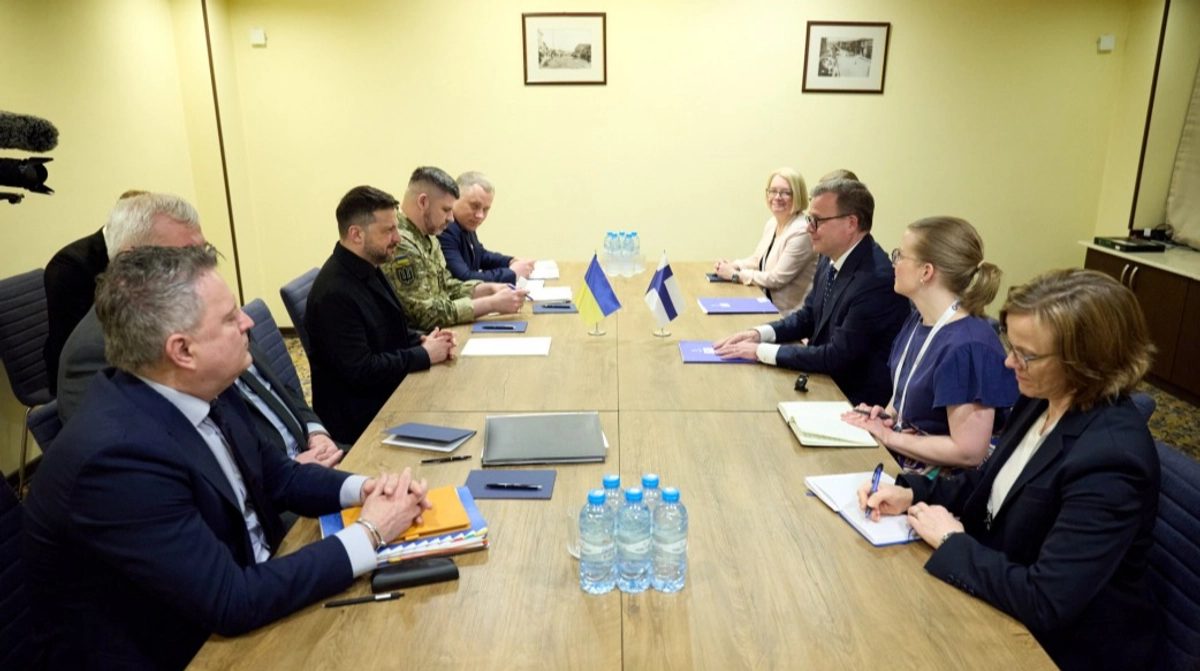
Finnish Prime Minister Petteri Orpo said two suspected drone violations of Finnish airspace on 3 May were unacceptable and confirmed the government has reliable information on the incidents. Finland said it is prepared to monitor and defend its airspace, while indicating coordination with Ukraine to prevent further incursions. The article is primarily geopolitical and security-focused, with limited direct market impact.
The market implication is not about one-off drone incidents; it is about Europe’s tightening tolerance for spillover risk from Ukraine-related military activity. Once a frontline state publicly frames airspace discipline as a bilateral issue, the probability rises that allies will demand tighter geo-fencing, flight-plan verification, and real-time cross-border deconfliction protocols, which favors vendors with counter-UAS, radar fusion, and airspace management software. The second-order benefit accrues to defense primes and electronics suppliers that can sell layered detection rather than kinetic interceptors alone, because the cheapest way to avoid escalation is earlier identification and attribution. The more interesting catalyst is procurement timing. Finland has already been moving toward stronger air defense, and this kind of incident can compress buying decisions from a multi-year budget cycle into an emergency supplemental or accelerated tender over the next 1-3 quarters. That tends to help names with NATO interoperability, short installation lead times, and software-defined upgrades; it is less helpful for platforms requiring long factory lead times. The losers are not Ukrainian assets per se, but any narrative that assumes unlimited operational latitude for drones near allied borders — that increases friction, rules-of-engagement complexity, and the risk of reputational spillover into broader Western support if incidents recur. Contrarian view: the headline may be overread as a diplomatic rift when it is more likely a coordination problem being publicly managed. If this is the beginning of a recurring pattern, the bigger market signal is not Finnish-Ukrainian tension but a broader European push toward autonomous border defense and hardened critical infrastructure. In that scenario, the trade is on enablement vendors, not on headline-sensitive geopolitics, and the upside can persist for months as procurement converts from rhetoric to orders.
AI-powered research, real-time alerts, and portfolio analytics for institutional investors.
Request DemoOverall Sentiment
neutral
Sentiment Score
-0.10
