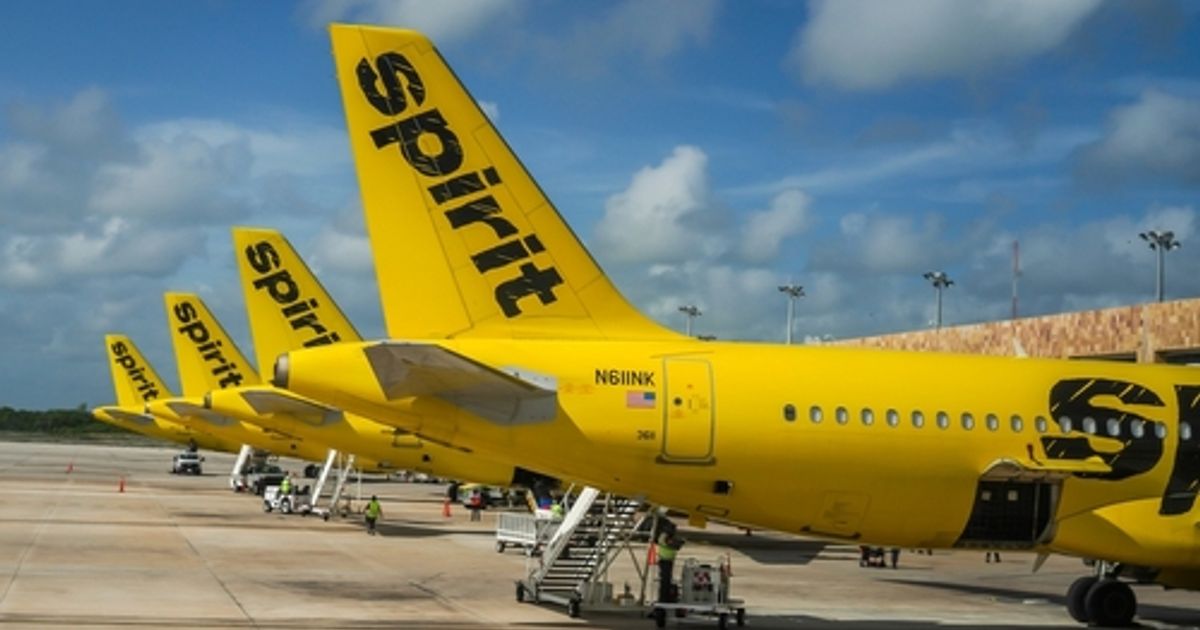
Spirit Airlines says it expects to emerge from Chapter 11 in late spring or early summer after reaching a preliminary agreement with lenders and secured creditors to fund the remainder of its restructuring, which includes shrinking its fleet and route network and adding premium- and first-class-style seating. The carrier, which filed for bankruptcy again in August after exiting a prior Chapter 11 in March, has suspended operations in roughly a dozen U.S. cities and furloughed about 1,800 flight attendants; shares jumped ~36% to ~$0.45 on the news but are down nearly 95% over the past year. This milestone could materially affect creditor recoveries and equity outcomes but execution risk and continued operational cuts leave the outlook highly uncertain.
Market structure: Spirit’s announced plan to shrink and reposition suggests a local, not systemic, supply contraction — route suspensions in “roughly a dozen” U.S. cities imply low-single-digit capacity declines on affected city-pairs, which should lift RASM regionally by mid-single digits over 1–3 months and benefit nearby ULCCs (ALGT, ULCC) and some legacy short-haul markets. Direct losers are Spirit equity (FLYYQ) holders and airports/airports-reit exposure in cities losing service; winners are carriers able to quickly redeploy aircraft or pick up slots/gates. Pricing power shifts toward incumbents in those markets for the summer leisure travel window if Spirit’s cuts persist through peak season.
Risk assessment: Tail risks include liquidation (value destruction), contagion to other weak ULCCs (Frontier/ULCC credit stress), regulatory obstacles to any sale, and labor/union litigation delaying emergence; each could cause >50% additional downside to FLYYQ and widen sector CDS by 200–500bps. Immediate risk (days): equity illiquidity and volatile pops; short-term (weeks–months): court votes and operational cuts around the announced late-spring/early-summer emergence; long-term: structural repositioning to premiumized ULCC model may or may not restore profitability within 12–24 months. Hidden dependencies: lease renegotiations, gate reassignments, and counterparty DIP financings that determine recoveries.
Trade implications: Tactical long exposure to ALGT and ULCC (size 1–3% each) via 3–6 month call spreads to capture expected RASM upside ahead of summer; avoid owning FLYYQ equity and only consider senior secured DIP/debt if yields exceed 12% and contract covenants give control/priority. Hedge sector tail risk with short-dated puts on the JETS ETF (90–120 days, 8–12% OTM) sized 0.5–1% of portfolio. Monitor fuel (ULSD) — if Brent >$90/bbl or jet fuel surges 15% from current levels, unwind ULCC longs.
Contrarian angles: Consensus treats FLYYQ as effectively worthless, but the plan to add premium economy/first-class-style seats could lift unit yields materially if executed; a successful premium pivot or an opportunistic buyer pre- or post-emergence could flip valuations. The market may be over-discounting spillover benefits to majors; history (post-2008 restructurings) shows survivors can capture outsized pricing power, but only if fleet and labor realign — an execution risk priced cheaply today and worth asymmetric option-like exposure in select ULCC equities. Also, gate/aircraft availability from Spirit retirements could become a supply for rivals, accelerating their recovery.
AI-powered research, real-time alerts, and portfolio analytics for institutional investors.
Request DemoOverall Sentiment
mixed
Sentiment Score
0.05
