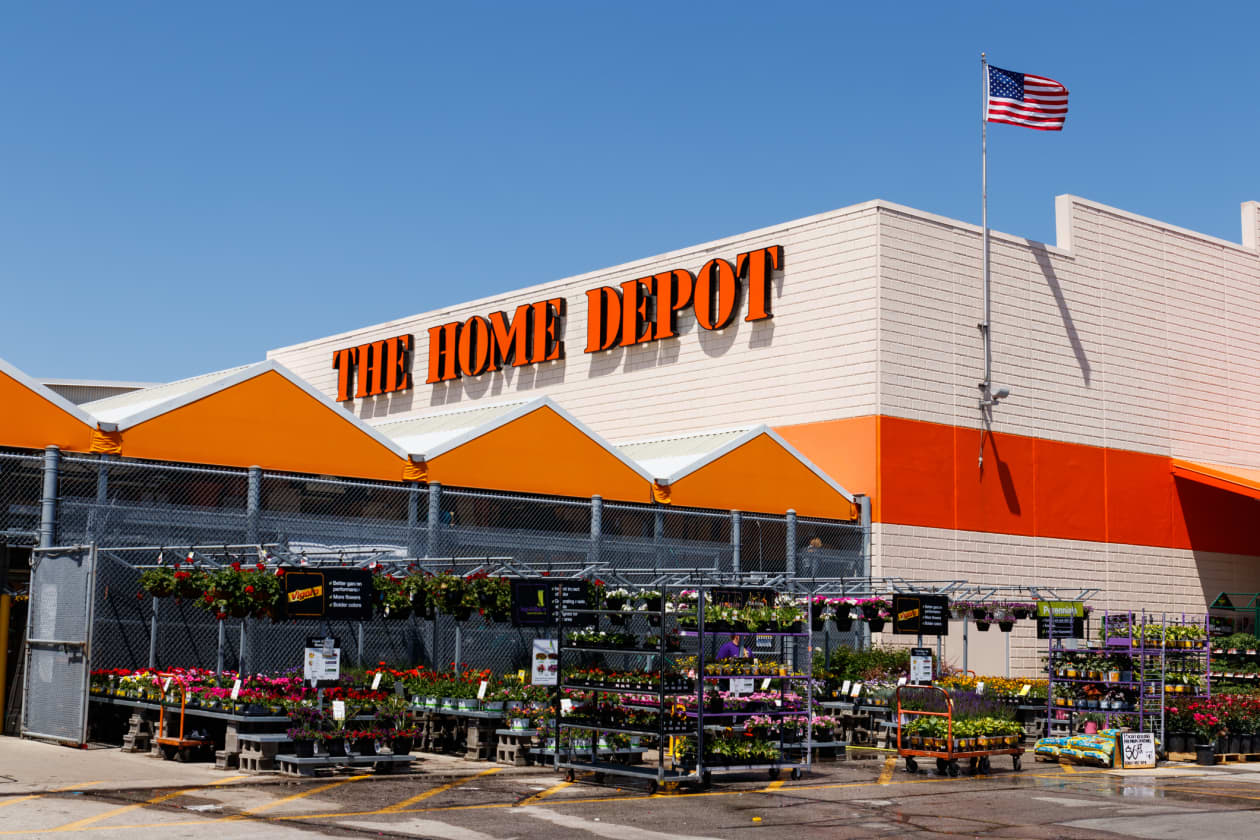
Home Depot beat fiscal first-quarter profit and total sales expectations, and shares rose in early trading after the company kept its full-year outlook intact. Comparable sales growth was a bit shy, but the unchanged guidance eased investor concerns about higher gasoline prices and a weak housing market weighing on spending.
The clean takeaway is not that demand is strong, but that the market was positioned for a sharper downgrade and did not get it. That matters because big-ticket retail is now being treated as an early read on household balance-sheet stress: if discretionary hardware demand is merely flat-to-slightly down rather than rolling over, it argues the consumer is still trading down within the category rather than cutting projects outright. In that setup, the near-term equity reaction can outperform the underlying operating trend as short interest and bearish guide-down expectations get squeezed.
The second-order winner is the home-improvement ecosystem with the highest exposure to project deferral normalization: appliance, paint, flooring, and pro-contractor adjacencies should stabilize before broader housing re-accelerates. The loser is any supplier or specialty retailer counting on a housing-turn thesis to save volumes in the next 1-2 quarters; this print suggests the recovery remains patchy and heavily weather/rates dependent. If spending holds while fuel remains elevated, the mix likely shifts toward maintenance and emergency repairs, which is better for Home Depot’s basket than for longer-cycle renovation categories.
The key risk is that this is a confirmation rally, not a fundamental inflection. A stable outlook in one quarter does little if mortgage rates stay restrictive and gasoline eats into real disposable income over the next 2-3 months; the consumer can stay “resilient” until a single macro shock changes behavior quickly. The most fragile part of the thesis is forward comp assumptions into the next two quarters, where even a modest deceleration in foot traffic can compress margins if promo intensity rises.
Consensus is probably underestimating how much of the equity upside is already in the multiple reset rather than the earnings beat itself. If the stock is being priced like a cyclical with no visibility, holding guidance intact can justify a rerating, but only if subsequent monthly data avoid confirming housing weakness. The move looks tactically constructive, but the medium-term upside likely depends more on rate expectations than on this quarter’s operating execution.
AI-powered research, real-time alerts, and portfolio analytics for institutional investors.
Request DemoOverall Sentiment
mildly positive
Sentiment Score
0.25
Ticker Sentiment
