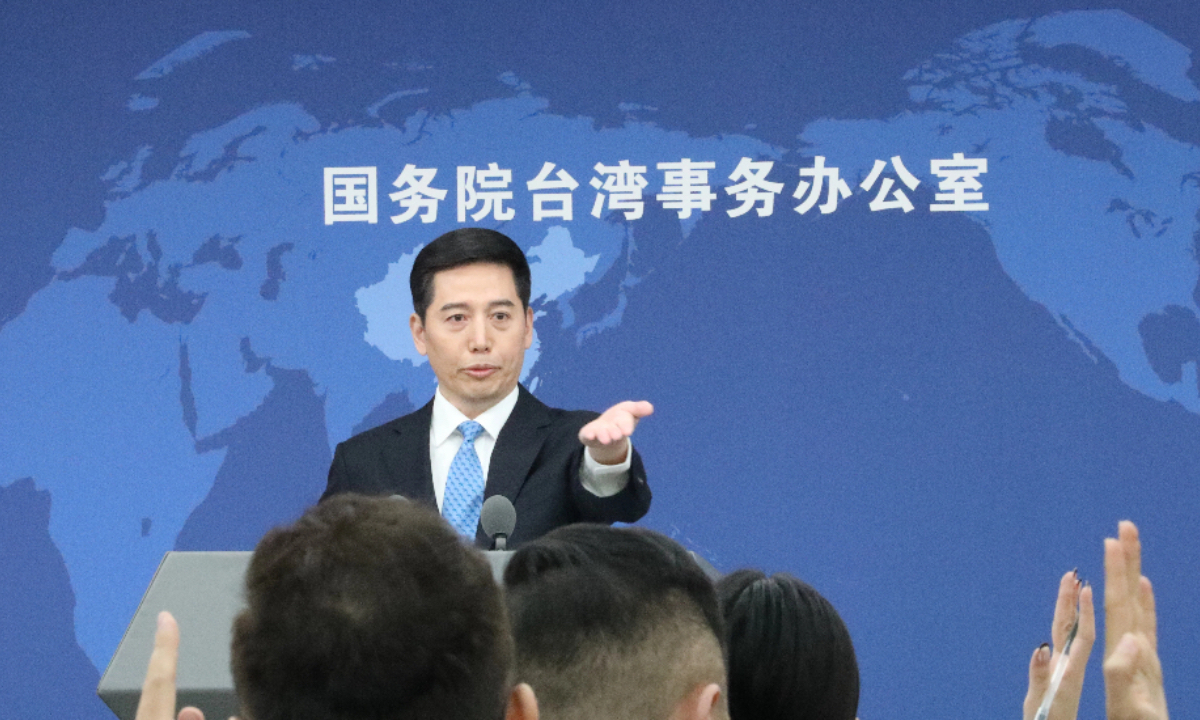
China's Taiwan Affairs Office spokesperson Peng Qing'en accused Taiwan's DPP of colluding with Japan after Taiwanese official Lin Chia-lung encouraged more travel to Japan and purchases of Japanese goods; Beijing condemned remarks by Japanese Prime Minister Sanae Takaichi and reiterated that the Taiwan question is an internal Chinese affair, warning it will 'resolutely strike back' against external interference. The exchange revives Cold War-era 'first island chain' rhetoric and heightens geopolitical risk in the Taiwan Strait, a dynamic that could pressure regional markets, supply chains and defense-linked assets should tensions escalate.
Market structure: A geopolitical escalation around Taiwan/Japan benefits defense primes (RTX, LMT, NOC) and insurance/reinsurance lines while hurting Taiwan-facing consumer, travel, and foundry-dependent tech (TSM/ EWT). Pricing power shifts toward capital goods and defense suppliers as governments accelerate procurement; shipping/insurance premia push freight and energy costs higher by a risk premium of +$5–15/barrel equivalent in stress scenarios. FX flows tilt to safe havens (USD, JPY) and gold, while EM/China equities face disproportionate outflows.
Risk assessment: Tail risk is a kinetic incident interrupting Taiwan semiconductor output—if TSMC capacity falls >20% for >4 weeks global chip tightness could spike prices 15–30% and OEM revenues compress; probability low (<5%) but systemic. Immediate (days) sees volatility and FX moves; short-term (weeks–months) sees supply-chain re-routing and inventory builds; long-term (quarters–years) sees capex reallocation into onshore/ally fabs. Hidden dependencies: marine insurance, export-control cascade (ASML/NA restrictions), and supplier single‑sourcing amplify shocks.
Trade implications: Tactical: rotate 4–6% net into US defense equities and buy 7–10Y UST duration +1–2% and 1–2% gold exposure within 1–4 weeks to capture risk-off flows; hedge semiconductor/Taiwan exposure with 1–2% notional in 1–3 month puts (TSM or EWT). Use pair trades: long RTX/LMT vs short EWT to capture relative outperformance; if 10Y yield drops >25bps, trim duration and lock profits. Options: buy 3-month puts 10% OTM on TSM (size 1–2% notional) and 3-month calls ATM on RTX (size 2–3%).
Contrarian angles: The market may overpay for defense cyclicality while overselling secular semiconductor assets—TSMC falling >25% becomes a tactical buy for 12–36 month secular AI/autonomy demand with staged entry. Historical parallels (Crimea/2014; South China Sea flare-ups) show sharp short-term drawdowns followed by multi‑quarter rebounds for core tech; avoid extinguishing long-term Taiwan chip exposure unless physical disruptions exceed 4–6 weeks. Monitor PLA sortie counts and daily MND reports; sustained abnormal activity (e.g., >10 sorties/day for 3 consecutive days) should trigger position re‑weights.
AI-powered research, real-time alerts, and portfolio analytics for institutional investors.
Request DemoOverall Sentiment
moderately negative
Sentiment Score
-0.40
