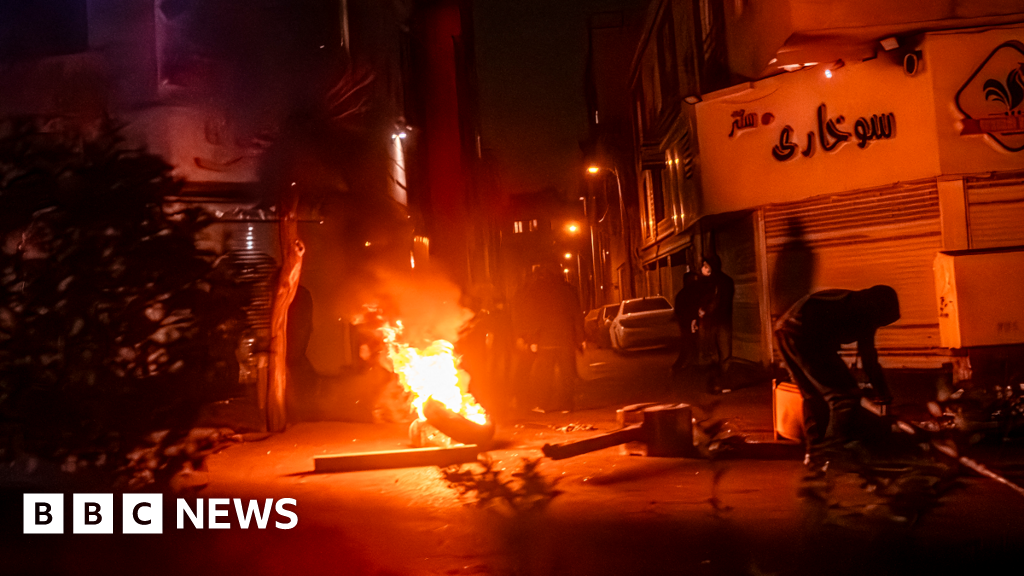
Widespread anti-government unrest in Iran has intensified following a collapse in the currency and severe inflation, with the US-based HRANA reporting nearly 500 protesters and 48 security personnel killed while sources suggest higher tolls; the government has responded with internet and phone shutdowns and a heavy security crackdown. Witnesses and expatriates cite hyperinflation that has left people markedly poorer (one interviewee claimed a 45% loss of purchasing power in four months), broadening this from a currency shock into a crisis of political legitimacy that raises tail risks for regional stability, sanctions dynamics and any Iran-linked commodity or emerging-market exposures.
Market structure: Short-term winners are oil & gas majors (XOM, CVX, XLE) and safe-haven assets (GLD, USD/UUP) as supply-risk premia rise; losers are EM equities/bonds (EEM, EMB), regional banks and frontier-market FX tied to Iran and Middle East trade. Pricing power shifts to integrated producers who can flex production and to insurers/shippers who raise freight/pastime costs; consumer cyclicals in Europe/Asia face margin pressure if oil spikes >$85/bbl for more than 2–4 weeks.
Risk assessment: Tail risks include a Strait of Hormuz closure or widened military engagement (assign ~10–20% near-term probability) that could lift Brent >$100 for weeks, and a harsher US sanctions regime (20–30% probability) tightening global supply lines. Immediate (days) -> volatility in oil, FX and shipping; short-term (weeks–months) -> EM credit spread widening of +100–300bp; long-term (quarters–years) -> potential re-entry of Iranian oil if regime change occurs, reversing current premia.
Trade implications: Favor 1–3% tactical exposure to energy upside and 0.5–1.5% in gold; implement Brent call spreads (3–6 month) rather than outright longs to cap downside. Hedge EM sovereign/bank exposure via short EMB or buying 3–6 month puts on EEM; consider small long positions in defense names (LMT, NOC) sized 0.5–1% conditional on escalation signals.
Contrarian angles: Consensus assumes persistent supply shock — history (2019–20 Iran flares) shows spikes often mean-revert within 2–3 months absent broader war. Risk of a successful political opening in Iran (low probability but material) would eventually add supply and compress energy longs; therefore stagger entries, prefer option structures and defined-risk trades to avoid being caught by quick reversals.
AI-powered research, real-time alerts, and portfolio analytics for institutional investors.
Request DemoOverall Sentiment
strongly negative
Sentiment Score
-0.60
