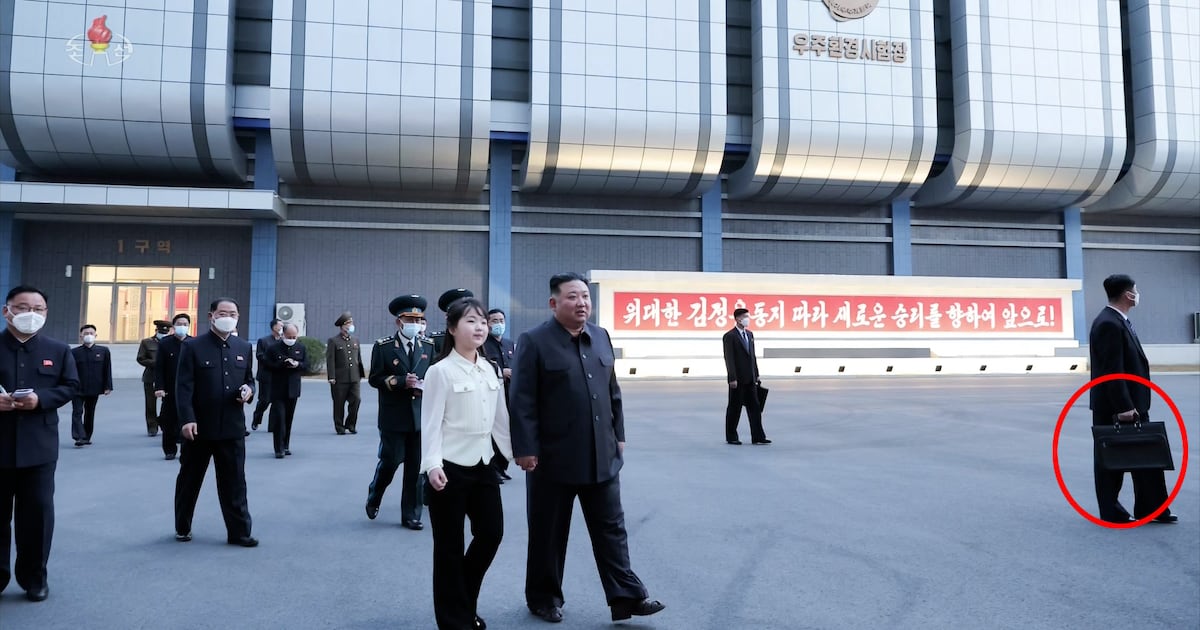
North Korea has replaced senior security chiefs close to leader Kim Jong-un, indicating a reshuffle at the top of the regime's security apparatus that could signal internal consolidation or shifts in military and intelligence priorities. For investors, the personnel changes increase geopolitical uncertainty in the region, warranting closer monitoring of risk-sensitive assets, defense-sector exposure and safe-haven flows while assessing the potential for altered signaling or escalation that could affect sanctions enforcement and regional stability.
Market Structure: A leadership shake-up in North Korea raises near-term geopolitical risk premium across Northeast Asia; winners include defense primes (LMT, NOC, GD) and safe-haven assets (USD, JPY, gold), losers are South Korean equities/semiconductors (EWY, 005930.KS) and regional tourism/airlines. Pricing power shifts toward defense suppliers via expectation of higher R&D/ordnance budgets—market-implied incremental defense spending could be +5-15% regionally over 12–24 months if provocation frequency increases. Cross-asset flows will likely push core sovereign yields down (flight-to-quality) while widening EM spreads and KRW depreciation by 2–8% in stress bouts.
Risk Assessment: Tail risks include an escalatory missile/cyber episode disrupting shipping or semiconductor supply (low prob <10% in 6 months, high impact), or tighter sanctions prompting Chinese mediation that stabilizes prices (contrary tail). Immediate window (days) is heightened volatility; short-term (weeks–months) could see repeated knee-jerk selloffs; long-term (quarters) fundamentals hinge on defense budget cycles and supply-chain relocation. Hidden dependencies: US/ROK joint exercises calendar, China’s diplomatic posture, and insurance/shipping re-routing costs that amplify real economic impact.
Trade Implications: Near-term tactical plays favor 1–2% portfolio long in LMT/NOC via 3-month OTM calls (30–50% leverage) and 1–2% long GLD or physical gold for 1–3 months as downside hedge; hedged shorts in EWY via 3-month puts if KRW weakens >3% vs USD. For balance-sheet risk, buy 3–6 month protection (put spreads) on KOSPI/EWY and consider 5–10% duration extension via TLT if risk-off persists beyond 2 weeks.
Contrarian Angles: Consensus may overprice sustained Korean equity weakness—historicals (2016–2018 NK incidents) show mean reversion within 2–6 weeks; a >8% drawdown in EWY could present a tactical long (1–3% allocation) on valuation mean-reversion. Unintended consequences include accelerated regional capex into domestic defense and semicap reshoring, benefiting select Korean/Japanese industrials—identify those names on >30% order-book exposure to defense or fabs for 12–24 month alpha.
AI-powered research, real-time alerts, and portfolio analytics for institutional investors.
Request DemoOverall Sentiment
moderately negative
Sentiment Score
-0.30
