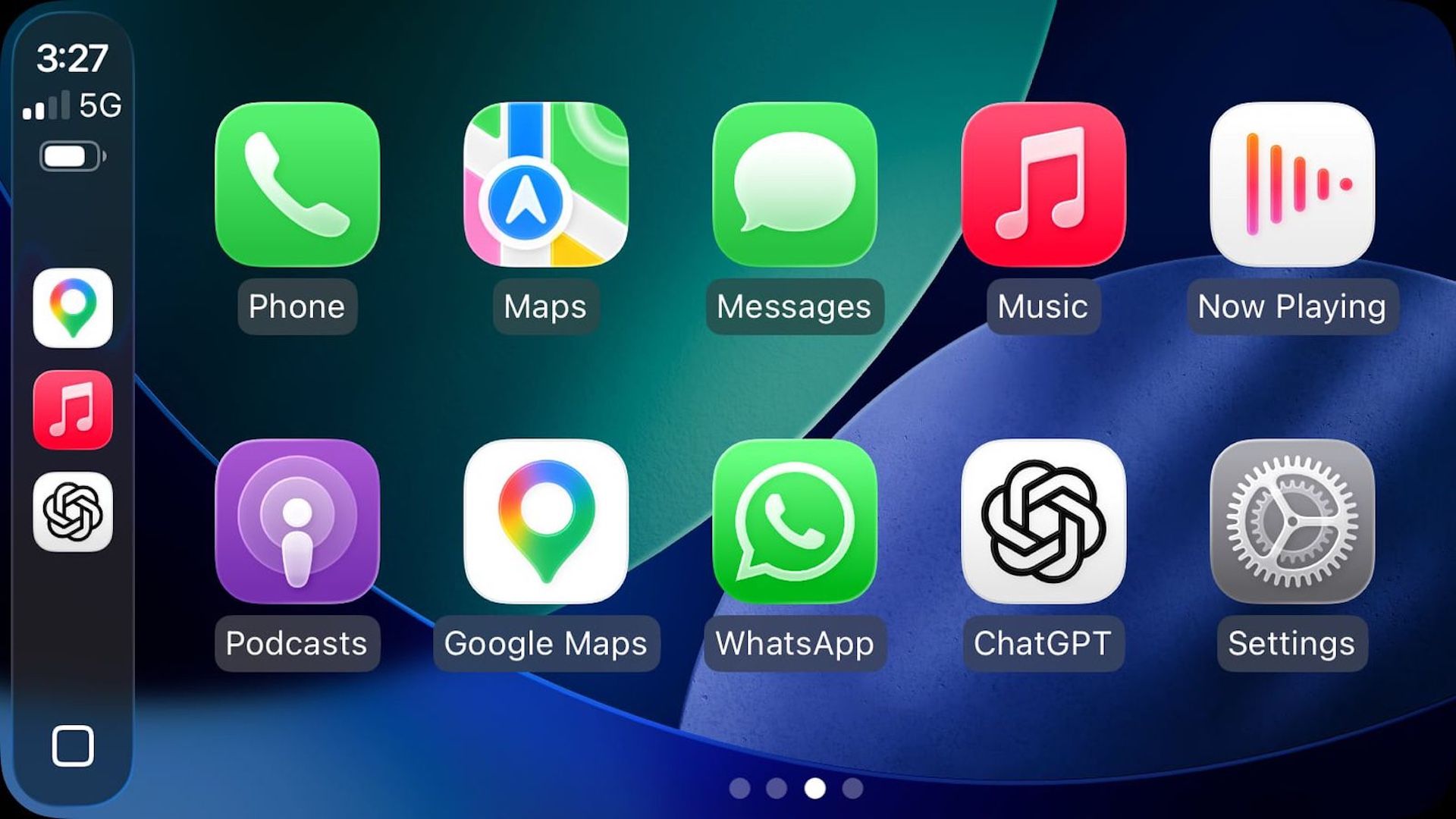
iOS 26.4 adds support for third-party, voice-based AI chatbots on Apple CarPlay and OpenAI updated ChatGPT to work with CarPlay, enabling voice-only conversations when the app is present on the iPhone. Apple restricts interactions to voice (no typing or reading of generated text), there is no wake word and ChatGPT cannot control the iPhone or vehicle settings, limiting functionality compared with built-in assistants. Useful for in-car queries and novice adoption of AI assistants in older vehicles, but this constrained rollout is unlikely to have meaningful near-term market impact.
This is a micro-step in a larger migration: smartphone-hosted, voice-only AI in the car increases iPhone lock‑in for drivers who prioritize information and conversational assistance while mobile. Expect a measurable uptick in CarPlay session depth rather than user counts — roughly a 5–10% increase in voice session minutes in the next 6–12 months would be enough to nudge Services monetization (in‑app subscriptions, data usage) and increase stickiness metrics that matter for upgrade cycles.
Manufacturers and Tier‑1 suppliers are the real second‑order battleground. OEMs that prefer to outsource intelligence to phones weaken the bargaining power of embedded infotainment vendors over the next 1–3 years; conversely, those OEMs that want richer, integrated AI will accelerate purchases of on‑board inference hardware (NVIDIA, Qualcomm), creating a dichotomy in supplier winners. I expect a two‑track market: (A) short‑term displacement of some software/service spend away from OEMs toward Apple/third‑party apps; (B) a re‑acceleration of capital spending on in‑car compute for premium segments within 24–36 months.
Regulatory and UX constraints are the primary tail risks and also the trigger points. Voice‑only, no wake‑word and manual app activation limit broad adoption — a single safety guidance update or an OEM partnership that permits deeper integration (e.g., media controls, settings API) would be a binary catalyst within quarters. Litigation or safety rules that further restrict in‑car AI could materially reduce adoption expectations and reprice winners quickly.
AI-powered research, real-time alerts, and portfolio analytics for institutional investors.
Overall Sentiment
mildly positive
Sentiment Score
0.20
Ticker Sentiment
