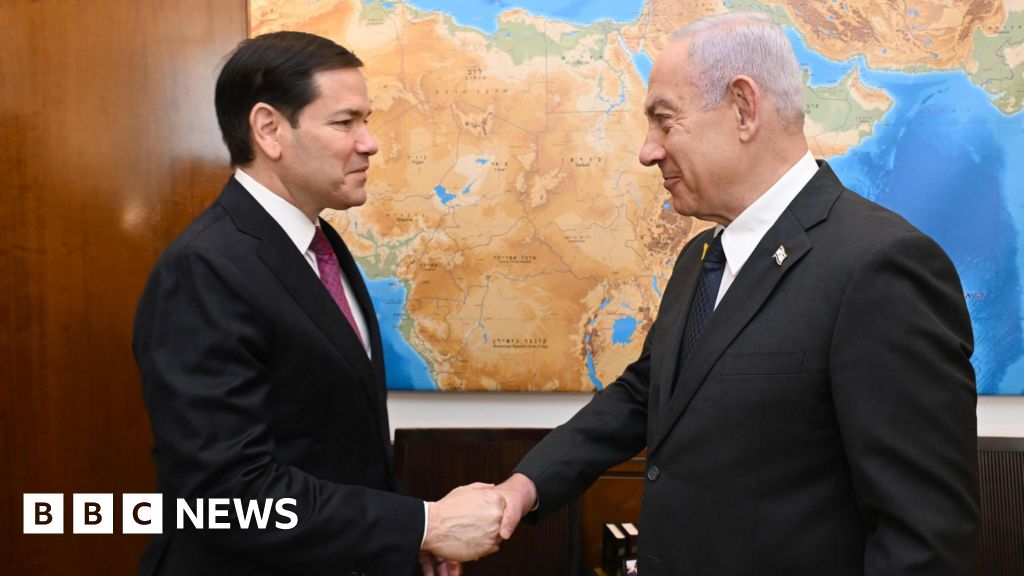
US Secretary of State Marco Rubio met Israeli Prime Minister Benjamin Netanyahu in Jerusalem to address the fallout from Israel's recent strike in Qatar, which targeted Hamas leaders and drew US condemnation, complicating regional mediation efforts. Discussions also encompassed Israel's ongoing military operations in Gaza City and West Bank settlement expansion. These talks occur ahead of an anticipated UN General Assembly meeting where several key US allies are expected to recognize a Palestinian state, signaling escalating geopolitical tensions and potential shifts in international diplomatic alignments concerning the Israeli-Palestinian conflict.
US-Israeli relations are facing significant strain following an Israeli strike in Qatar, a key US ally and regional mediator, which prompted public criticism from the US administration. The meeting between US Secretary of State Marco Rubio and Israeli Prime Minister Benjamin Netanyahu aims to manage this diplomatic fallout, though public gestures affirming a "durable" relationship are contradicted by their avoidance of direct questions on the incident. The situation is exacerbated by concurrent Israeli military actions, including plans to seize Gaza City and expand West Bank settlements, which escalate regional conflict. A critical forward-looking risk is the upcoming UN General Assembly meeting, where key US allies like the UK, France, and Canada are expected to recognize a Palestinian state. This potential diplomatic divergence signals a fracturing of the traditional Western consensus, pointing to a period of heightened geopolitical uncertainty and justifying the high market impact score of 0.75.
AI-powered research, real-time alerts, and portfolio analytics for institutional investors.
Request DemoOverall Sentiment
strongly negative
Sentiment Score
-0.65
