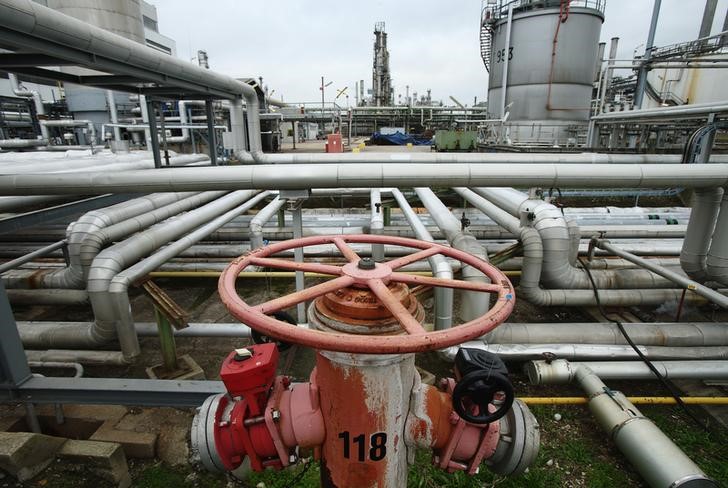
Israel is preparing strikes on Iranian energy facilities, likely within the next week, but is awaiting U.S. approval after President Trump issued a 48-hour ultimatum. Strikes on energy infrastructure could materially disrupt oil supply and prompt a spike in oil prices and a broad risk-off reaction across global equities, currencies and safe-haven assets. Monitor U.S. authorization and any operational developments over the next 48–168 hours as the decision will drive near-term market volatility.
A short lead-time shock to energy infrastructure typically creates an immediate risk-off impulse in equities and a concurrent, sharp re-pricing of oil and freight insurance. That dynamic pressures discretionary ad budgets and high-growth mobile monetization first (weeks), while capex decisions at hyperscalers and cloud providers reprice over the following 1–3 months as electricity and logistics costs snap higher.
Export controls and supply-chain throttles for high-end GPUs and server components are the high-convexity second-order effect few price in: constrained GPU availability amplifies the value of integrators that can quickly reallocate SKUs, source alternate boards, or deliver GPU-dense boxes on short notice. If GPU lead times extend by 4–12 weeks, OEMs with flexible procurement can capture mid-single-digit to low-double-digit pricing premia on booked orders and accelerate revenue recognition.
Adtech/mobile monetization platforms are the near-term losers — risk-off reduces CPMs and CPI, compressing revenue within 1–2 quarters; smaller, performance-driven ad networks see the fastest hits. Conversely, server/system integrators with visible enterprise/AI demand and inventory agility are asymmetric beneficiaries in a constrained GPU environment, as buyers trade immediate availability for higher unit economics.
Key catalysts and monitoring: volatility in Brent and freight insurance premia (watch $5–10 moves and WTI/Brent spread), GPU lead-time datapoints from NVDA and distributors, hyperscaler capex commentary, and 48–72 hour clustered event windows that will either produce sustained price gaps or rapid mean-reversion. Tail risk is escalation that pushes oil >$100/bbl for multiple weeks — that flips the thesis from tactical disruption to broad macro recession risk, which would hurt both names.
AI-powered research, real-time alerts, and portfolio analytics for institutional investors.
Request DemoOverall Sentiment
strongly negative
Sentiment Score
-0.80
Ticker Sentiment
