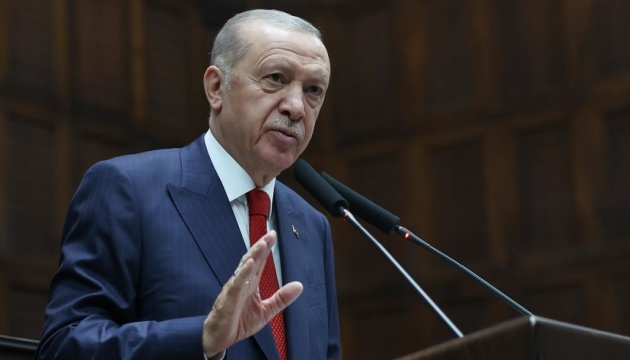
Turkish President Recep Tayyip Erdogan told Bloomberg in written responses that Turkey can speak directly to both Vladimir Putin and Volodymyr Zelensky and is prepared to make Istanbul the center for renewed Ukraine‑Russia peace talks when conditions permit. He emphasized Turkey’s balanced diplomatic contacts across Washington, Brussels, NATO and the UN and cited Ankara’s role in Palestinian‑Israeli mediation, noting a prior November proposal to resume negotiations in Istanbul. For investors, the comments underscore Turkey’s intent to act as a mediator and could, if formal talks materialize, reduce geopolitical tail risks, but they carry negligible immediate market impact.
Market structure: A credible Erdogan-led negotiation pathway would be a deflationary shock to war-risk premia: winners include energy consumers, agricultural exporters/importers (ADM, BG), Turkish assets (TUR, TRY) and carry/EM flows; losers are defense primes (LMT, NOC, RTX) and safe-havens (GLD, UST duration). If talks materially reduce perceived tail-risk within 1–3 months, expect 5–12% downside in Brent and 3–7% fall in gold; Russian asset recoveries (RUB +7–15%) are possible but remain sanction-constrained.
Risk assessment: Tail risks remain large — talks could be a false positive that provokes a renewed escalation or trigger secondary sanctions on facilitators; probability-weighted scenarios: 30% successful process (6–12 months), 50% stalled/slow diplomacy, 20% breakdown/escalation. Hidden dependencies: Turkish domestic politics (elections, NATO friction), Ukrainian battlefield dynamics, and US/EU leverage; any one can reverse market moves quickly. Key catalysts are joint statements from Moscow/Kyiv within 30–90 days and re-opening of Black Sea grain corridors.
Trade implications: Favor tactical short-energy and defense exposure via options and small long Turkey exposure: volatility will spike on headlines (intraday moves ±3–8%); use 3-month delta-based option spreads to limit capital and capture directional moves. Rotate modestly from duration into cyclical commodities/industrial names if negotiations confirm de-risking for >60 days. Maintain cash buffer for re-pricing on false starts.
Contrarian angles: Consensus assumes de-escalation equals immediate commodity weakness — underestimate persistence of sanction regimes and structural NATO demand for defense rearmament. If talks are symbolic only, defense names may re-rate higher; Turkish political risk could negate any short-term TUR rally. Historical parallels: 1990s localized ceasefires produced short-lived commodity dips, not permanent demand shifts — size positions accordingly.
AI-powered research, real-time alerts, and portfolio analytics for institutional investors.
Request DemoOverall Sentiment
neutral
Sentiment Score
0.10
