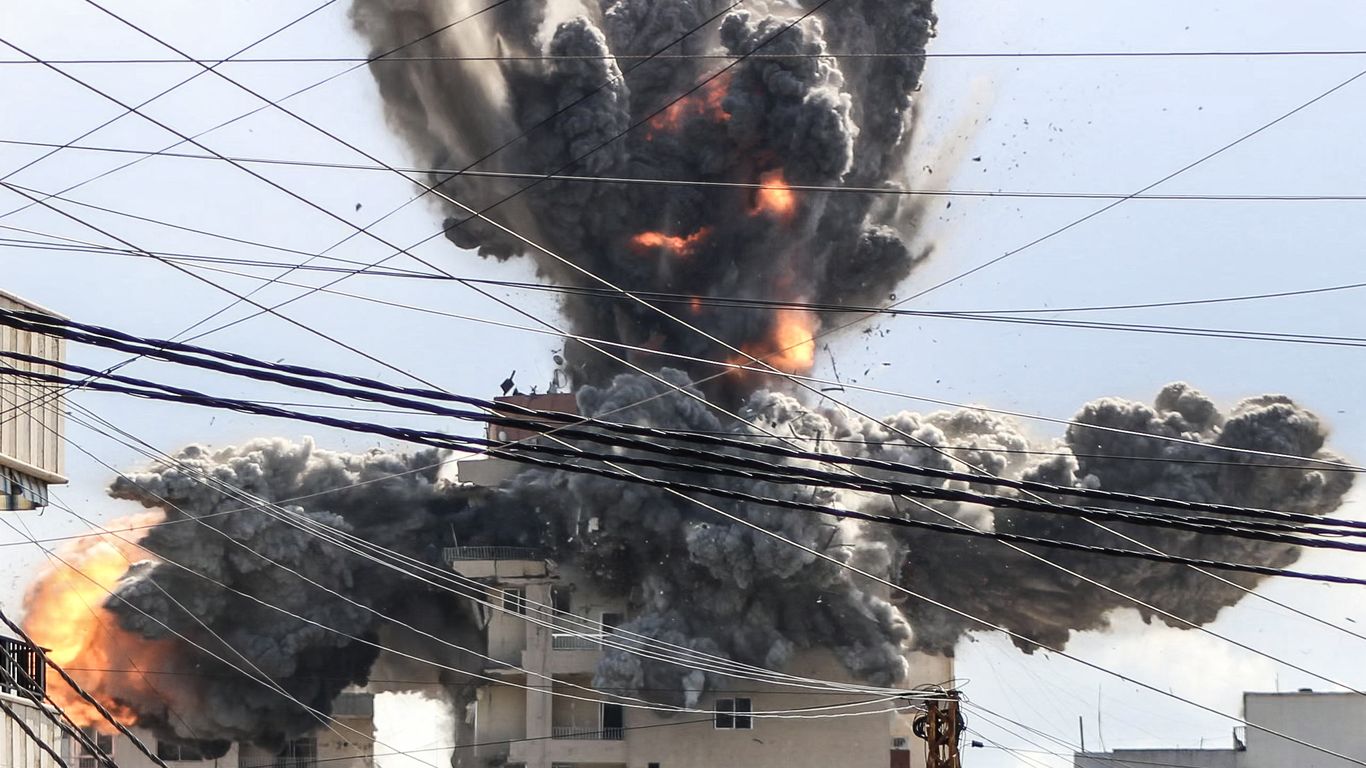
50 Israeli Air Force jets struck ~100 Hezbollah command centers using ~160 munitions in Lebanon, with Lebanese Red Cross reporting >80 killed and ~200 wounded. The U.S. clarified the U.S.-Iran ceasefire does not cover Israeli strikes in Lebanon, contradicting Pakistani and Iranian claims and raising the risk of renewed regional escalation. Iran has threatened to resume fighting and close the Strait of Hormuz, and reports say oil tankers were stopped, posing near-term downside risk to oil supply and global markets. Expect elevated volatility and a risk-off response in oil and regional asset prices until clarity on ceasefire scope and Lebanon operations is achieved.
This episode creates asymmetric short-term upside for energy and defense real-assets while imposing directional downside risk on regional trade/logistics and tourism flows. A limited, localized Lebanon flare that keeps the Strait of Hormuz open will likely lift Brent $5–$12/bbl for 1–6 weeks by rerouting risk premia onto crude and tanker rates, whereas a genuine closure would be a step-change shock (+$25+/bbl, supply-disruptive for 3+ months).
Defense names and munition suppliers get a persistent earnings tail if attrition rates of precision munitions increase; this is a multi-quarter revenue re-rate rather than a one-week spike, driven by inventory replenishment and congressionally visible procurement. Conversely, insurers, freight forwarders and Mediterranean short-sea carriers face elevated claims and rerouting costs that compress margin cyclicality over the next 1–3 quarters as rerouting and war-risk premiums become structural.
Probability-weighted positioning should therefore separate immediate, option-like plays for a spike from multi-month exposure to higher baseline defense spend. The key catalysts to track are: (1) credible Strait of Hormuz interdiction reports (hours–days), (2) sustained Lebanese front escalation beyond tactical strikes (weeks), and (3) diplomatic de-escalation/energy releases (2–8 weeks) that can unwind premia quickly; these define entry/exit windows and force tight risk-management.
AI-powered research, real-time alerts, and portfolio analytics for institutional investors.
Overall Sentiment
strongly negative
Sentiment Score
-0.62
