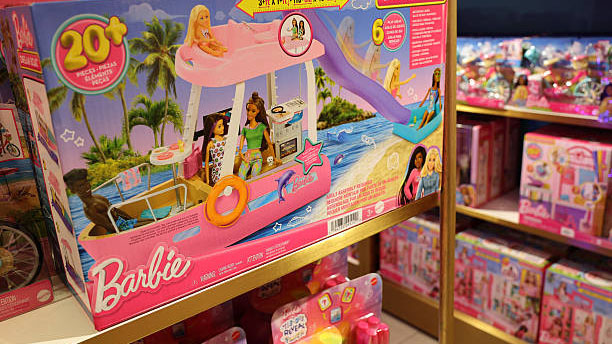
Mattel reported third-quarter sales and earnings that missed analyst estimates, leading to a decline in its shares. The toy manufacturer experienced a 6% drop in sales, primarily attributed to U.S. retailers delaying orders amid uncertainty surrounding Trump administration tariffs on goods from China, a major sourcing hub for the global toy industry. This highlights the direct impact of trade tensions on consumer goods companies' financial performance.
Mattel (MAT) reported a significant miss on its third-quarter sales and earnings estimates, leading to a decline in its shares and a strongly negative sentiment (-0.8). The company experienced a 6% year-over-year drop in sales, primarily attributed to U.S. retailers delaying orders. This immediate financial underperformance reflects direct operational challenges stemming from external macroeconomic factors.
The primary driver for the delayed orders and subsequent sales decline was heightened uncertainty surrounding Trump administration tariffs. Given that the global toy industry heavily relies on China for product sourcing, a key target of these tariffs, Mattel's supply chain and retail partnerships are directly exposed to trade policy risks. This highlights the direct impact of geopolitical trade tensions on consumer goods companies.
The situation underscores how macro-level trade policies can directly translate into tangible operational and financial challenges for specific sectors. The uncertainty not only impacts immediate sales but also introduces volatility into inventory management and future revenue projections for companies like Mattel, indicating a moderate market impact (0.6). This event serves as a critical indicator of how trade policy can disrupt established supply chains and consumer demand patterns.
AI-powered research, real-time alerts, and portfolio analytics for institutional investors.
Overall Sentiment
strongly negative
Sentiment Score
-0.75
Ticker Sentiment
