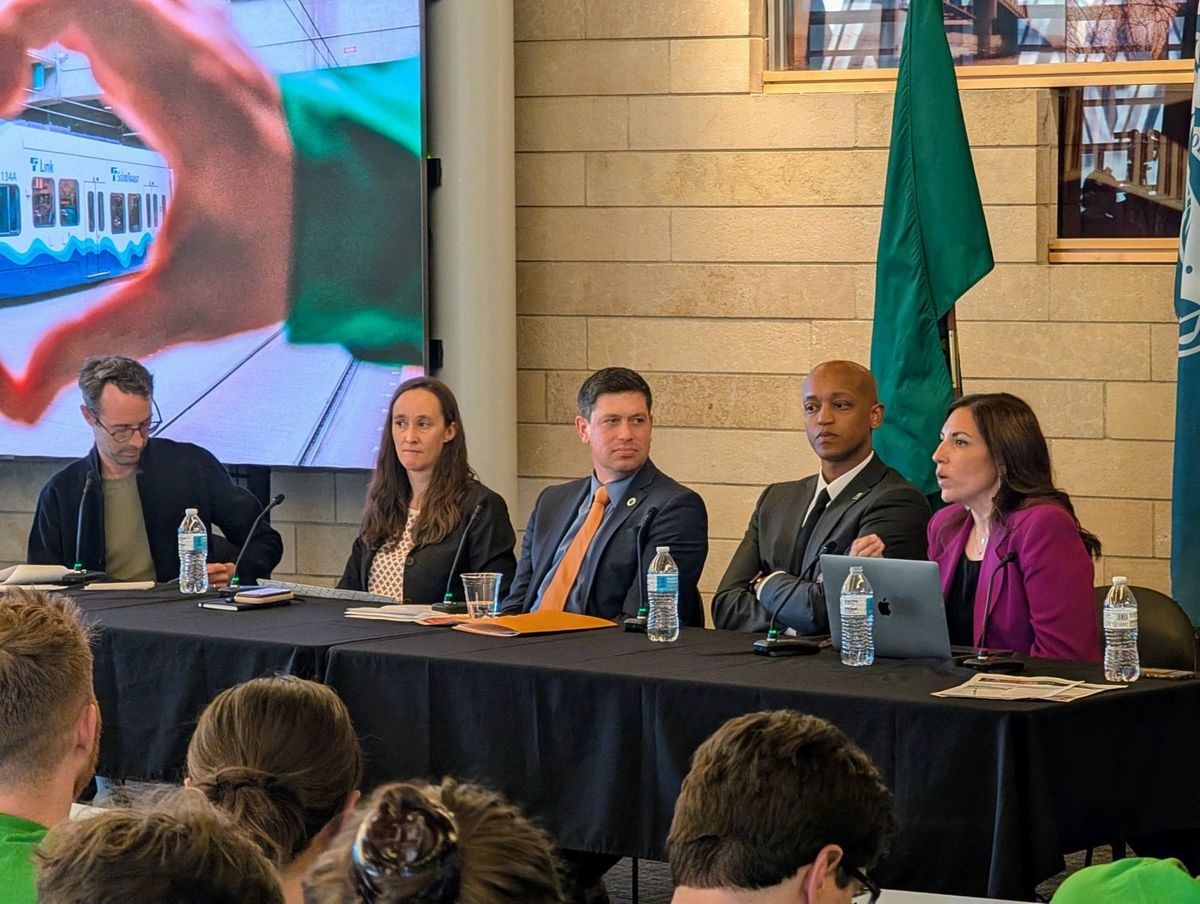
Sound Transit is weighing budget-balancing measures that could indefinitely defer some light rail stations and lines, while Seattle leaders are pushing to keep Ballard, West Seattle, and CID projects moving. Key financing levers include 75-year bonding, higher debt limits, grants, a possible rental car tax, and cost cuts, but the agency has not resolved the funding gap. The board is expected to vote this month on a revised long-term financial plan, leaving several projects in limbo.
The key market signal is not the political theater; it is that long-duration public works are being repriced for financing, not just engineering. That matters for Boeing because one of the few named project-level exposures is the South King County station tied to airport-adjacent rental activity, which creates a narrow but real local demand-support channel for BA’s regional footprint and supplier ecosystem. The bigger second-order effect is on municipal and agency credit: if the board leans into deferrals rather than revenue tools, near-term debt needs may shrink, but the franchise value of the system weakens, which can widen the spread premium demanded on future issuance.
The most important catalyst is legislative, not board-level: a 75-year bonding framework would be a step-function positive for project continuation, but the timing is months, not days, and the base case still looks binary. Until then, the agency is effectively choosing between political pain now and execution risk later; that usually creates a dead zone for contractors and adjacent transportation names because procurement decisions get pushed right while design work burns cash. If cost-cutting through slimmer station designs proves scalable, the optionality is asymmetric: even modest capex reductions can unlock projects that otherwise disappear from the 10-year plan.
The contrarian view is that the market may be underestimating the probability of a “salvageable but smaller” plan. The article’s biggest hidden positive is that the agency is still actively optimizing scope rather than canceling outright, which historically preserves the pipeline for engineering, tunneling, signaling, and civil contractors even when headlines sound negative. The downside tail is that protracted redesign and environmental rework can add 12-24 months and compound inflation, which would force a larger reset later and punish any names priced for near-term awards.
AI-powered research, real-time alerts, and portfolio analytics for institutional investors.
Request DemoOverall Sentiment
neutral
Sentiment Score
-0.10
Ticker Sentiment
