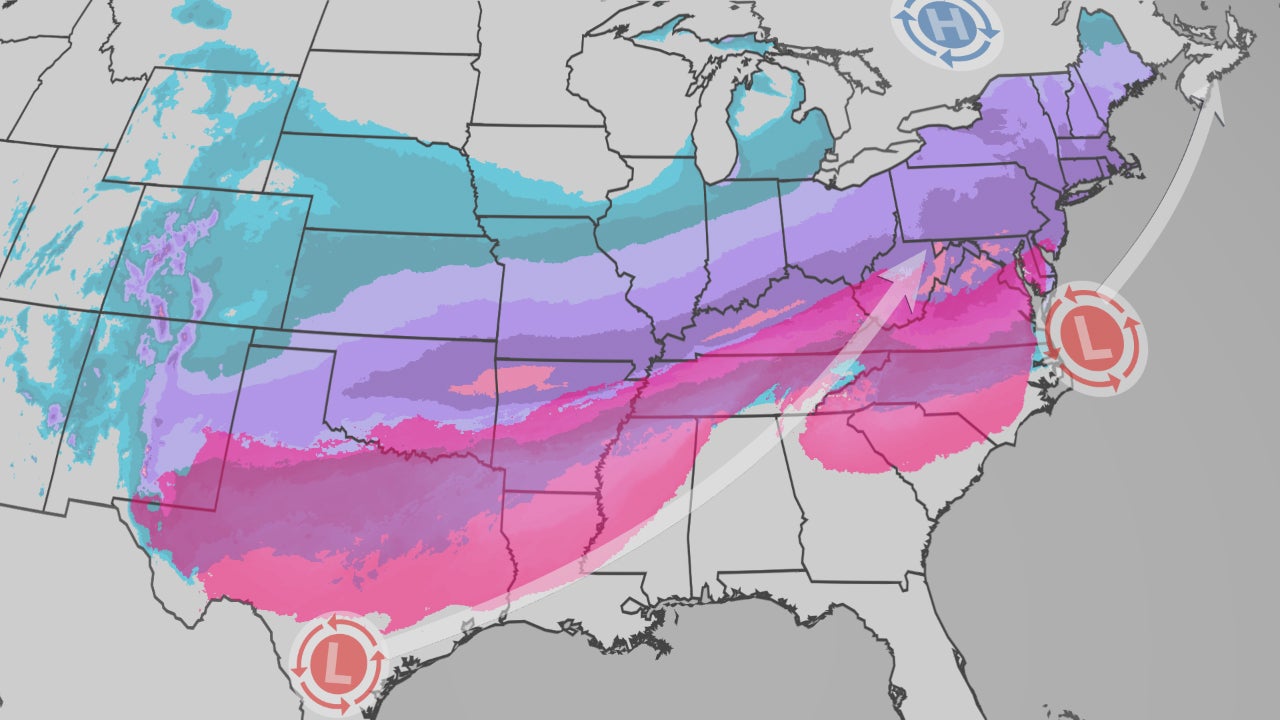
Winter Storm Fern is forecast to impact more than 230 million Americans across 33 states from Friday through Monday, bringing damaging ice (risk of ≥0.25 in. accumulations) and heavy snow (many areas 6–12+ inches, some 1-foot+) from the Southern Plains into the Northeast and potential nor'easter effects along the East Coast. Expect widespread hazardous travel, major flight delays/cancellations at East Coast hubs, multi-day power outages and tree damage that could stress regional utilities, raise near-term energy demand, disrupt logistics and create loss exposures for insurers and transport-sensitive firms.
Market structure: Winners include residential generator and home-improvement exposure (Generac GNRC, HD, LOW), road-salt/minerals (Compass Minerals CMP) and winter fuel/natural gas suppliers (long Henry Hub/UNG) as near-term heating demand and outage-driven purchases spike. Losers are highly schedule-dependent transport & logistics (AAL, UAL, DAL, UPS, FDX) and regional retailers/venues in affected corridors; P&C insurers and municipal utilities face elevated claim/capex risk where >0.25" ice accumulations and widespread outages occur.
Risk assessment: Tail risks include multi-day outages across dense markets (DC/Philly/NYC) causing concentrated insured losses and sustained generator shortages that push retail sell-through beyond 2-4 weeks; a northward warm push could reduce freezing-rain zones and blunt impacts (binary within 48–72h). Immediate window (0–7 days) sees travel/airline revenue hits and gas/propane demand shock; weeks–months affects utility O&M and insurer reserves; quarters could see capex/price-case implications for regulated utilities.
Trade implications: Tactical plays favor 1–2% long GNRC and 1–2% long CMP sized to portfolio for 1–3 month horizons; buy a 1–3 month call spread on natural gas (e.g., UNG or Henry Hub futures) sized 1–2% to capture winter-price spikes, cap upside by selling higher strike. Short 0.5–1% in airlines/logistics via puts (AAL/UAL/FDX) with 2–4 week expiries targeting >10% realized downside from cancellations; pair trade long regulated utility (DUK or SO) 1% vs short airline 1% to capture relative safe-haven recovery.
Contrarian angles: Consensus may over-penalize utilities—regulated returns permit recovery via rate adjustments, making selective long utility exposure attractive post-storm (buy on >3% pullback). The market may underprice generator/aftermarket demand if outages last >48 hours; conversely, a warm intrusion or rapid grid restoration would rapidly reverse airline/short-term volatility trades, so size and option structures should be capped and delta-hedged where possible.
AI-powered research, real-time alerts, and portfolio analytics for institutional investors.
Request DemoOverall Sentiment
moderately negative
Sentiment Score
-0.40
