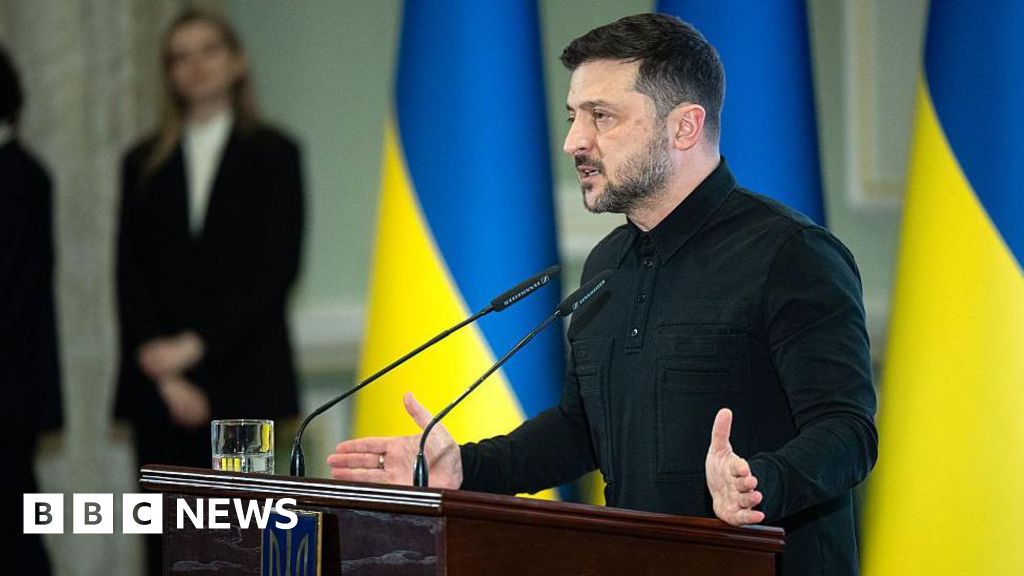
Ukraine and US envoys have advanced a 20-point peace framework that contemplates Ukrainian withdrawals from parts of Donetsk into demilitarised or 'free economic' zones policed by Ukraine, backed by security guarantees from the US, NATO and European states. Key provisions include allowance for a peacetime Ukrainian military of up to 800,000, proposed joint arrangements around the Russian-occupied Zaporizhzhia nuclear plant (which Kyiv rejects), a plan for a roughly $200bn US‑/EU-backed investment fund, and requirements for a referendum and elections after any deal; implementation remains uncertain given likely Russian objections and ongoing negotiations.
Market structure: A negotiated compromise (demilitarised/free economic zones) lowers immediate tail of full-scale escalation but preserves chronic supply-side risk — sustaining elevated defense procurement, energy security spending and insurance premia. Expect defense primes (LMT, NOC, RTX) to see procurement upside of +10–20% revenue tail over 12–24 months if guarantees and rearmament accelerate; European gas/oil price volatility remains +20–40% skew on downside/upside shocks. Cross-assets: safe-haven bid for USD, gold (GLD), long-dated bunds/USTs on flight-to-quality; euro and peripheral EM assets stay vulnerable.
Risk assessment: Tail scenarios include (a) Russia rejects deal → rapid oil/gas shock (Brent +$20 within 30 days) and widescale sanctions; (b) “frozen” settlement → protracted low-intensity conflict, elevated defense capex but lower near-term commodity spikes. Near-term (days) volatility likely; short-term (weeks–months) market repricing around negotiations and referendum dates; long-term (quarters–years) reallocation to security/energy resilience. Hidden dependencies: US political incentives (Trump administration stance) and conditionality of the $200bn investment fund could accelerate or stall capital flows.
Trade implications: Tactical long exposure to defense names and gold, directional long gas exposure; implement volatility plays rather than naked directional risk — e.g., 6–12 month call spreads on LMT/NOC and 3–6 month straddles on natural gas. Pair trades: long defense vs short Euro/Cyclical Europe to express security premium versus macro weakness. Time decisions to negotiation cadence: act within 2–6 weeks if no tangible Russian concession; unwind or hedge sharply if a credible withdrawal timetable appears within 30–60 days.
Contrarian angles: Consensus assumes either peace or war; miss is a prolonged frozen conflict (Minsk-style) that boosts steady defense spending and infrastructure rebuilds for years — favor long-term defense and select infrastructure over cyclicals. Reaction may be underdone in defense equities and overdone in EU banks/consumer cyclicals; if a deal is signed within 60 days expect 10–25% pullback in defense names — use options to avoid selling into that volatility. Historical parallel: post-Minsk produced multi-year elevated defense budgets, not normalization.
AI-powered research, real-time alerts, and portfolio analytics for institutional investors.
Request DemoOverall Sentiment
neutral
Sentiment Score
0.05
