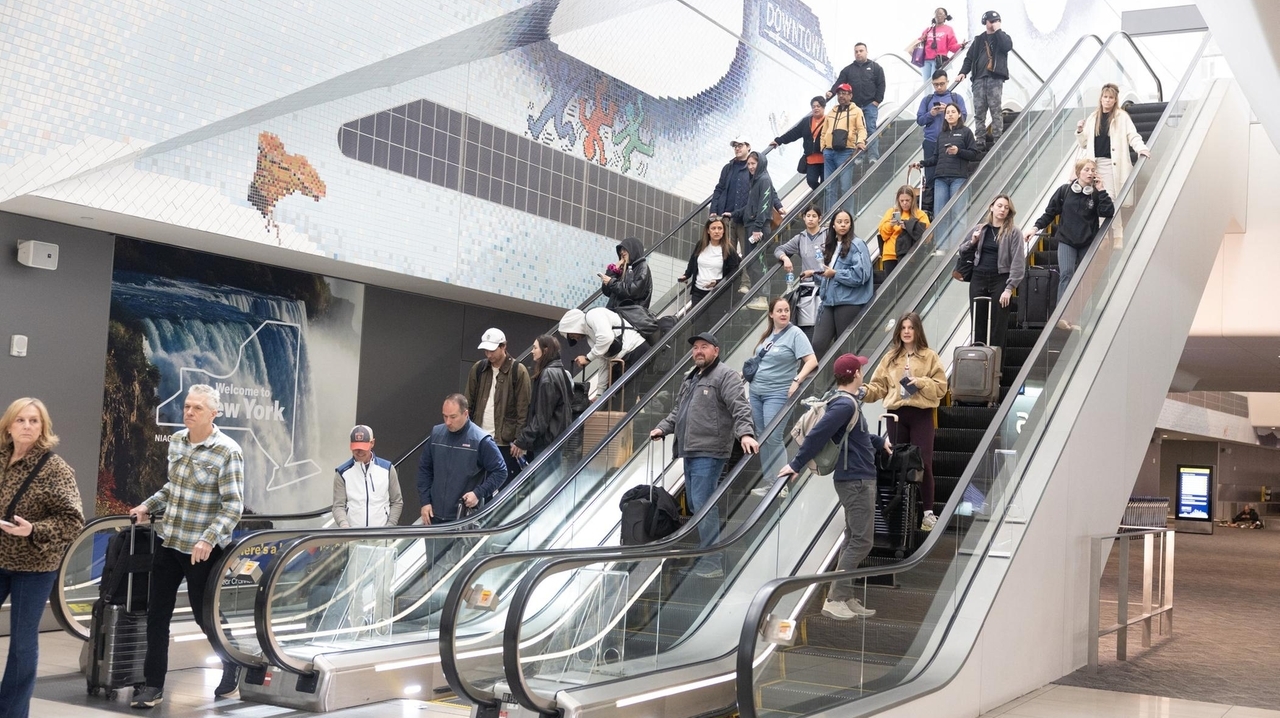
About 50,000 TSA agents have been unpaid since Feb. 14, resulting in longer security lines, increased sick calls and nearly 500 departures; the White House said TSA pay could resume as soon as Monday, which may alleviate staffing pressures. LaGuardia's runway reopened after an on-runway collision that killed the Air Canada Express pilot and co-pilot; Port Authority is awaiting NTSB findings before changing procedures. JFK, LaGuardia and Newark warned security wait times are "significantly longer than normal" during a high-volume travel week (Passover/Easter/spring break), and travelers are advised to arrive several hours early, creating operational risks for carriers and airports.
Operational uncertainty at checkpoints is a demand-side shock concentrated over days-weeks but with measurable supply-side spillovers lasting quarters. Longer pre-flight dwell times push material volume into non-aeronautical buckets — parking, TNC/ride-hailing, F&B and rental cars — boosting per-passenger ancillary revenue but also increasing gate occupancy and knock-on delay risk that raises airline turn costs (crew, fuel burn during taxi, rebooking).
A staffing/payroll confidence inflection is the key catalyst: if payment certainty becomes binary (guaranteed vs. perceived at-risk), officer attendance and overtime behavior will change quickly; the market for private or outsourced security services will expand only if airport authorities decide to lock in capacity through multi-quarter contracts, shifting cost from variable to fixed. Political resolution that permanently increases DHS budgets would flip the story — higher labor cost base for carriers and airports for 6–18 months, material to airline margins but supportive of security vendors.
Second-order effects favor players with flexible capacity or pricing power: ground transportation and rental fleets can capture incremental demand immediately with little lead time, while legacy airlines face margin pressure via irregular operations and reputational hit accelerating demand elasticity. Watch short-term volatility windows (next 2–6 weeks around peak travel days) for outsized P&L swings and the 3–12 month legislative calendar for structural margin impacts from funding or labor rule changes.
AI-powered research, real-time alerts, and portfolio analytics for institutional investors.
Request DemoOverall Sentiment
mildly negative
Sentiment Score
-0.25
