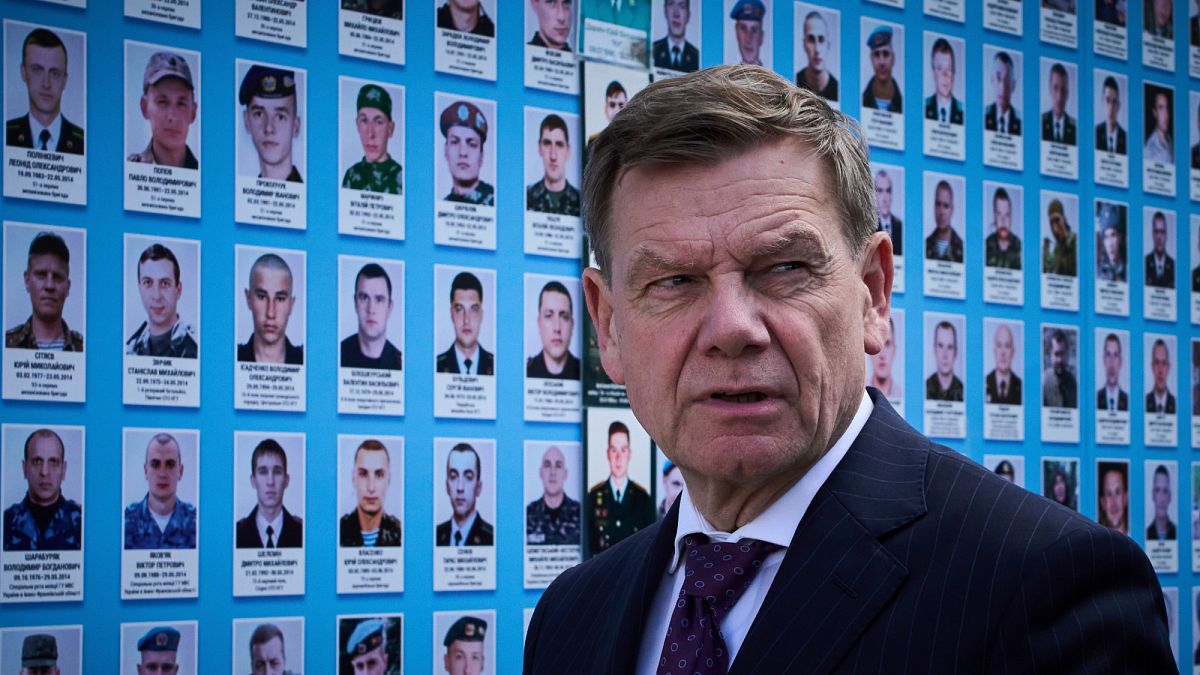
German Foreign Minister Johann Wadephul visited Kyiv, reaffirming Germany's commitment as Ukraine's second-largest military backer with pledges of continued modern air defense, weapons, and economic aid. This visit, which included defense industry representatives, underscores Germany's critical role amid uncertainty over future U.S. support, even as Berlin continues to withhold Taurus long-range missiles while Russia intensifies its offensive and rejects genuine peace negotiations.
Germany is reinforcing its position as Ukraine's primary European military and economic supporter, a role underscored by Foreign Minister Johann Wadephul's visit to Kyiv alongside defense industry representatives. This commitment is significant given the stated uncertainty surrounding future U.S. aid under a potential Trump presidency. While Germany pledges continued provision of modern air defense and other weaponry, its refusal to supply Taurus long-range missiles indicates a carefully calibrated strategy aimed at avoiding direct escalation with Russia. Instead, Germany's pledge to help Ukraine develop its own long-range missile systems suggests a strategic pivot towards fostering Ukrainian defense self-sufficiency. This diplomatic and industrial support occurs against a grim backdrop of an intensifying Russian offensive, described as a "grinding war of attrition" and highlighted by the recent "biggest combined aerial attack," with Russian President Putin reportedly rejecting negotiations in favor of seeking Ukraine's capitulation.
AI-powered research, real-time alerts, and portfolio analytics for institutional investors.
Request DemoOverall Sentiment
mixed
Sentiment Score
-0.10
