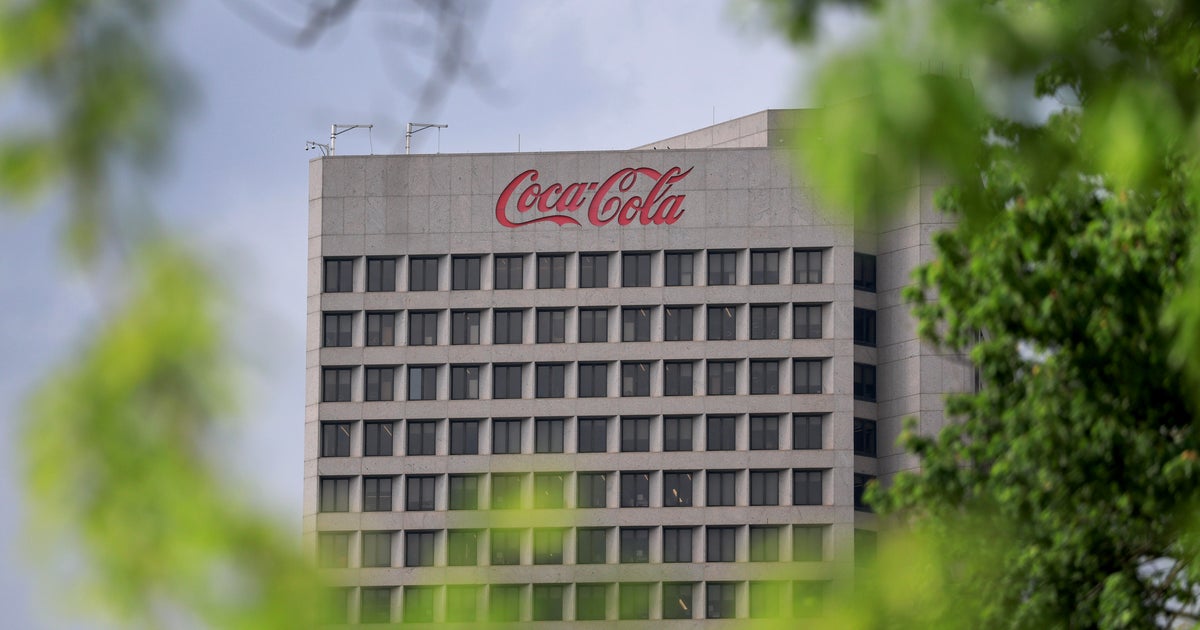
The Coca‑Cola Company notified Georgia workforce officials it will eliminate about 75 positions at its Atlanta headquarters beginning on or about Feb. 28, 2026, as part of a broader 2025 reorganization intended to reshape the workforce for the next phase of growth. The reductions will be executed in phased waves, are expected to be permanent with no bumping rights or union representation, and the company has provided more than 60 days' notice while stating it is not conceding WARN Act applicability. The action is limited in scale relative to Coca‑Cola’s global footprint but signals ongoing cost-optimization and operational restructuring that could modestly affect near-term workforce costs and execution at corporate functions.
Market Structure: The announced ~75-headcount cut (~$12–$20m run-rate savings assuming $160–$270k fully-loaded per role) is immaterial to Coca‑Cola’s ~>$40B revenue base but signals a corporate push into margin optimization and potential reinvestment or buyback funding. Direct winners are long-term shareholders if cuts presage broader cost programs or capital return; competitors (PEP) see no immediate volumetric advantage, so market share and pricing power are unlikely to shift materially in the next 1–2 years. Cross-asset impact is muted: KO credit spreads should remain tight, implied equity volatility may tick +10–20% intraday on headlines, and FX/commodity exposure is negligible from this action alone.
Risk Assessment: Tail risks include escalation to larger restructuring (200–500 FTEs) or a mismanaged program that damages brand/marketing execution, and potential WARN-related litigation costing low‑single-digit millions; probability <10% but high governance/PR impact. Immediate (days) impact is sentiment-driven; short-term (weeks–months) depends on management follow-through and disclosure of broader headcount plans; long-term (quarters) depends on whether savings are redeployed to growth or buybacks. Hidden dependencies: cuts at HQ can slow product launches/field support, creating a 3–6 month sales headwind in certain markets.
Trade Implications: Tactical long bias on KO (ticker KO) vs broad market is reasonable: establish a modest 1–2% portfolio position targeting 10–15% upside over 6–12 months if management converts cuts into margin improvement and/or increases buybacks; use a -6% stop loss. Consider a 3–6 month call spread (buy KO Jun‑2026 65C / sell 75C) sized to risk 0.5–1.0% of portfolio to exploit low implied vol and limited fundamental risk. Pair trade: long KO 2% / short PEP 1.5% for 3–9 months; unwind if KO underperforms PEP by >5% in 60 days.
Contrarian Angles: Consensus treats this as trivial; the market may underprice potential cascading restructuring that could deliver 50–100 bps EBIT margin tailwinds if scaled companywide — a scenario that would justify 8–12% re-rating. Conversely, if cuts blunt innovation/field execution, a delayed revenue hit could emerge 3–9 months out, an outcome markets often miss until quarterly results. Historical parallels (large caps streamlining HQ staff) show variable outcomes; require management proof points (quarterly cost targets, repurchase cadence) within 2–3 quarters to validate bullish positioning.
AI-powered research, real-time alerts, and portfolio analytics for institutional investors.
Request DemoOverall Sentiment
mildly negative
Sentiment Score
-0.25
Ticker Sentiment
