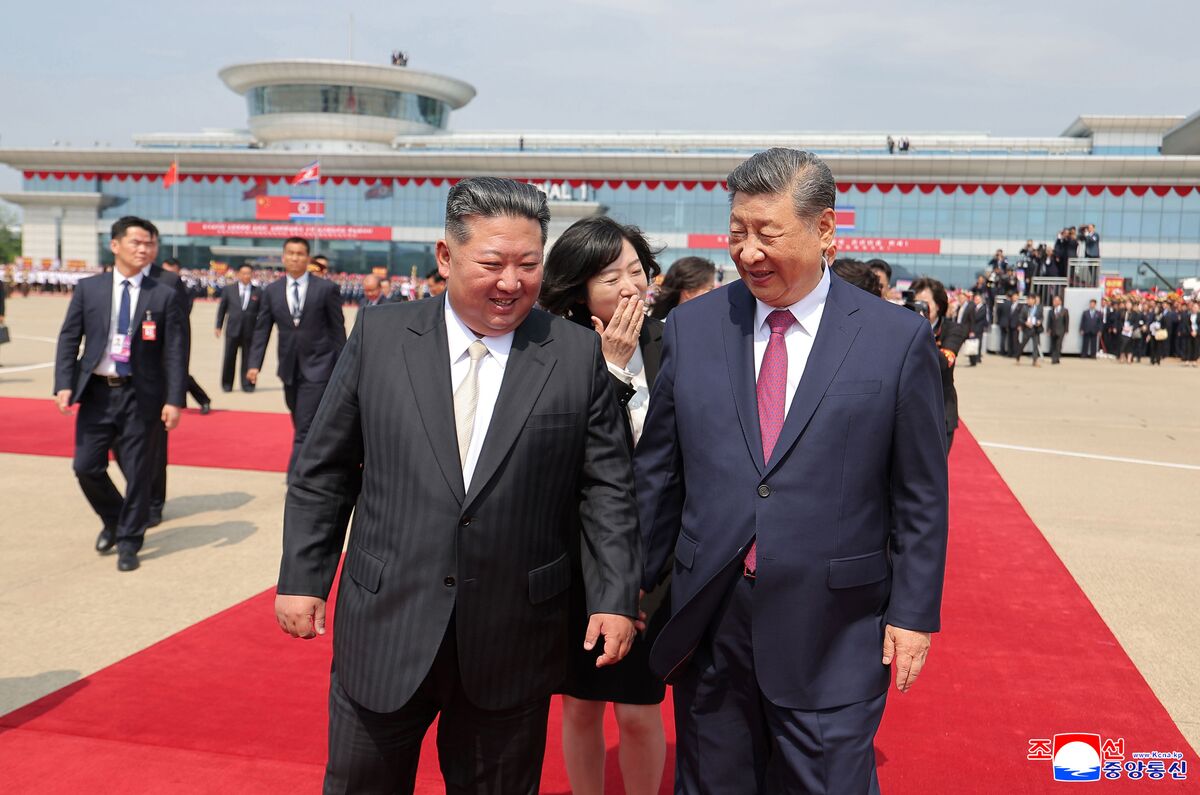
The US and Japan reiterated their commitment to North Korea's denuclearization after China appeared to downplay the issue and Russia called it a "closed issue." The statement underscores continued geopolitical friction in Northeast Asia, but the article contains no new policy action or market-moving escalation. Near-term market impact is limited, though defense and regional risk sentiment may remain supported.
The market implication is not a near-term weapons shock; it is a gradual repricing of security expectations around Northeast Asia. The bigger second-order effect is on defense procurement, missile defense, undersea surveillance, and hardening of critical infrastructure in Japan and South Korea, because a sustained diplomatic stalemate tends to push budgets toward deterrence rather than disarmament. That creates a slow-burn tailwind for primes with Asia exposure and for niche suppliers tied to interceptors, sensors, command-and-control, and secure communications. The more interesting trade is on sanctions and export-control intensity. If the US, Japan, and their allies conclude denuclearization is stagnant, the policy response usually shifts from negotiation to tightening enforcement around dual-use goods, maritime interdiction, and financial plumbing. That can indirectly support compliance software, cargo screening, and logistics verification names, while increasing friction for shipping/industrial firms with Northeast Asia trade exposure if screening and documentation burdens rise. The contrarian read is that the headline may be overstating policy divergence: when major powers publicly disagree on status, it often reflects bargaining posture rather than a true step-change in risk. The real catalyst to watch is not rhetoric but any move toward alliance exercises, missile-defense funding, or new export-control packages over the next 1-3 quarters; absent that, the market will likely fade the story. The downside risk to the thesis is a rapid diplomatic reset or a broader security crisis elsewhere that crowds out Northeast Asia funding, which would delay budget allocation rather than eliminate it.
AI-powered research, real-time alerts, and portfolio analytics for institutional investors.
Request DemoOverall Sentiment
neutral
Sentiment Score
-0.05
