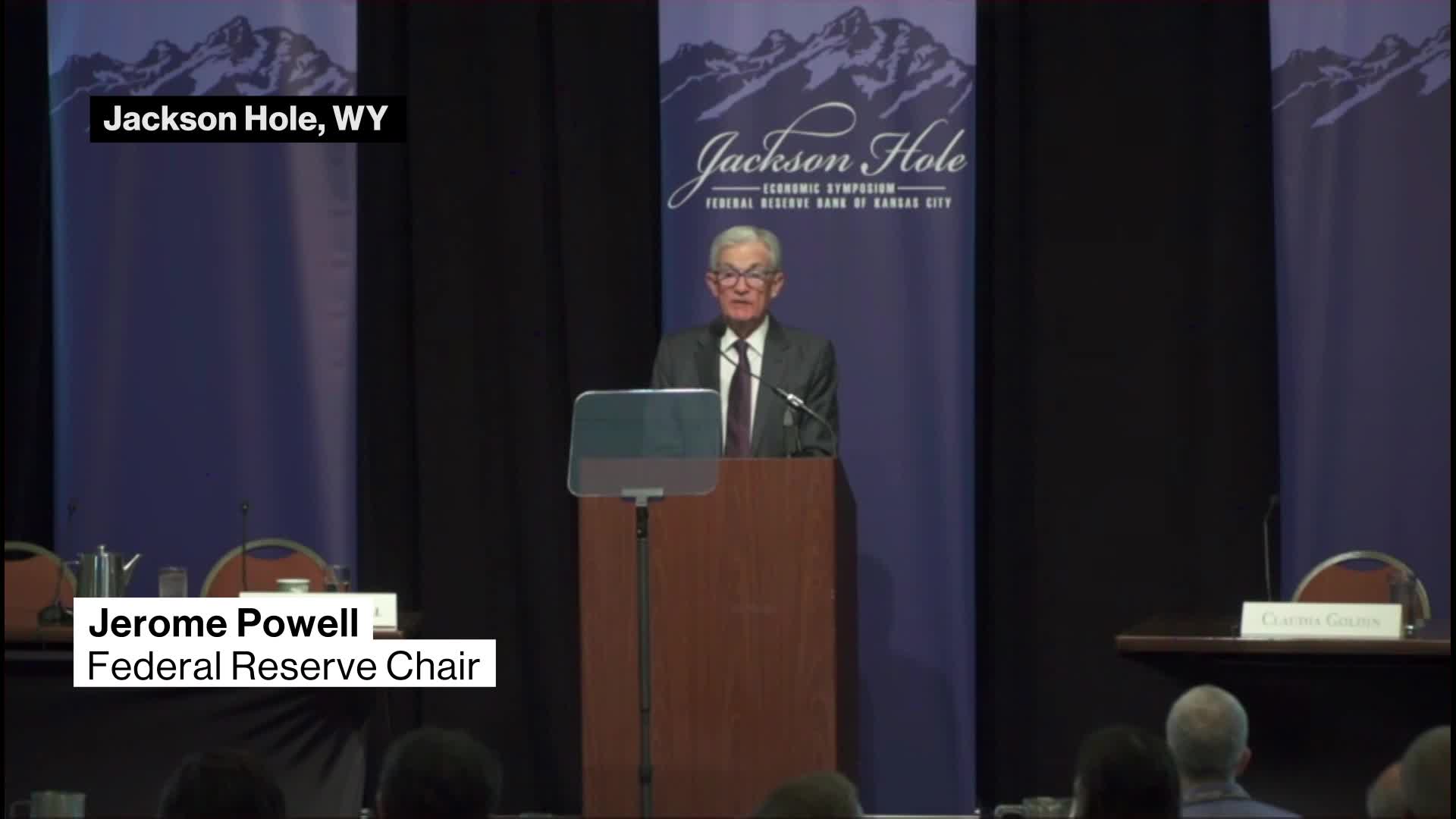
Federal Reserve Chair Jerome Powell, speaking at the Jackson Hole conference, stated that President Trump's tariffs are clearly impacting consumer prices, contributing to inflation that has persisted above the Fed's target for over four years. Powell emphasized that this elevated inflation remains a significant concern for households and businesses, underscoring its prominence in the current economic outlook.
Federal Reserve Chair Jerome Powell's statements from the Jackson Hole conference explicitly connect US tariff policy to elevated consumer prices, adding a critical dimension to the inflation outlook. By noting that inflation has persisted above the central bank's target for over four years and remains a "prominent concern," Powell reinforces the Fed's primary mandate of price stability. The direct attribution of price pressures to tariffs suggests that the sources of inflation are complex and include supply-side factors beyond the Fed's direct control. This cautious tone, reflected in the moderately negative sentiment score, implies that the path for monetary policy may remain restrictive, as the Fed must contend with inflationary drivers originating from fiscal and trade policy, which could complicate efforts to bring inflation back to target without impacting economic activity.
AI-powered research, real-time alerts, and portfolio analytics for institutional investors.
Request DemoOverall Sentiment
moderately negative
Sentiment Score
-0.60
