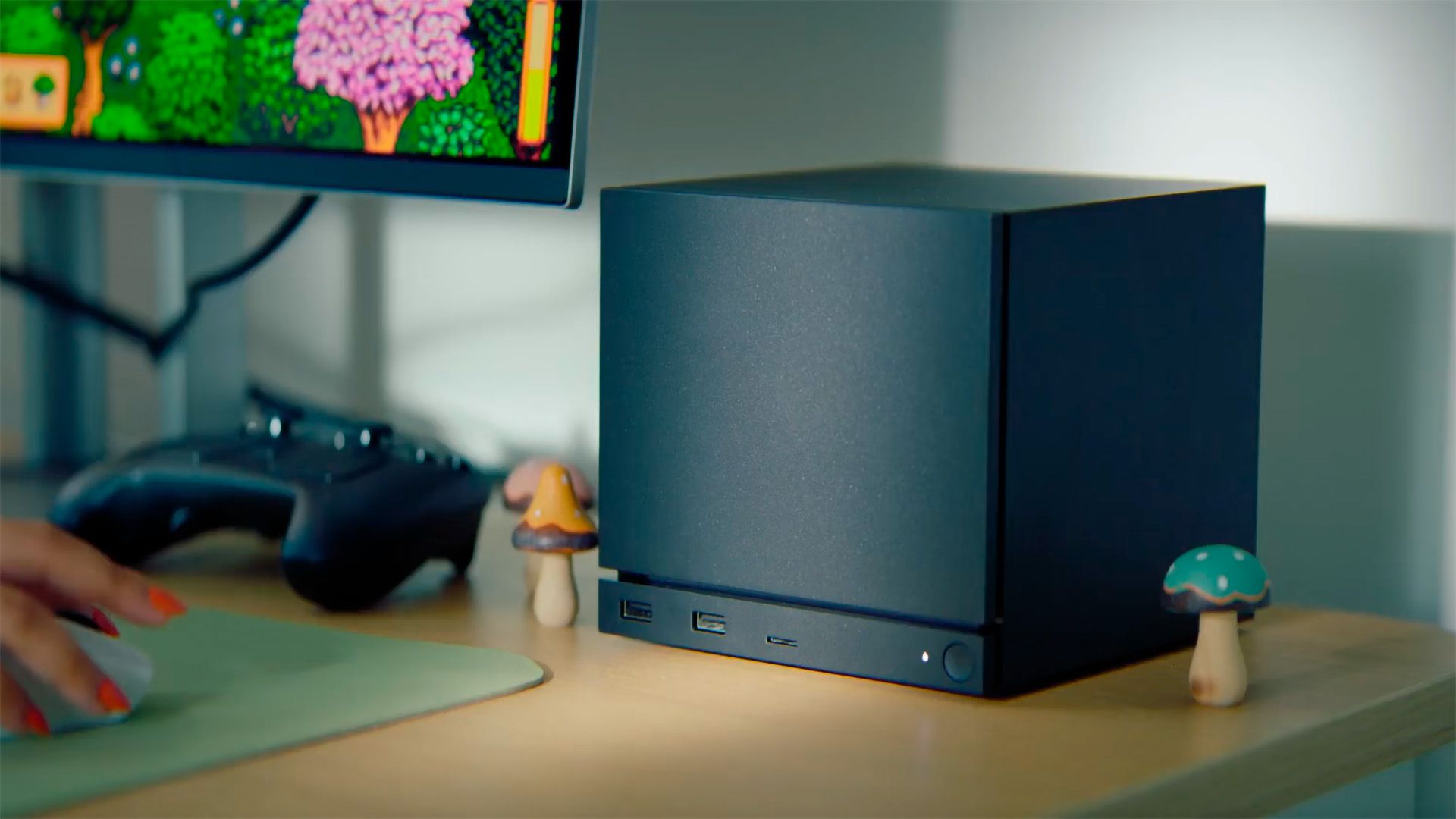
Czech retailers Smarty and Alza have leaked Steam Machine prices in site source code, listing a 512GB SKU at $950 and a 1TB SKU at $1,070 (pre-tax); Smarty typically applies roughly a 15% markup versus Valve, implying possible U.S. retail equivalents near $826 and $930. The reported pricing would position the Steam Machine materially above current consoles (up to ~50% pricier than a PS5 and ~27% above an Xbox Series X), and Tom’s Hardware cites a global NAND shortage as a key driver of elevated storage and memory costs that may force Valve to set higher, PC-like pricing ahead of a possible Q1 2026 launch.
Market structure: A high, non-subsidized Steam Machine price implies winners are component suppliers (NAND/DRAM flash manufacturers and GPU/IP licensors) because ASPs rise rather than OEMs absorbing losses. Losers are mid-tier console/retail channels that compete on price-sensitive volume; a $800–$1,000+ SKU compresses TAM for price-conscious buyers and boosts used/cloud gaming elasticity. Cross-assets: persistent NAND tightness supports MU/MQ/TWD/KRW flows, puts mild upward pressure on CPI components and nominal yields over quarters, and increases implied vol in semiconductor equities.
Risk assessment: Key tail risks are a Valve delay/cancellation (drop in hardware orders), rapid NAND destocking (spot NAND falls >15% in 60 days), or consumers rejecting a >$900 console leading to inventory markdowns. Immediate (days-weeks): headline-driven volatility around leaked listings; short-term (0–3 months): retail preorders and inventory signals; long-term (3–12 months): component pricing normalization or new console cycles. Hidden dependencies include retailer markups, regional VAT effects, and Valve’s choice of SoC (AMD vs NVIDIA) which shifts supplier winners.
Trade implications: Favor long exposure to NAND/SSD suppliers (Micron MU, Western Digital WDC, SK Hynix 000660.KS) via defined-risk options/spreads with 3–9 month horizons; buy tactical calls on GPU beneficiaries (NVDA, AMD) ahead of Q1 2026 launch windows. Hedge with small short positions in consumer discretionary retailers (Best Buy BBY) or buy puts if revenues/guidance weaken. Use triggers: close or reduce memory longs if spot NAND down >15% over two months or if Valve confirms sub-$800 MSRP.
Contrarian angles: Consensus assumes premium pricing kills volume; instead higher ASPs can raise component revenue even with flat units — a scenario underappreciated by the market. Memory equities may be underpriced for a multi-quarter tightness cycle similar to 2016–2017 NAND run; conversely, a durable shift to cloud/streaming gaming could be the structural threat. Monitor Valve’s official pricing launch (target Q1 2026) and OEM SoC announcements as primary circuit breakers for these themes.
AI-powered research, real-time alerts, and portfolio analytics for institutional investors.
Request DemoOverall Sentiment
moderately negative
Sentiment Score
-0.30
