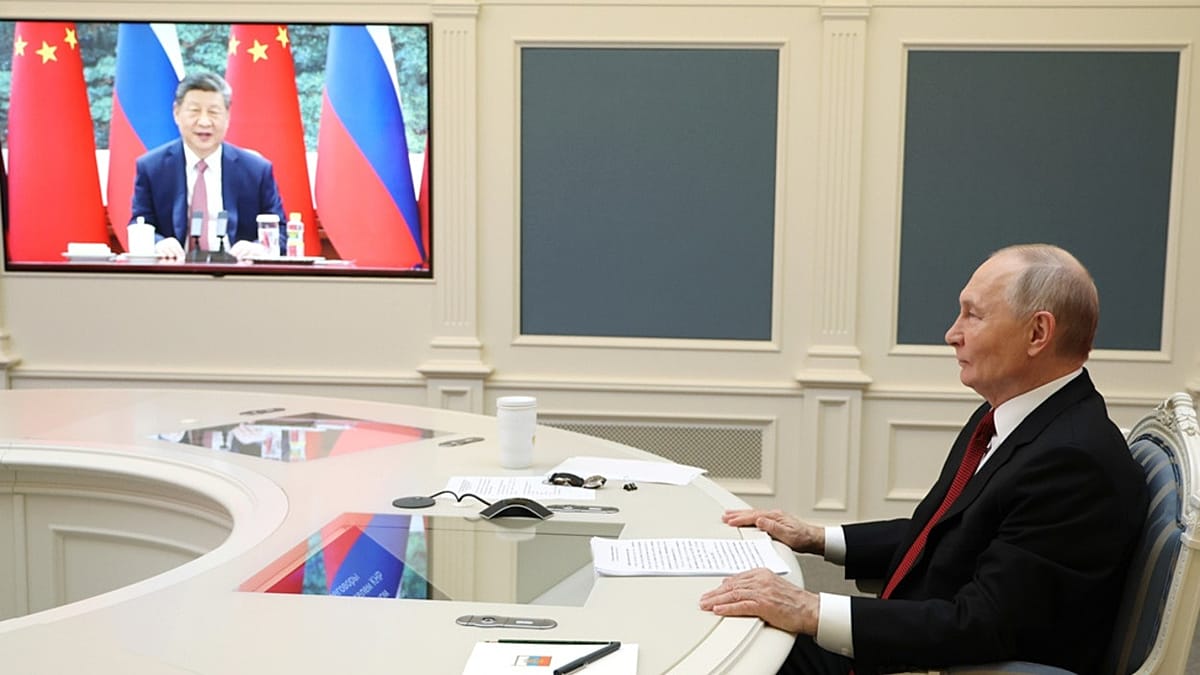
Chinese President Xi Jinping and Russian President Vladimir Putin held a video call to deepen economic and strategic cooperation, discuss relations with the United States and regional tensions (Iran, Venezuela, Cuba), and coordinate on sovereignty and security issues. Putin accepted an invitation to visit China in the first half of the year and will attend APEC in Shenzhen in November; the leaders noted Russia’s desire for relief from Western sanctions and raised concerns about the unresolved request for a one-year New START extension. The call — which preceded a separate Xi-Trump phone conversation — signals closer Beijing-Moscow alignment that could influence geopolitical risk premiums and trade flows for investors with exposure to Russia and China.
Market structure: Short-term winners are defense contractors (LMT, RTX, GD) and commodity exporters (XOM, CVX, BHP) as closer China–Russia ties raise geopolitical risk premia and keep energy/metal supply concerns alive; losers include banks and logistics firms exposed to secondary-sanctions leakage and Russian trade corridors. Expect a 5–15% re‑rating tailwind for defense and select commodity names over 3–12 months if diplomatic alignment persists; pricing power for strategic metals and oil tightens versus 2023 baselines.
Risk assessment: Tail risks include large-scale escalation in Ukraine or US secondary sanctions on Chinese counterparties (probability ~10–25% over 12 months) which would spike volatility and EM spreads; loss of New START or military incidents would be <10% but catastrophic. Immediate (days) moves should be contained; weeks–months see sector repricing; quarters–years could see structural shifts (reshoring, supply‑chain bifurcation).
Trade implications: Tactical trades favor 2–3% long positions in defense ETFs/blue-chips and 1–3% exposure to energy and gold as hedges; use 3–6 month call spreads to control cost and target asymmetric upside (10–20%). Rotate out of EU banks and logistics names with Russia exposure; hedge portfolio tail risk with short-dated VIX call spreads sized to 0.5–1% notional.
Contrarian angles: Consensus overstates an irreversible Sino‑Russian bloc — China’s dependence on Western tech and trade (20–30% of exports to US/EU) caps full political alignment, creating mispricing in both China ex-tech equities and defense stocks. If diplomatic engagement (Xi–Trump; EU visits) softens headlines, cyclical Chinese exporters may outperform while defense/commodity spikes fade; watch legislative moves on secondary sanctions as the pivot.
AI-powered research, real-time alerts, and portfolio analytics for institutional investors.
Request DemoOverall Sentiment
neutral
Sentiment Score
0.05
