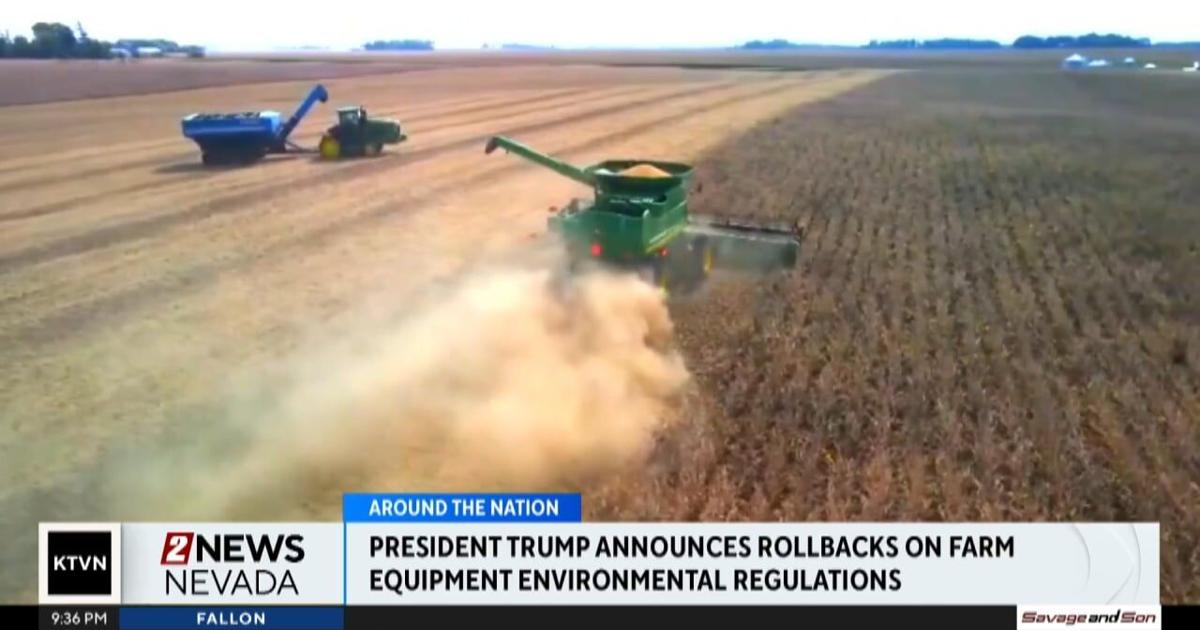
President announced rollbacks to environmental regulations on farm equipment and proposed allowing high-ethanol gasoline blends to be sold year-round; no monetary or percentage figures were disclosed. The regulatory changes could lower compliance costs for farm-equipment manufacturers and lift demand for ethanol, with potential modest benefit to ethanol producers and fuel retailers. Immediate market disruption is likely limited, with implications primarily at the sector level rather than market-wide.
The policy shifts reallocate value along the biofuel and agricultural equipment value chains rather than creating a new demand pool. Expect midwestern corn basis and processor crush margins to re-price within one planting cycle: a 1-2% incremental corn demand shock can move local basis spreads by 10-30% within 3–9 months, benefitting large grain processors and storage/rail logistics while pressuring feed-intensive food producers. Refiners with ethanol assets or blender-pump exposure capture a dual margin uplift from higher blender margins and potential RIN compression; monitor D6 RINs for the earliest market signal.
On the industrial side, removing near-term emissions compliance lifts OEM free cash flow and reduces long-tail servicing revenue for emissions-control specialists. For a major agricultural OEM, deferred compliance and lower after-treatment parts demand can translate into a meaningful 50–100 bps operating margin tailwind over 12–24 months as warranty/aftermarket spend normalizes downward. Conversely, aftermarket remanufacturers and small regional service chains face a multi-year revenue erosion risk as operators delay costly retrofits and replacement programs.
Key catalysts and risks are concentrated: near-term price moves hinge on retailer uptake of blender infrastructure and RIN price action (days–months), while the largest tail risk is litigation or state-level resistance that can reverse the economics over 6–24 months. Weather and global grain flows are an independent wildcard that can overwhelm policy-driven moves; a favorable crop can erase positive signals for ethanol-linked equities in a single season. Watch EPA guidance and state AG lawsuits as binary re-pricing events.
The market is underpricing two offsets: (1) the time and capex needed to convert retail infrastructure means ethanol volume growth will be front-loaded in expectations but realized slowly, making a 3–9 month phased trade more attractive than a headline-immediate one; (2) OEM margin relief from rolled-back emission standards is underappreciated and likely persistent, making select equipment names a less-crowded way to play the policy shift.
AI-powered research, real-time alerts, and portfolio analytics for institutional investors.
Request DemoOverall Sentiment
neutral
Sentiment Score
0.00
