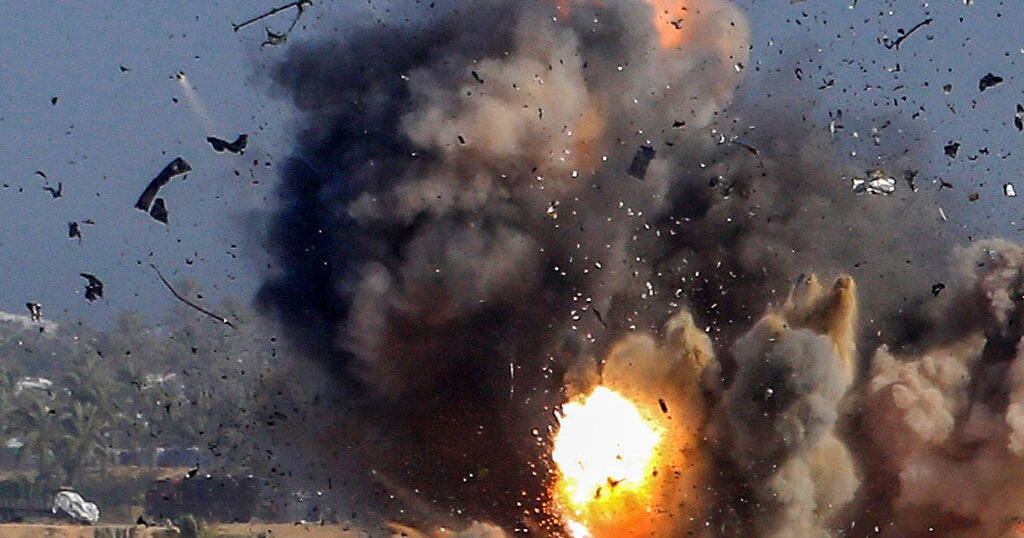
Israeli strikes in Gaza killed at least 30 Palestinians, including women and children, in one of the deadliest days since the Oct. 10 ceasefire, with strikes hitting an apartment building, a tent camp (seven killed) and a Gaza City police station (at least 14 killed). The IDF said the strikes were in retaliation for alleged Hamas ceasefire violations after Israeli forces killed four militants near Rafah; Hamas denounced the attacks as a renewed violation. Coming a day before a limited reopening of the Rafah crossing and the second phase of a U.S.-brokered ceasefire, the incident raises the risk that renewed violence could derail border reopening and reconstruction plans and prompt near-term risk-off moves in regional assets and sentiment.
Market structure: Near-term winners are defense primes (LMT, RTX, GD) and cyber-security vendors (PANW, FTNT) as risk premiums rise; commodity beneficiaries include Brent/WTI and gold on a possible regional risk premia widening (oil +$5–$20/bbl in a large escalation, gold +5–10%). Losers are EM and Israeli equities (EEM, EIS) and local banks/airlines tied to Gaza disruption; pricing power shifts to suppliers of security services and reconstruction materials (CRH, CAT) over consumer discretionary in the region.
Risk assessment: Tail scenarios include escalation to broader regional conflict (low probability, high impact) that could push Brent >$120/bbl and US equities -8–15% in days, or a political clampdown that restricts defense procurement (regulatory tail). Immediate: days of elevated volatility and FX flows into USD/JPY/Gold; short-term (weeks–months): supply-chain and border re-openings will determine reconstruction cadence; long-term (12–36 months): capital allocation to reconstruction and defense could re-rate selected sectors.
Trade implications: Favor tactical long defense (3–9 months) and safe-havens (TLT, GLD) while reducing EM/Israel beta. Use volatility instruments as inexpensive tail hedges (30–90 day VIX calls or 1-month put spreads on EEM). Monitor Brent and 10Y yield moves: act if Brent moves ±10% or 10Y yield moves ±25bp from entry to rebalance.
Contrarian angles: Consensus skews long defense; miss is timing — order flow takes months, so front-loaded longs can be crowded. Underappreciated is reconstruction alpha for materials/equipment over 12–24 months (CRH, CAT) if crossings and aid corridors stay open; conversely, if ceasefire holds and Rafah opening eases humanitarian fears, volatility and defense risk-premia can snap back 20–40% quickly, creating short-term mean-reversion trades.
AI-powered research, real-time alerts, and portfolio analytics for institutional investors.
Request DemoOverall Sentiment
strongly negative
Sentiment Score
-0.60
