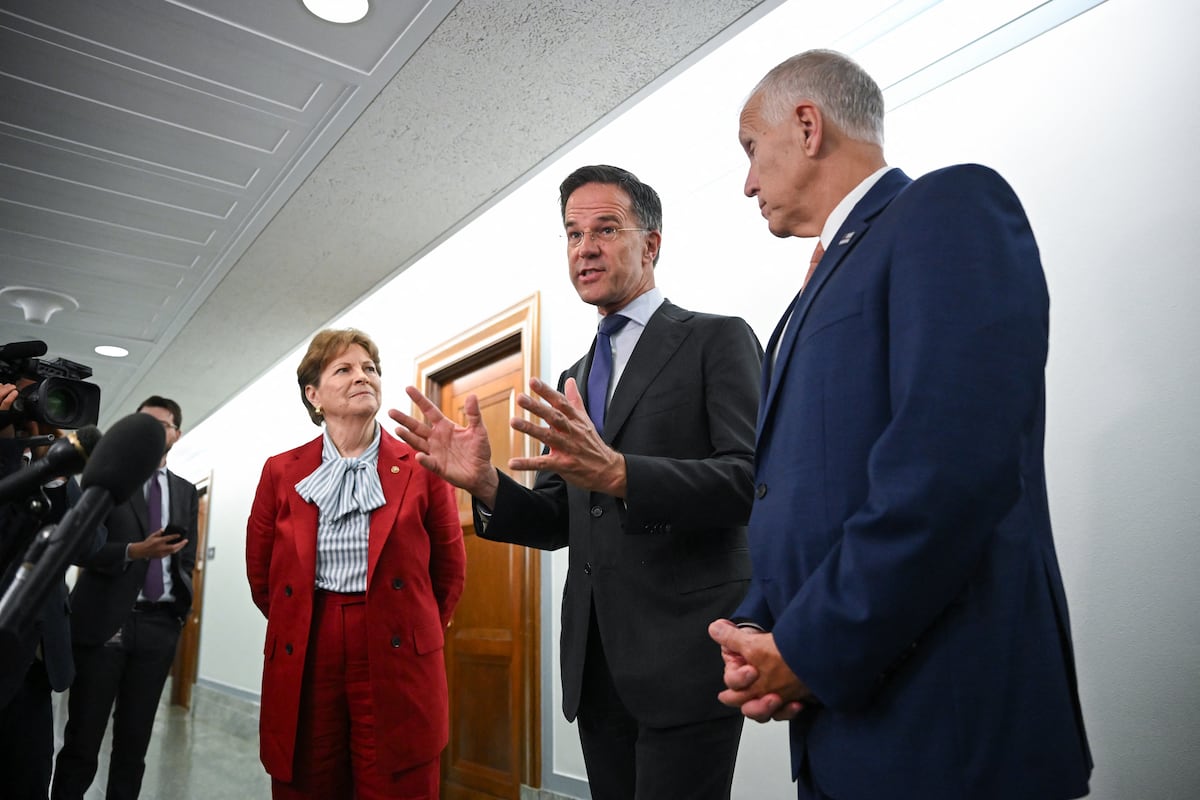
President Trump threatened to withdraw the U.S. from NATO amid a Strait of Hormuz standoff (the waterway typically carries ~25% of global oil flows), but withdrawal would require a two-thirds Senate vote or an act of Congress and is widely viewed as unlikely. Bipartisan Senate leaders (Shaheen, Tillis, McConnell, Coons) publicly reaffirmed U.S. commitment to NATO and warned that any attempt to withdraw would undermine U.S. security; French President Macron cautioned that repeated doubts could hollow out the alliance. For portfolios, this raises geopolitical and energy-security uncertainty but, given legislative hurdles and bipartisan pushback, does not represent an immediate market-moving policy shift.
Political theater around alliance commitment is now a persistent volatility generator rather than a credible regime change event — procedural hurdles make a sudden legal exit a multi-quarter process, so markets should treat headline risk as elevated noise, not a decisive structural break. That dynamic favors convex hedges and dispersion strategies: expect realized equity volatility to outpace fundamental credit repricing, with equity risk premia likely widening by 50–100bps across geopolitical-sensitive buckets over the next 1–3 months.
Defense procurement is the canonical second-order beneficiary: when politics gets noisy but institutions hold, Congress tends to favor visible, politically attractive appropriations (munitions, shipbuilding, sustainment) that are spendable within 12–24 months. That flow profile advantages large primes and C4ISR specialists able to convert topline into near-term backlog; mid-cap suppliers of interoperability upgrades could see outsized order cadence vs their market capitalizations.
Energy and maritime are the second macro lever: a partially blocked Strait of Hormuz sustains an oil risk premium and pushes ship-owners’ war-risk insurance and tanker day-rates materially higher. Absent a coordinated multinational naval/diplomatic solution, expect a $5–15/bbl elevated Brent premium and persistently wider shipping insurance spreads that last for several months, creating opportunity in options on oil and in select tanker/insurance beneficiaries.
AI-powered research, real-time alerts, and portfolio analytics for institutional investors.
Request DemoOverall Sentiment
neutral
Sentiment Score
0.00
