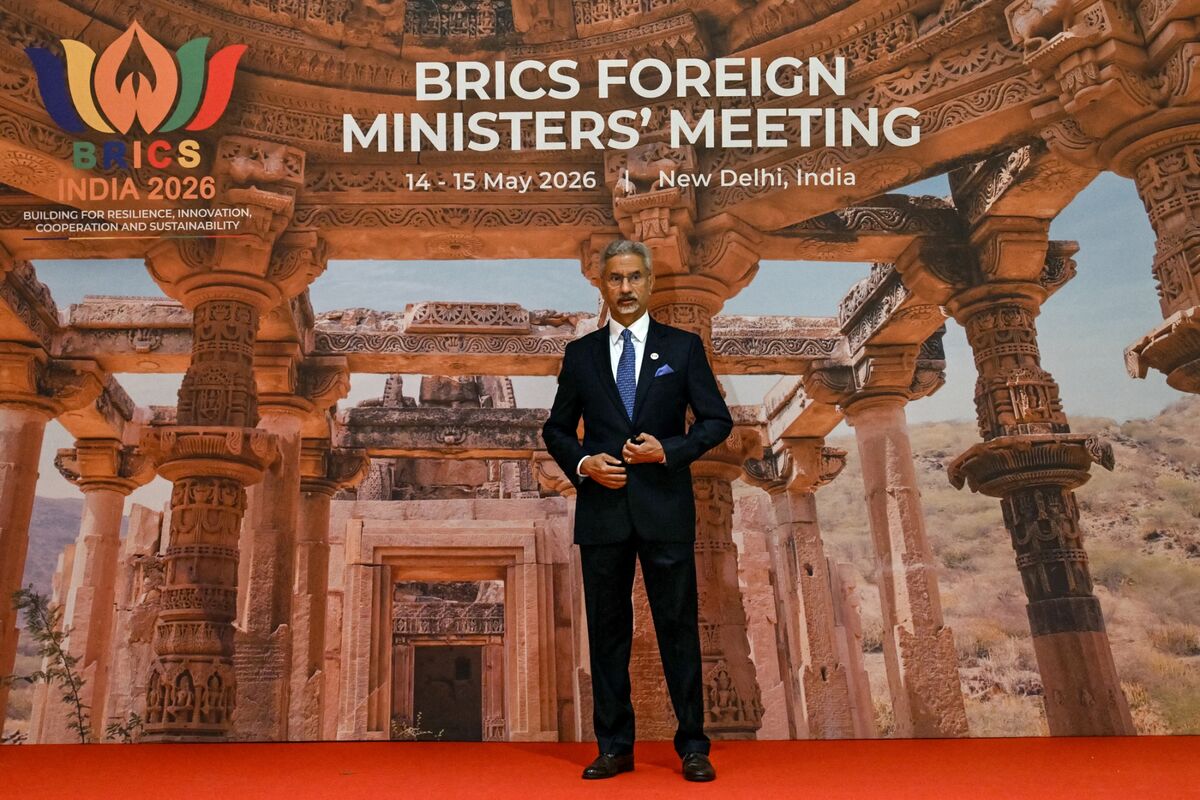
India is hosting a two-day BRICS foreign ministers’ meeting in New Delhi as the bloc remains split over the Iran war and the US/Israeli strikes launched more than two months ago. The article highlights deep divisions among BRICS members on the Middle East conflict, creating a diplomatic challenge for India as chair. The news is geopolitically significant and could matter for emerging-markets risk sentiment, but it does not describe a direct market-moving policy decision.
The market implication is less about BRICS unity and more about India’s widening policy-construction burden: New Delhi is trying to keep strategic optionality between the US, Gulf suppliers, Russia, and China while avoiding a visible split inside a flagship diplomatic forum. That raises the premium on India’s role as a neutral intermediary, but it also increases the probability of short-lived, headline-driven risk aversion around Indian assets if the meeting produces a weak communique or open dissent. Second-order effects are concentrated in energy and rates rather than broad equity beta. Any sign that the bloc cannot converge on a Middle East line makes it harder for India to extract concessions on discounted crude, shipping insurance, or alternative settlement channels; that matters because India is structurally more exposed than peers to imported-energy shocks. Over the next 2-8 weeks, the main transmission is via crude, INR, and local inflation expectations, which can pressure financials and consumer discretionary even if the geopolitical event itself fades quickly. The contrarian read is that fragmentation inside BRICS may be incrementally positive for India over a 6-12 month horizon: it highlights that the bloc is not a cohesive economic cartel and reduces the probability of policy coordination that would constrain India’s room to maneuver with the West. If the meeting is visibly messy, that could actually strengthen India’s bargaining position as the only member credible enough to mediate across camps. The key risk is a sharp escalation in the Middle East that forces India to choose between diplomatic neutrality and concrete energy/security interests; in that case, the move becomes a macro shock, not just a diplomatic annoyance.
AI-powered research, real-time alerts, and portfolio analytics for institutional investors.
Request DemoOverall Sentiment
mildly negative
Sentiment Score
-0.25
