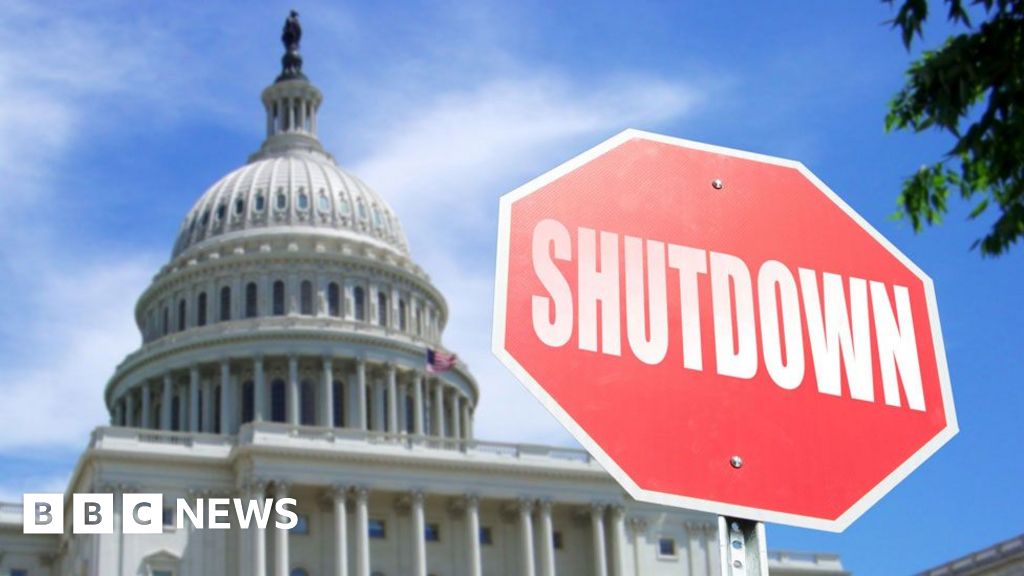
The ongoing U.S. government shutdown, stemming from partisan disputes over federal spending and Democratic demands for healthcare tax credits, has placed federal workers, including essential personnel, on unpaid leave. This iteration is notable as President Trump aims to leverage it for permanent government staffing and spending reductions. Federal employees are experiencing significant financial hardship and uncertainty, underscoring the immediate economic strain on a segment of the workforce and the broader political volatility impacting government operations and potentially consumer confidence.
The current U.S. government shutdown, stemming from a partisan deadlock over federal spending and healthcare tax credits, introduces significant fiscal and political uncertainty, reflected in the strongly negative sentiment and uncertain tone. A key differentiator in this event is the stated intent by the Trump administration to use the shutdown to enact permanent reductions in government staffing and spending, signaling a potential long-term shift in fiscal policy. The immediate economic consequence is a direct income shock to federal workers, many of whom are on unpaid leave. This financial strain is significant, as evidenced by one worker's account of having to withdraw from retirement savings during the prolonged 2018-19 shutdown. While no specific companies are mentioned, this disruption to household finances directly threatens consumer confidence and spending, particularly in regions with a high concentration of federal employment. The deep political polarization, with some federal workers supporting the shutdown's aims despite personal hardship, suggests a resolution may not be swift, extending the period of market-unsettling uncertainty.
AI-powered research, real-time alerts, and portfolio analytics for institutional investors.
Overall Sentiment
strongly negative
Sentiment Score
-0.70
