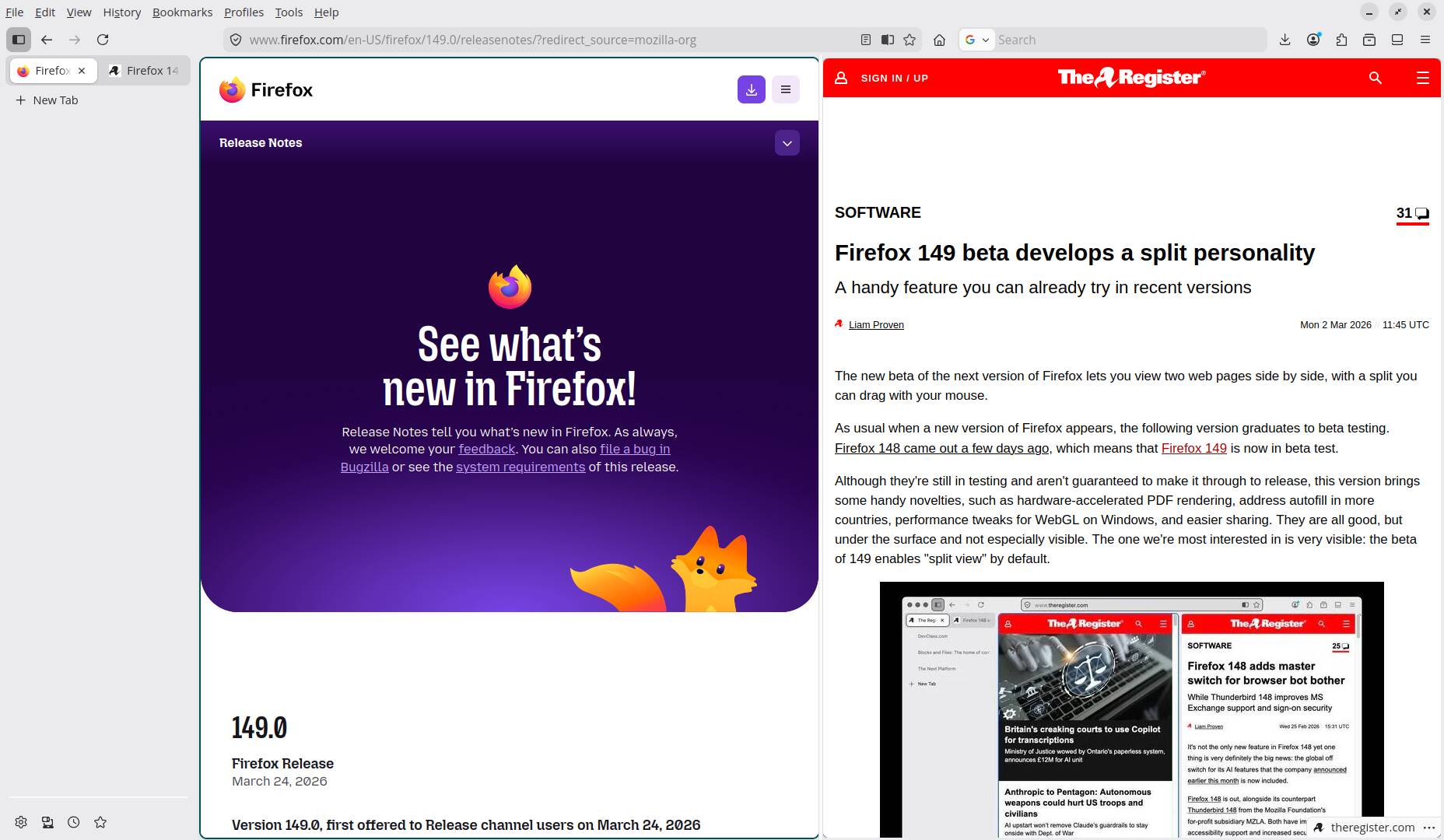
Firefox 149 introduces a free built-in VPN capped at 50 GB/month, along with split view, tab sticky notes, and Linux XDG portal support for native file dialogs. The VPN rollout is progressive and region-limited and only covers traffic inside the Firefox instance (not system-wide), reducing but not eliminating the need for external VPNs; competing browsers (Opera, Vivaldi) already offer unlimited in-browser VPNs. Opera GX is now available for Linux as a .deb download, signalling incremental Linux adoption among gamers. Market impact is minor — modest feature-driven competitive pressure in the browser niche with negligible effect on broader markets.
Browsers turning into lightweight platform bundles (utility + UX + incremental privacy) create a low-friction distribution channel that systematically raises switching costs for peripheral apps and services. Over the next 6–18 months expect smaller VPN vendors, vertical tab/annotation startups and some ad-tech intermediaries to see user engagement decline unless they convert to paid tiers or integrate deeper with browsers; conversion economics favor firms that control the UI/drive-to-action (i.e., the browser vendors themselves).
For ad-driven networks and social platforms the immediate channel risk is twofold: lower visible ad inventory because of integrated blockers/privacy toggles, and higher churn in ad personalization revenue as first-party browser signals replace third-party telemetry. If browser-level features erode even 1–2% of addressable ad impressions in developed markets, that could translate into a multi-quarter revenue headwind for dominant ad sellers as CPMs and targeting efficacy slip, with impacts compounding over 2–4 quarters as buyers reallocate budgets.
Regulatory and monetization catalysts will determine who wins: browsers that can both retain users and create proprietary upsells (subscriptions, marketplace integrations, paid privacy tiers) will monetize the displacement; those that only offer free alternatives will compress third-party margins without recapturing revenue. Key risks that would reverse the trend include fast regulatory intervention on bundling/competition, or a rapid shift back to centralized ad-targeting solutions that browsers cannot replicate — both are 6–24 month tail events that would re-open TAM for adtech incumbents.
AI-powered research, real-time alerts, and portfolio analytics for institutional investors.
Request DemoOverall Sentiment
mildly positive
Sentiment Score
0.12
Ticker Sentiment
