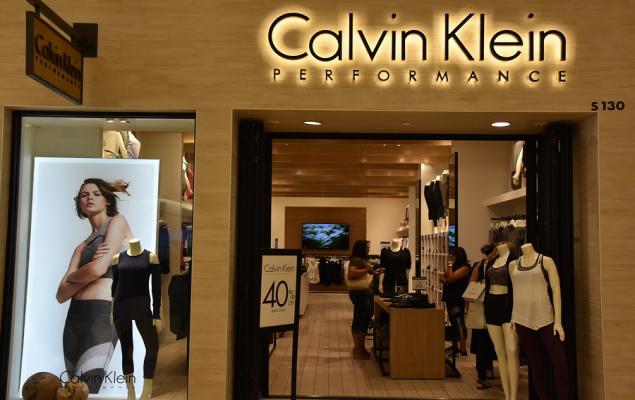
PVH reported fiscal Q3 adjusted EPS of $2.83 (down 6.6% Y/Y) beating the Zacks consensus of $2.56, with revenues of $2.29 billion (+2% Y/Y, -1% constant currency) also above estimates. Gross profit was $1.29 billion as gross margin contracted 210 bps to 56.3%, adjusted EBIT fell 14.5% to $202.3 million, and inventories rose 3%; cash was $158.2 million and long-term debt $2.25 billion. Management reaffirmed full-year constant‑currency revenue and margin targets, narrowed reported revenue and non‑GAAP EPS ranges (FY adj EPS $10.85–$11.00; adj operating margin ~8.5% vs 10% prior), flagged material tariff headwinds (~-$1.05 FY impact, -$0.60 in Q4 partially offset by FX), and noted 7.7 million shares repurchased year‑to‑date via ASRs and open‑market buys.
Market structure: PVH’s print shows brand resilience (Calvin Klein/Tommy Hilfiger) but immediate margin erosion from U.S. tariffs (FY25 EPS headwind ~$1.05, Q4 unmitigated ~$0.60) and freight/promotional pressure. Winners in the near term are wholesale partners in the Americas (wholesale +4% Y/Y) and currencies (management cites ~$0.45 FX tailwind FY25); losers are margin-levered mid-tier apparel peers and licensees (licensing revs -11%). Cross-asset: rising interest expense (projected $80m vs $67m) slightly raises credit risk for leveraged retail credits and should increase short-dated implied volatility in PVH options and widen HY spreads for apparel names.
Risk assessment: Tail risks include tariff escalation (large negative shock to FY25 EPS >$1/share), a holiday consumer pullback that turns inventories >+5% Y/Y (forcing >200bp gross margin markdowns), or a failed integration of in‑house women’s categories increasing working capital >300bp. Time horizons: market reaction immediate (days) to tariff headlines, earnings/Q4 comps drive 1–3 month moves, and brand recovery/SG&A savings play out over 6–18 months. Hidden dependency: ASR funding raised interest expense and reduced cash cushion (cash $158m vs LT debt $2.25bn), limiting defensive liquidity.
Trade implications: Tactical: favor relative-quality/luxury (RL) over mid-tier PVH. Execute a 1–2% notional short PVH or buy a 3–6 month PVH put spread sized to 1–1.5% portfolio risk (target 10–20% downside capture); offset with 2–3% long in RL (Zacks rank #2, stronger EPS/revenue growth estimates). Use a pair trade (long RL/short PVH) for 3–6 months to neutralize macro risk; take profits or reassess after Q4 guidance or tariff resolution.
Contrarian: The market may underprice PVH+ cost savings (Growth Driver 5) which could offset some tariff pain if management executes — a >10% pullback in PVH could present a tactical long (target 12‑18 month recovery of 20–30%). Conversely, if tariffs persist beyond Q1 FY26, downside could exceed 25%; avoid one-way exposure and size positions to the tariff outcome (close/trim if tariff relief announced within 30–60 days).
AI-powered research, real-time alerts, and portfolio analytics for institutional investors.
Request DemoOverall Sentiment
mixed
Sentiment Score
0.10
Ticker Sentiment
