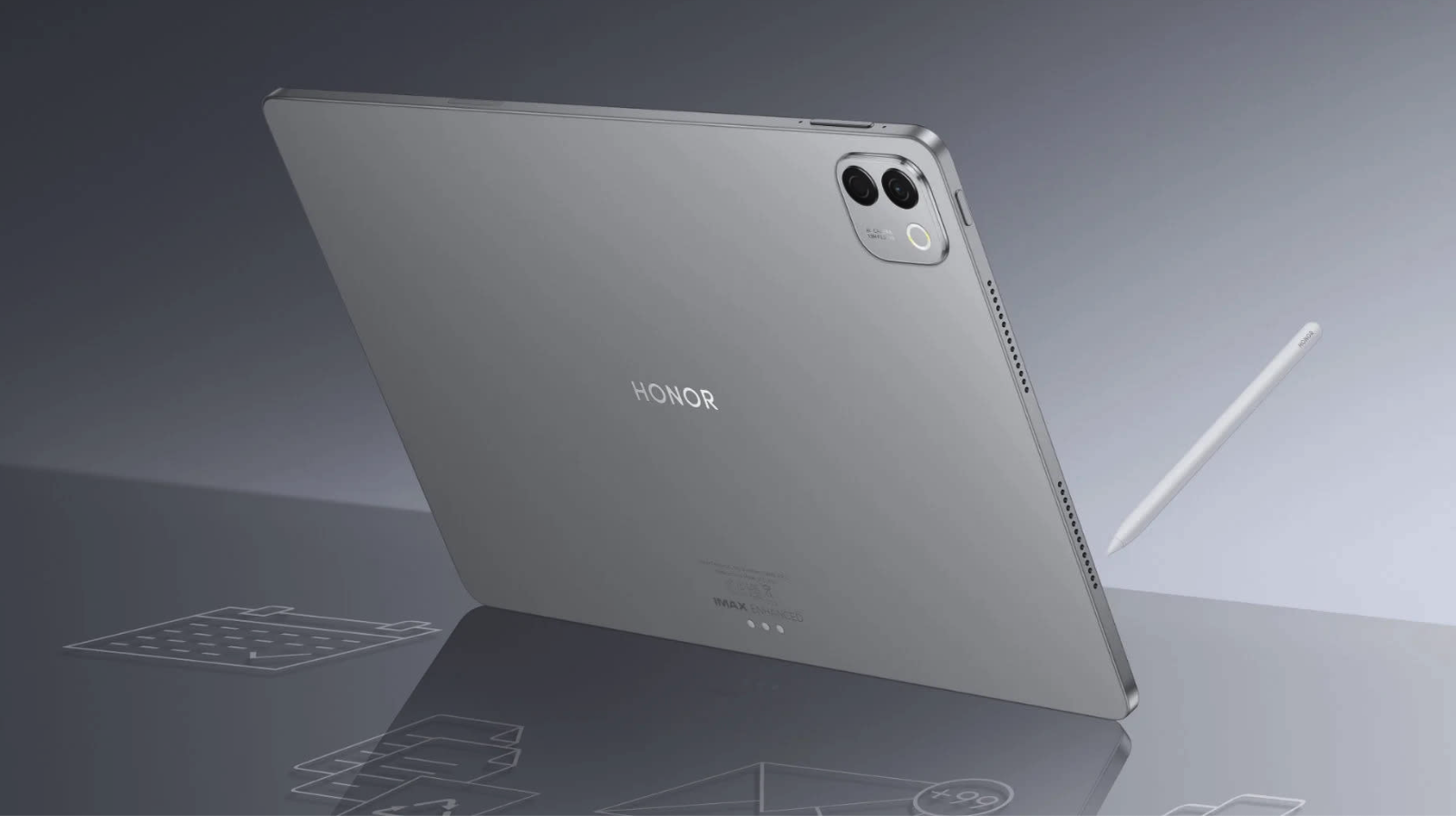
Honor unveiled the MagicPad4, billed as the world's thinnest tablet at 4.8mm and approximately 450g, and the first tablet to use a 3nm Snapdragon 8 Gen 5 chipset for PC-class AI productivity. The 12.3-inch 165Hz OLED device includes eight speakers with spatial audio, a 10,100mAh battery, and cross-brand connectivity with iOS and Android; price and availability remain undisclosed ahead of an expected showing at MWC. The product strengthens Honor's competitive positioning versus Apple and Samsung on design and AI-enabled features, but absent pricing or launch details the near-term market impact is limited.
Market structure: Ultra-thin tablets powered by a 3nm Snapdragon move economic gravity toward advanced-node foundries and IP owners (TSMC/ASML) and chipset designers (QCOM). Suppliers of premium OLED panels, batteries and acoustics (OLED vendors, battery makers, HiFi codec licensors) get pricing power for higher-spec SKUs, while Apple (AAPL) faces incremental share pressure in value-conscious markets—pressure likely to be single-digit share shifts over 12–24 months, not immediate mass defections.
Risk assessment: Key tail risks are regulatory (US export controls on China supply chain), yield/capacity bottlenecks at 3nm fabs, and Honor’s price positioning (could be loss-leader). Expect negligible price moves in days, product-hype-driven volatility in weeks (MWC, price reveal), and material demand shifts in 3–18 months as distribution and ecosystem support unfold. Hidden dependency: Honor’s global impact depends critically on channel access outside China.
Trade implications: Direct plays favor QCOM (chip design upside) and TSM/ASML (3nm capex), with tactical option exposure around product reviews and pricing. Use small, size-conscious pair trades (long Qualcomm vs. short AAPL bias) and buy-protection on AAPL if tablet guidance slips; monitor QCOM/TSMC bookings and Honor pricing within 30–60 days as execution triggers.
Contrarian angles: Consensus overweights ecosystem lock-in; hardware first-mover on thinness plus AI features can win share in education/EMEA where price sensitivity is higher. Market may be underrating semiconductor supplier upside (TSM/QCOM) while overestimating immediate AAPL downside; unintended consequence is a renewed device price war compressing OEM margins into 2025 if multiple vendors chase volume.
AI-powered research, real-time alerts, and portfolio analytics for institutional investors.
Request DemoOverall Sentiment
moderately positive
Sentiment Score
0.45
Ticker Sentiment
