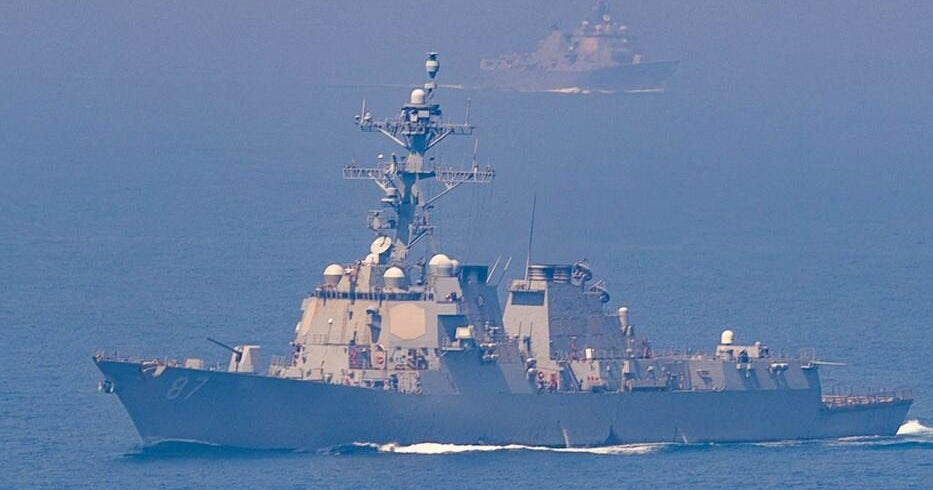
Tensions escalated sharply in the Strait of Hormuz after U.S. and Iranian forces exchanged fire, with the U.S. reporting three Navy destroyers came under missile, drone and small-boat attack and then launched self-defense strikes on Iranian ports. Iran said the U.S. had “crossed the point of no return,” while President Trump said the ceasefire is still in effect but warned of much harder retaliation if no deal is reached. The UAE also activated air defenses after reported Iranian missile and drone activity, raising the risk of a broader regional shock to energy and shipping flows.
The market’s first-order read is higher energy and defense risk, but the deeper implication is a repricing of maritime reliability premia across the Gulf. Even without a full Hormuz closure, insurers, charterers, and LNG/oil offtakers will likely demand wider safety buffers, longer voyage assumptions, and higher hedging intensity; that can tighten effective supply by more than the headline barrel loss suggests. The most vulnerable assets are not just producers in the crossfire, but downstream refiners, global airlines, and EM importers whose input costs re-rate before spot crude fully reflects the shock.
A sustained escalation would also widen the gap between “physical winners” and “financial winners.” Integrated majors and tanker owners can benefit from volatility and rerouting, while high-beta levered shale names may lag if the move in crude is accompanied by a risk-off dollar bid and weaker credit windows. The second-order FX channel matters: Gulf currencies pegged to the dollar are stable, but CAD, NOK, INR, TRY, and broader EM FX could absorb the adjustment through current-account stress and imported inflation, which would compress local equities and sovereign spread assets.
The key contrarian risk is that the market may overprice a straight-line march to closure while underpricing rapid de-escalation from backchannel diplomacy. If the conflict remains episodic rather than structural, the biggest unwind will be in volatility and freight rather than crude itself, creating a cleaner short than a directional energy bet. The most attractive setup is to own convexity into the next 1-2 weeks, not to chase spot on the assumption that this necessarily becomes a months-long supply outage.
AI-powered research, real-time alerts, and portfolio analytics for institutional investors.
Request DemoOverall Sentiment
strongly negative
Sentiment Score
-0.82
