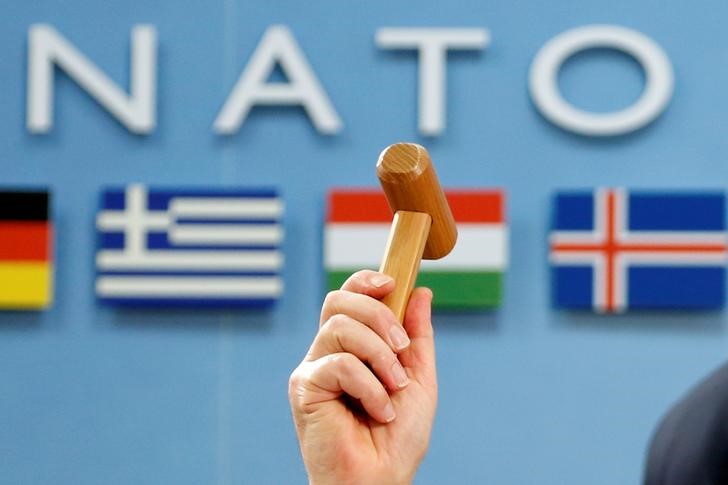
The U.S. is reportedly preparing concrete proposals within weeks to accelerate reductions in its military presence in Europe, with plans to be discussed at NATO's June Force Sourcing Conference. The move would shift more defense responsibility to European allies and aligns with President Trump's long-standing push for burden sharing. The report also underscores a broader U.S. strategic pivot toward China and the Indo-Pacific, alongside commitments tied to the Iran conflict.
The first-order read is a lower-commitment U.S. security umbrella for Europe, but the second-order effect is a forced repricing of the entire European risk stack: defense spending, sovereign issuance, and energy/infrastructure resilience. If Washington signals a real drawdown, Europe likely has to bridge the gap with faster procurement cycles and more domestic industrial capacity, which should steepen near-term order visibility for continental defense primes while squeezing budgets elsewhere. The market tends to underappreciate how quickly this becomes a financing story, not just a weapons story: higher defense outlays widen deficits unless offset by taxes or cuts, pushing long-end European rates up and making peripheral sovereigns more sensitive to any growth scare.
The bigger hidden variable is infrastructure security. Any U.S. retrenchment increases the premium on subsea cables, satellite links, air defense, EW, and logistics nodes — the stuff that protects commerce rather than wins headlines. That creates a more durable winner set than pure munitions: names exposed to border surveillance, command-and-control, and critical infrastructure hardening should see multi-quarter demand acceleration as governments shift from aspirational plans to funded programs.
Consensus risk is that this is treated as a slow-burn political headline rather than a catalyst. The actual trade setup is a 3-12 month sequence: initial skepticism, then procurement announcements, then budget reallocations, then rerating of the European defense complex. The reversal risk is also clear — any NATO reaffirmation, watered-down U.S. proposal, or escalation elsewhere that forces Washington to keep capacity in Europe would unwind the thesis quickly, so the market should fade only the excess, not the direction.
Contrarian view: the move may be less bearish for Europe overall than it first appears because it can reduce strategic ambiguity and force long-delayed industrial policy. That said, the adjustment period is messy, and assets most exposed to discretionary public spending in Europe should underperform until funding clarity improves.
AI-powered research, real-time alerts, and portfolio analytics for institutional investors.
Request TrialOverall Sentiment
mildly negative
Sentiment Score
-0.15
