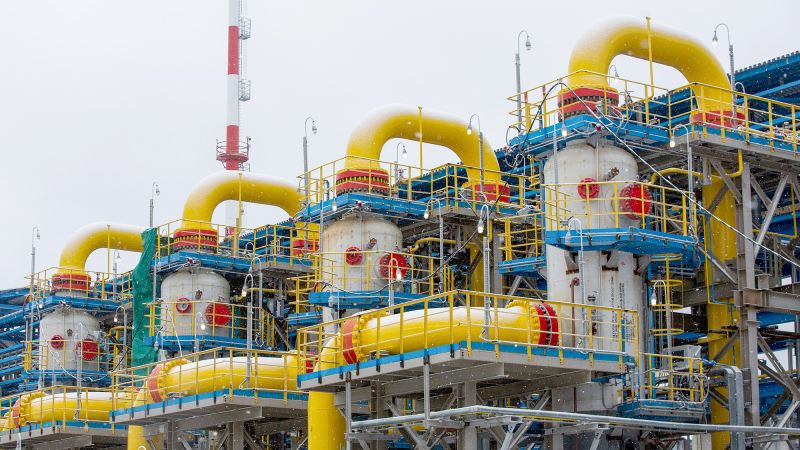
The EU agreed to permanently halt Russian gas imports, phasing out LNG by end-2026 and pipeline gas by end-September 2027, with transitional cut-offs for short- and long-term contracts between mid-2026 and early 2027 and limited extensions for members with storage shortfalls. The Commission also committed to phasing out remaining Russian oil by end-2027 and requires national diversification plans by March 1; Russia supplied 12% of EU gas imports as of October (down from 45% pre-2022). The timetable and reporting requirements will tighten supply dynamics, accelerate demand for alternative LNG and pipeline sources, and create regulatory and infrastructure implications for utilities, traders and energy importers across Europe.
Market structure: The EU ban (LNG cutoffs by end-2026, pipeline by Sept‑2027) reallocates an estimated shortfall on the order of tens-to-low‑hundreds bcm/year into the global LNG market, boosting pricing/power for large LNG exporters and regasification owners. Clear winners: U.S./Qatar LNG exporters, Norwegian production (Equinor), integrated majors with LNG portfolios (Shell), terminal builders/shippers; losers: Russian exporters (Gazprom), European midstream/utility incumbents still on Russian contracts (e.g., Uniper/ENGIE). Market share will shift toward spot/global LNG suppliers and shipping, raising basis in Europe vs Henry Hub through 2025–27.
Risks & timing: Tail risks include Russian supply retaliation (broader hydrocarbon cutoffs), accelerated demand destruction in EU industry, and regas bottlenecks producing winter 2026/27 price spikes. Immediate (days–weeks): volatility in TTF/Brent and related equities; short term (months–12): capex announcements, FID on new LNG trains and terminal builds matter; long term (2027+) structural decline in Russian market share and faster renewables/hydrogen investment. Hidden dependency: EU regas/rail/logistics — lack of terminals is the choke point, not just LNG supply.
Trade implications: Favor selective long positions in listed LNG exporters and Norwegian producers (Cheniere LNG, EQNR, SHEL) and infrastructure contractors; short concentrated European gas retailers/utilities (Uniper/ENGI) who can’t pass-through rising procurement costs. Use 9–24 month call spreads on LNG exporters and calendar spreads in TTF (buy winter 2026 vs sell summer 2025) to play seasonality and storage risks. Watch storage thresholds (national storage <90% by Oct 2026) as a quantitative trigger.
Contrarian view: The market may overpay for perpetual European scarcity—once regas capacity and pipeline diversions ramp (2026–27), structural price upside could be capped; higher gas prices will accelerate electrification and industrial feedstock substitution, compressing long‑run gas demand. Look for mispricings in companies exposed to regas capex and in long-dated European utility bonds which may overstate default risk relative to recovery under regulated pass-through regimes.
AI-powered research, real-time alerts, and portfolio analytics for institutional investors.
Request DemoOverall Sentiment
moderately negative
Sentiment Score
-0.45
