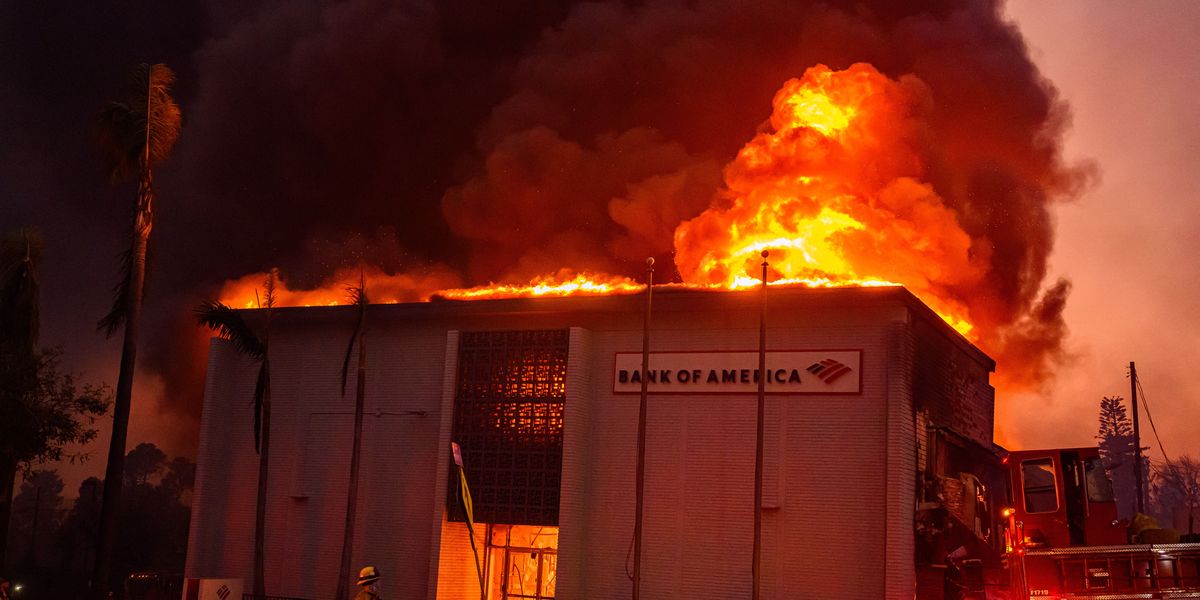
Federal regulators, including the FDIC, OCC, and Federal Reserve, have rescinded interagency guidelines that required large financial institutions with over $100 billion in assets to consider climate-related financial risks in their business strategies. The agencies justified the withdrawal by stating that existing safety and soundness standards are sufficient for managing all material risks. This decision, however, has drawn criticism for potentially increasing systemic financial risk, especially given the escalating economic impact of climate change, including CBO projections of significant GDP reduction and property losses, and prior warnings from Fed Chair Jerome Powell about banks withdrawing from climate-vulnerable regions.
Federal regulators, including the FDIC, OCC, and Federal Reserve, have formally rescinded the "Principles for Climate-Related Financial Risk Management for Large Financial Institutions," which previously mandated that banks with over $100 billion in assets consider climate risks. The agencies assert that existing "safety and soundness standards" are sufficient to address all material and emerging financial risks, rendering specific climate guidelines unnecessary. This move reverses a framework established in 2023, a year marked by record temperatures and $92 billion in U.S. climate disaster damages.
This withdrawal contradicts earlier statements from Federal Reserve Chair Jerome Powell, who in October 2023 stressed the necessity for banks to manage climate-related financial risks, encompassing both physical and transition risks. The Congressional Budget Office (CBO) further projects significant long-term economic impacts, estimating a 4% reduction in U.S. GDP if current warming trends persist, alongside potential property losses ranging from $250 billion to $930 billion due to sea level rise. Powell himself previously warned that certain regions could become unmortgageable or unbankable within 10-15 years due to escalating climate risks, citing instances like State Farm's withdrawal from high-risk areas.
Critics, such as Public Citizen's Elyse Schupak, characterize the decision as "irresponsible and politically motivated," arguing it undermines efforts to mitigate systemic financial risks posed by climate change. The move is seen as a capitulation that could jeopardize the stability of supervised banks and the broader financial system by reducing explicit regulatory focus on these growing threats. The strongly negative sentiment and high market impact score associated with this news reflect concerns over increased uncertainty and potential future financial instability.
AI-powered research, real-time alerts, and portfolio analytics for institutional investors.
Request DemoOverall Sentiment
strongly negative
Sentiment Score
-0.75
Ticker Sentiment
