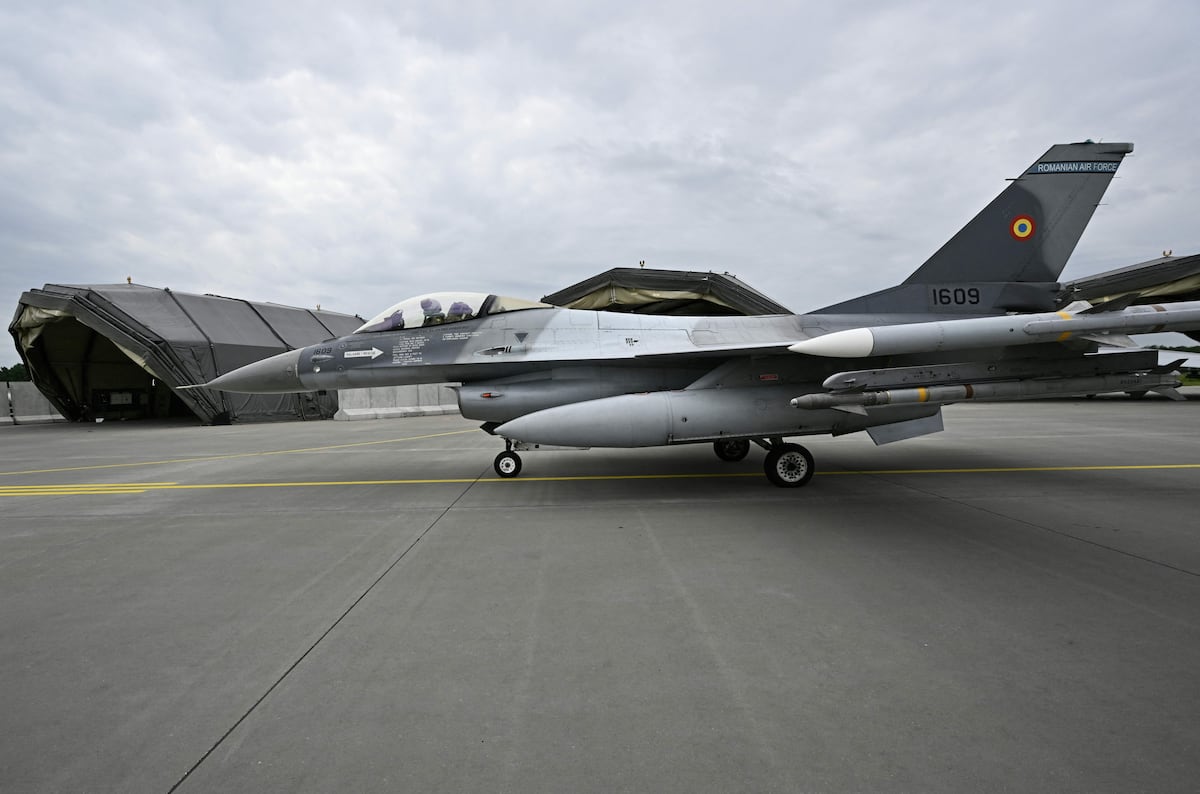
A NATO air policing jet shot down a suspected Ukrainian drone over Estonia, marking a first for Baltic airspace interceptions and underscoring heightened regional security risk. Estonia confirmed the incident and Ukraine issued an apology, while officials warned the drone threat to Baltic states may recur. The event reinforces ongoing geopolitical tensions involving Russia, Ukraine, and NATO, but is unlikely to have direct broad market effects beyond defense and regional risk sentiment.
The market implication is not the drone itself; it is the normalization of NATO air defenses treating Baltic airspace as an active threat corridor. That raises the probability of a sustained higher-spend cycle in regional air policing, short-range air defense, counter-UAS, radar, EW, and civil protection systems, with procurement urgency likely accelerating over the next 1-3 budget cycles rather than waiting for a formal strategic review. The biggest second-order winner is not the prime contractor that wins a headline system contract, but the layer-2 suppliers of sensors, effectors, software, and command-and-control that can be added quickly under emergency procurement.
A more interesting read-through is on infrastructure resilience. If even isolated incursions are now enough to trigger civil alerts and political churn, Baltic governments will likely harden energy assets, telecom backbones, and aviation approaches, which benefits companies exposed to perimeter security, mesh networking, secure comms, and critical infrastructure monitoring. The tail risk is escalation through misidentification: repeated shootdowns create a non-zero chance of a NATO-Russia signaling event if an incident occurs near a civilian route or if debris causes an injury, which would lift defense sentiment but pressure broader European risk assets for days to weeks.
The contrarian point is that the immediate “defense bullish” move may be overextended if investors assume every incident converts directly into large-ticket air defense orders. The more likely near-term outcome is a patchwork of small purchases and accelerated exercises, with budget uplift spread across many ministries and only partially visible in primes; that argues for preferring enablers over headline defense names. Also, if the drone attribution remains politically noisy, some of the urgency premium could fade within weeks unless there is another incursion or a documented infrastructure hit.
For risk/reward, the cleanest setup is to buy optionality on European defense names into any further incident-driven selloff in broader equities, because the catalyst path is asymmetric and the downside is limited to policy disappointment. The higher-conviction theme over 3-12 months is infrastructure resilience and electronic warfare, since those budgets can be justified as civilian protection even if headline conflict risk cools.
AI-powered research, real-time alerts, and portfolio analytics for institutional investors.
Request DemoOverall Sentiment
mildly negative
Sentiment Score
-0.25
