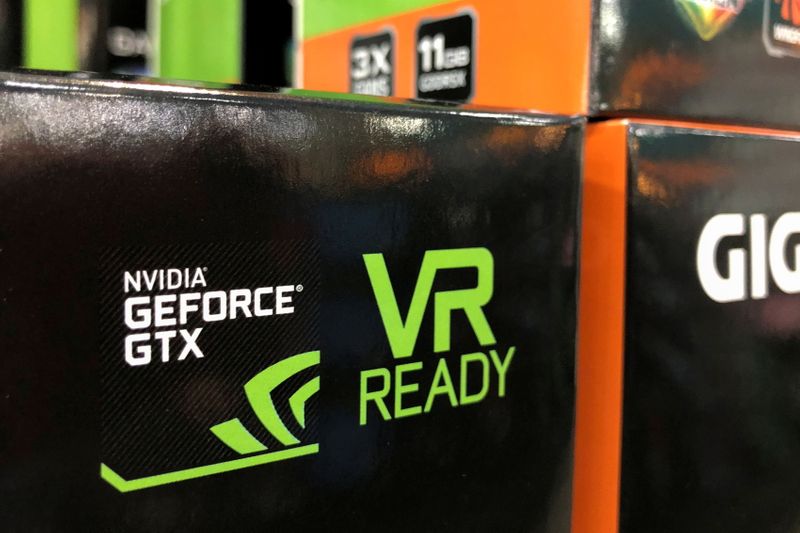
Traders are pricing a 6.5% post-earnings move in Nvidia, implying about $355 billion of market value swing around Wednesday’s Q1 results. The move is larger than the 5.6% implied before February earnings but below Nvidia’s 7.6% historical average around earnings, suggesting bullish positioning with some downside protection. The setup reflects ongoing AI spending concerns, but the article is primarily about options-driven volatility rather than a fundamental earnings update.
The key read-through is not the earnings print itself, but the persistence of elevated downside hedging even after a large run. When implied movement remains rich while traders are still net constructive, it usually means positioning is crowded but not yet fully de-risked; that combination can amplify both a post-print squeeze and a post-print air pocket, depending on whether guidance merely meets expectations or validates the capex cycle. The market is effectively pricing Nvidia as a macro proxy for AI spending durability, not just a single-company earnings event.
Second-order effects matter more than the headline chipmaker outcome. If the company signals any deceleration in order visibility, the first casualties are likely the second-derivative beneficiaries: power, networking, thermal management, and memory suppliers that have been trading on downstream AI capex intensity. Conversely, if guidance re-accelerates, the relief rally should be broader than NVDA because it would de-risk the entire AI infrastructure trade and compress the dispersion premium embedded across semicap names.
The contrarian angle is that the market may be underpricing the probability of a volatility crush rather than a directional break. Elevated implied move already bakes in meaningful uncertainty, so a merely decent report can still be bullish for spot if dealers have to unwind hedges into a low-liquidity window. But the bigger medium-term risk is that AI capex expectations are now front-loaded; if bookings or commentary suggest digestion into the next 1-2 quarters, multiples across the cohort can de-rate even without a hard demand miss.
AI-powered research, real-time alerts, and portfolio analytics for institutional investors.
Overall Sentiment
neutral
Sentiment Score
-0.10
Ticker Sentiment
