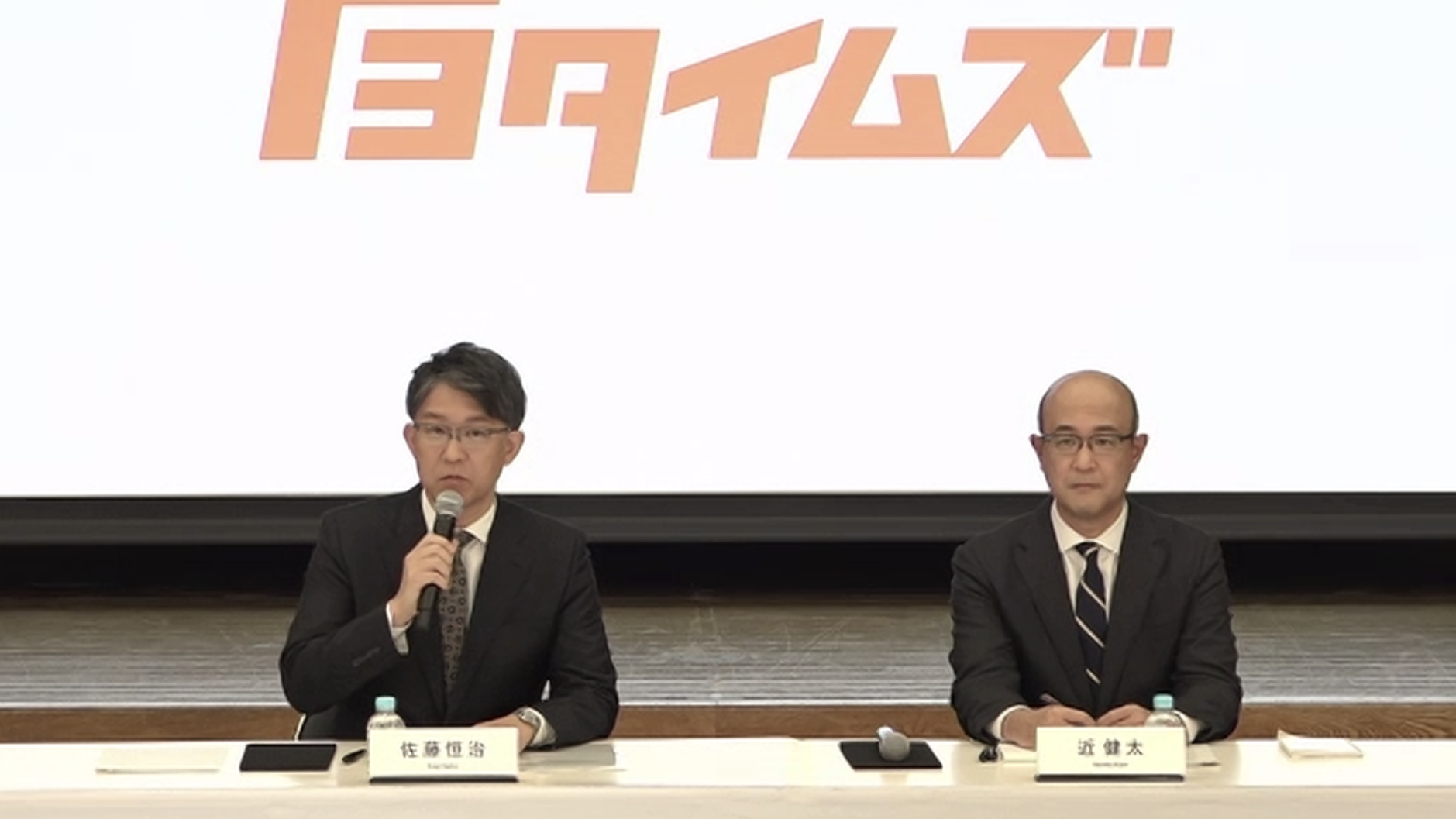
Toyota has named finance-focused executive Kenta Kon as its next CEO, signaling a strategic shift toward financial discipline and capital-allocation priorities rather than product-led leadership. Kon says a focus on financials will be key to the automaker’s long-term survival amid industry upheaval, a message that could presage tighter cost controls, reprioritised investment and investor-friendly moves with implications for margins and capital returns.
Market structure: A finance-first CEO at Toyota (TM / 7203.T) shifts winning bias toward margin-resilient incumbents (large OEMs, Tier-1 suppliers with scale) and away from high-burn EV pure-plays. Expect modest reallocation of capex from aggressive EV capex to efficiency, R&D prioritization and shareholder returns; this favors suppliers of hybrid/ICE components and aftermarket parts and compresses growth valuations for speculative EV names over 6–24 months. Cross-asset: equity upside for TM should support credit (tightening spreads) and JPY appreciation on buyback/repatriation talk, pressuring USD/JPY by ~1–3% if material buybacks announced within 3–6 months.
Risk assessment: Tail risks include regulatory/CO2 penalties if EV underinvestment draws fines (low-probability, high-cost), and operational risks if cost cuts delay EV programs leading to market-share loss in key EV markets (Japan/Europe/US) over 2–5 years. Short-term (days–months) volatility centers on guidance and capital allocation announcements; long-term (years) outcome depends on margin vs share trade-off. Hidden dependencies: supplier contract breakage, JV tensions (e.g., battery partners) and government EV incentives are catalysts that could reverse any positive market reaction.
Trade implications: Direct play is selective long in TM and investment-grade Toyota bonds on conviction around buybacks/EBITDA improvement; pair trades short EV manufacturers (e.g., RIVN) to hedge execution risk. Options: use 3–6 month call spreads on TM (buy ATM, sell 20% OTM) sized 0.5–1% to capture margin re-rating; sell short-dated puts on high-quality suppliers to harvest yield if you want selector exposure. Sector rotation: rotate 3–6% from high-valuation EV/software autos into core auto suppliers, hybrid powertrain leaders and Japanese exporters over next 1–4 quarters.
Contrarian angles: Consensus assumes cost focus = conservative and bad for growth, but underappreciated is upside from cash returns and margin expansion (150–300 bps possible over 12–24 months) which could re-rate TM by 10–20%. Overdone: panic selling of legacy suppliers is likely unjustified; underdone: market may not price multi-year share erosion risk if Toyota deprioritizes EVs — a 5–10% share loss in pure EV segments by 2030 is feasible. Watch for unintended consequences: activist investor pressure or forced large buybacks could reduce capex and accelerate competitor EV gains, reversing thesis.
AI-powered research, real-time alerts, and portfolio analytics for institutional investors.
Request DemoOverall Sentiment
mildly positive
Sentiment Score
0.25
