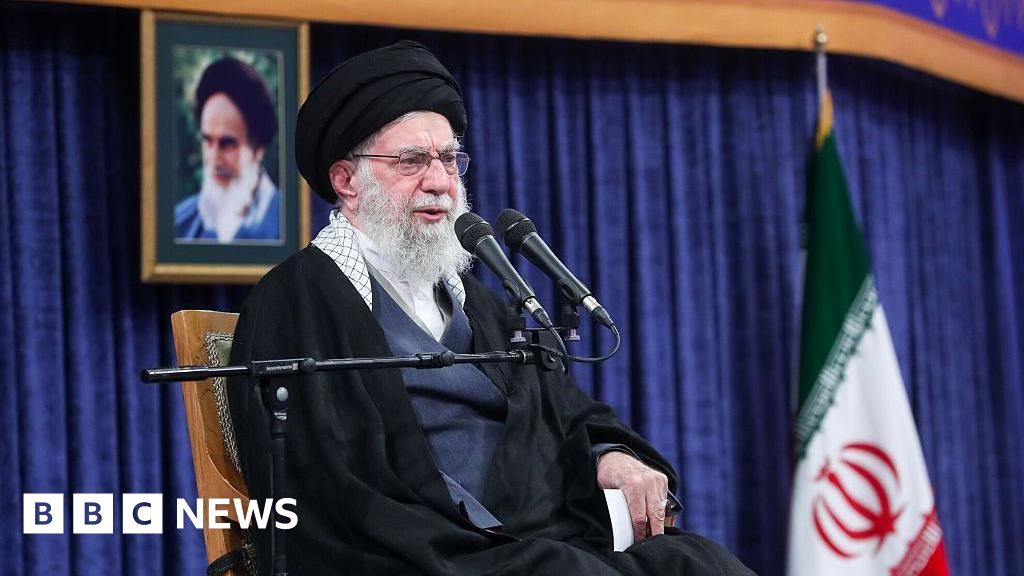
Iran's supreme leader Ayatollah Ali Khamenei publicly acknowledged that 'thousands' were killed during recent anti-government protests, with the US-based HRANA reporting 3,090 deaths amid authenticated footage of security forces firing and a near-total internet blackout (connectivity ~2% per NetBlocks). The admission, paired with US warnings of potential military responses, a partial US personnel drawdown at Al-Udeid air base and heightened rhetoric, raises regional geopolitical risk and likely increases volatility in emerging-market assets and risk-sensitive sectors (notably regional defense exposure and energy-related plays).
Market structure: Acute domestic instability in Iran and credible threats of US retaliation create immediate winners in defense contractors (LMT, RTX, GD) and oil producers/energy service firms (XLE, OXY) as risk premia on security and supply rise; losers include regional EM equities (EEM), airlines (DAL, AAL) and tourism-linked sectors where revenue could fall 10-40% if flows halt. Pricing power shifts toward integrated energy producers and reinsurers/insurers that can reprice maritime risk; sovereign-credit spreads for Iran-linked counterparties already widen and could spill into GCC banks if conflict expands.
Risk assessment: Tail scenarios (+5–25% portfolio impacts) include a limited US-Iran kinetic exchange driving Brent to $100–120/bbl within weeks or a wider regional escalation dragging global growth and equity multiples down 10–25% over months. Immediate (days) effects: volatility spikes, safe-haven flows to USD, Treasuries and gold; short-term (1–3 months): energy risk premium and defense rerating; long-term (quarters) persistent sanctions and higher insurance/shipping costs that structurally raise trade friction and inflation.
Trade implications: Favor tactical longs in high-quality defense (establish 1–2% positions in LMT, RTX) and convex energy protection (0.5% portfolio in 3-month Brent call spreads) while shorting high-beta EM equities or airlines (1–2% short in EEM or DAL) as a hedge against contagion. Use options to buy skewed tail exposure (30-day 10–20-delta Brent calls and 90-day EEM puts) rather than full directional futures; trim energy/defense if oil rallies >20% or if headlines de-escalate within 2–4 weeks.
Contrarian angles: Consensus may overstate near-term physical supply disruption—Iran’s crude exports are already constrained so a large, sustained oil shock is a lower-probability, high-impact outcome; markets often overshoot then mean-revert (2019–2020 Iran tensions produced ~15–25% oil spikes that faded). Beware crowded long-defense positioning; hedge with covered-call sales or short-dated put sales to monetize implied-volatility spikes while retaining upside if conflict prolongs.
AI-powered research, real-time alerts, and portfolio analytics for institutional investors.
Request DemoOverall Sentiment
strongly negative
Sentiment Score
-0.60
