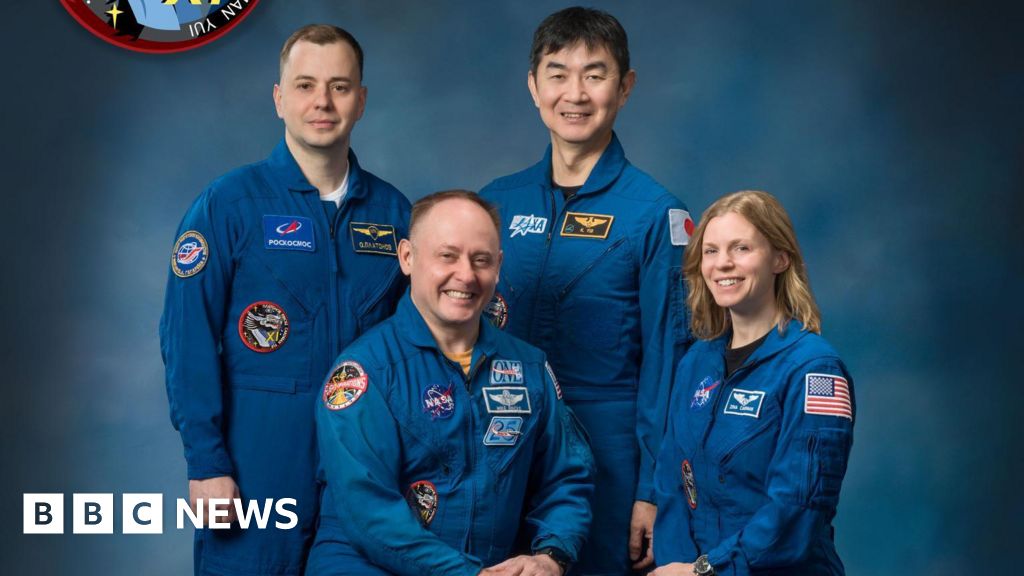
NASA is assessing an early termination of Crew-11's roughly six-month ISS mission after a medical issue affecting an unnamed crew member prompted the abrupt cancellation of a scheduled spacewalk. The four-person Crew-11 (Zena Cardman, Mike Fincke, Kimiya Yui and Oleg Platonov), launched in August 2025 on a SpaceX Crew Dragon and due to return around late February 2026, may be brought home together; if so, experiments and some maintenance work could be delayed and responsibilities redistributed to the remaining crew until the next rotation.
Market structure: This incident is unlikely to move broad markets but shifts marginal demand toward NASA/prime contractors that supply crew-health, life‑support and contingency-return hardware. Expect incumbents with existing NASA contracts (NOC, LMT, BA) to gain short‑term pricing power for follow‑on procurements while small commercial space names (RKLB, SPCE) face higher perceived execution risk; impact measurable as a re‑rating of ~1–3% over 1–3 months for affected small caps if headlines persist.
Risk assessment: Tail risks are low probability but high impact — a serious medical/contamination event (<10% implied) could trigger multi‑month grounding or new regulatory requirements, raising program costs by an estimated 5–15% for crewed flights. Immediate window (days) is headline volatility; short term (weeks) could see contract repricing; medium term (3–12 months) is where budget/contract awards and technical audits matter. Hidden dependencies: Russia’s role on ISS crew rotations and U.S.–Russia relations could become a gating factor for crew logistics and spare capacity.
Trade implications: Direct plays: overweight large defense primes with NASA exposure (NOC, LMT, BA) 1–3% positions for 6–12 months; underweight/short 1–2% in small commercial space operators (RKLB, SPCE) that trade on crew‑confidence narratives. Options: buy 3–6 month call spreads on NOC/LMT to capture re‑procurement upside while purchasing 3-month puts on SPCE/RKLB as event hedges. Monitor NASA contract notices and GAO audits over 30–90 days as execution triggers.
Contrarian angles: Consensus downplays procurement winners; history (post‑Columbia) shows NASA tightened safety and shifted spend to established primes — a force that can lift BA/LMT/NOC by low‑double digits over 12–18 months. Reaction may be underdone: small caps often see 10–30% downside on repeated safety headlines while primes see modest gains; unintended consequence is accelerated funding for on‑orbit medical systems and terrestrial telemedicine providers (select niche suppliers), which could be a secondary alpha source.
AI-powered research, real-time alerts, and portfolio analytics for institutional investors.
Request DemoOverall Sentiment
neutral
Sentiment Score
-0.10
