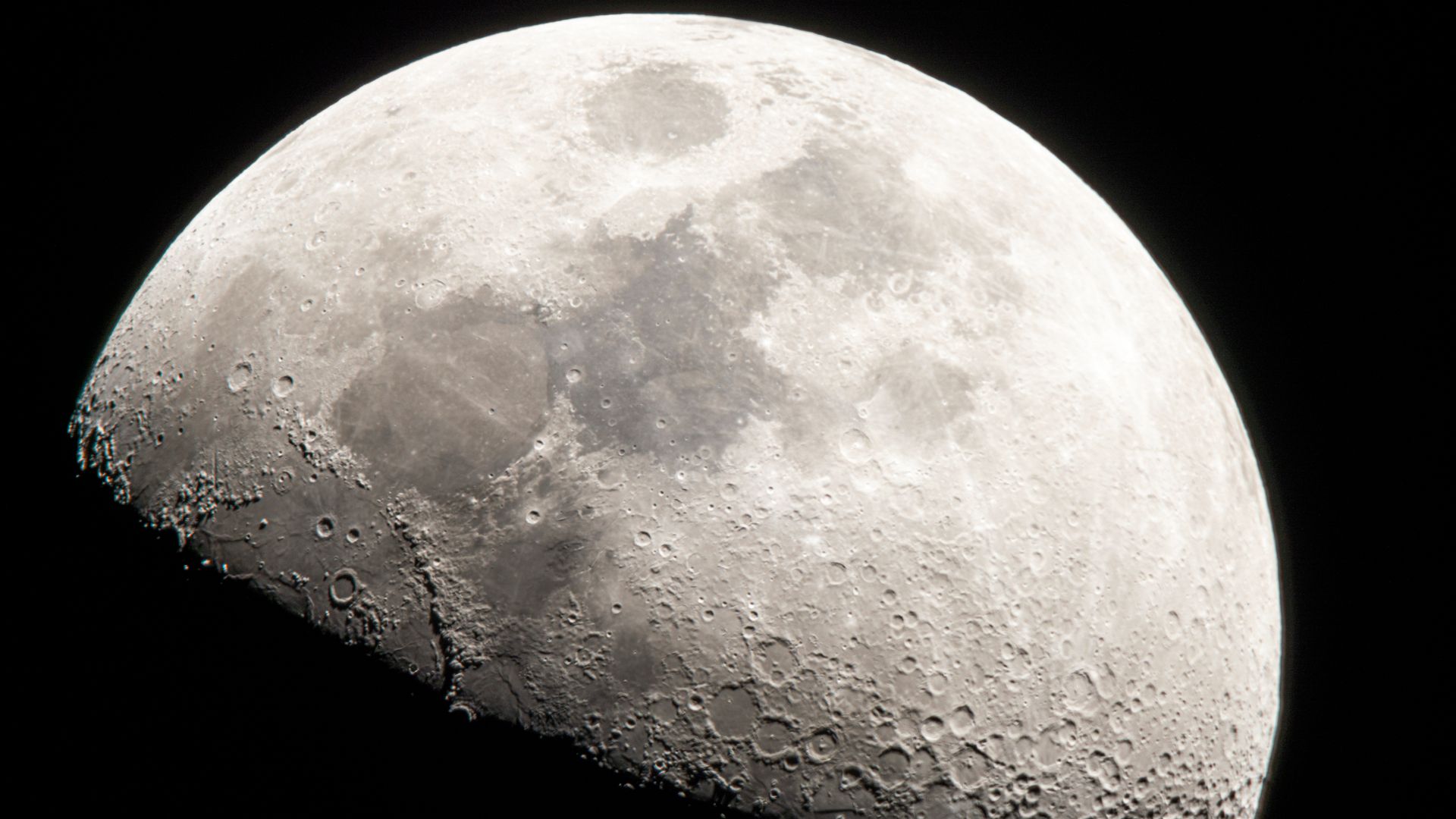
Artemis II will return astronauts to the lunar system for the first time in over 50 years, a generational milestone that Live Science and Rebecca Boyle frame as likely to reframe cultural and scientific views of the Moon. Boyle's new book (Penguin Random House, 2025) emphasizes the Moon's role in Earth's history and argues Artemis highlights long-lead investment in NASA and could boost public support, but it implies no direct near-term market or financial impact.
Artemis’s cultural resonance masks a far more consequential market dynamic: the moon is transitioning from a scientific target into a multi-decade infrastructure opportunity, which shifts value from one-off missions to long-tail suppliers of durable hardware and services (launch cadence, deep-space comms, cryogenic propellant handling, robotics/autonomy, and regolith-processing). That favors contractors whose revenue is tied to programmatic, multi-year government budgets and recurring subsystem supplies rather than speculative consumer-facing space plays. Expect procurement profiles to look more like naval shipbuilding (long lead, repeatable orders) than a typical aerospace cycle.
Second-order supply-chain effects will compound across seemingly unrelated niches: precision cryogenics and thermal control firms, high-reliability avionics/semiconductors, and terrestrial heavy manufacturing (fabrication, composite tooling, ground-test facilities) will see nominal demand uplift with long tails and sticky margins. Conversely, consumer-focused space tourism/platform plays without gov’t integration pathways risk being repriced lower as attention and capital funnel to infrastructure and defense-aligned incumbents. Contractors who own systems-integration and sustainment IP will extract outsized margins as the program matures.
Timing and catalysts matter: near term (days–months) the market will price mission telemetry and political optics; medium term (12–36 months) is when contract awards, subcontracting cascades, and supply-chain investments show up in bookings; long term (3–7+ years) is when ISRU, cryogenic depots, and lunar logistics become investable revenue streams. Tail risks include mission failure, a major launch anomaly, or a policy pivot that trims NASA/DoD budgets — any of which could compress multiples sharply on names carrying program-specific risk.
AI-powered research, real-time alerts, and portfolio analytics for institutional investors.
Request DemoOverall Sentiment
mildly positive
Sentiment Score
0.25
